Showing posts with label iran. Show all posts

September 26, 2014

How Israel became Vice-Chair of the UN Committee on Decolonization

By Adrien Welsh

What did Big Brother say in 1984? "War is peace", right? Well, today we can say "decolonization is colonization"...

It happened in secret, with little noise on June 18th. During the election of the six committees of the General Assembly of the United Nations, a wild political oxymoron emerged: Israel, an occupying power, was elected vice-chair of a committee for the rights of the Palestinian people and the occupied territories. The corresponding document, a statement to the UN, states that, "despite the strong opposition of the Group of Arab States, Mr. Mordechai Amohai, of Israel, was today elected Vice Chairman of the Fourth Committee of the General Assembly on Special Political and Decolonization”.

This move was tasteless joke in the face of the Israeli criminal operation "Protective Edge" which has left over 2,000 dead and over 10,000 wounded (08/19/14) and has brought Gaza farther towards its full destruction.

September 12, 2013

A Plea for Caution From Russia

We are reprinting this New York Times OpEd by Vladimir Putin for the consideration of youth and student activists in Canada, as well as discussion and debate, reflecting the contradictions and cleavages within imperialism over the question of Syria and international politics today.

By VLADIMIR V. PUTIN

Recent events surrounding Syria have prompted me to speak directly to the American people and their political leaders. It is important to do so at a time of insufficient communication between our societies.

Relations between us have passed through different stages. We stood against each other during the cold war. But we were also allies once, and defeated the Nazis together. The universal international organization — the United Nations — was then established to prevent such devastation from ever happening again.

September 7, 2013

Unprecedented?

Palestinian civilians and medics run to safety during an Israeli strike using
phosphorus shells at a UN school in 2009. Photograph: Mohammed Abed/AFP

Harper's line:

"I think what we have been seeing over the past several months is the Syrian government, which finds itself in a stalemate, believes that it can win... the civil war in Syria through the use of chemical weapons. And they have been step-by-step ratcheting up that usage to see if anyone is going to challenge it."

"I fear that if no one does challenge it, they will use chemical weapons on a scale way beyond anything we have seen to date to win that war. And if that ever happens, I believe, as I told the leaders that last night, that is a precedent that humanity will regret for generations to come."

"... And so obviously we are very supportive of those of our allies who want to take action to try and prevent this development from going further, trying to dissuade the Syrian regime from this course of action."

Canadian Prime Minister Steven Harper speaking at the G20 Summit

Reality check:

Imperialism’s “disgust” at the alleged use of chemical weapons by Syria is utterly hypocritical, given that it has been the main violator of international covenants banning the use of chemical and other weapons of mass destruction (WMD).

In addition to the use of nuclear weapons against civilian populations in Hiroshima and Nagasaki, Japan during the Second World War, there is credible evidence of its use of biological weapons during the Korean War, its widespread use of napalm and other chemical agents during the Vietnam War, and its use of white phosphorus and depleted uranium weapons in Iraq.

US imperialism also ‘looked the other way’ when Iraq used chemical weapons in 1988 during the Iraq-Iran conflict because it was anxious to weaken and defeat the Iranian regime for its own imperialist interests.

The use of chemical or other WMDs is a heinous war crime.  Back in May, UN Human Rights investigator Carla del Ponte concluded that "According to the testimonies we have gathered, the rebels have used chemical weapons, making use of sarin gas."

November 3, 2012

Why Canadians must oppose the war effort

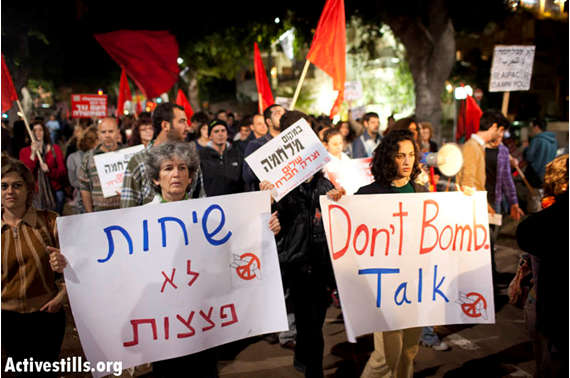
Photo: Protest in Israel against the war

By Darrell Rankin

      The question of war or peace in the Middle East is at a critical moment. The people and sovereignty of Iran and Syria are in grave danger. A small spark could set off a huge war engulfing many countries, including the NATO military alliance.

     Backed by the corporate media and joining other Western powers, the Harper government is imposing sanctions and cutting diplomatic ties as a cover for its own war preparations. Adding to the problem, it is hard to find disagreement on this issue between Harper and the main opposition parties.

     We need millions of Canadians to understand that Harper's war drive must be stopped. We need to explain the reasons behind Harper's role on the world stage, and his government's growing isolation from the world majority on the issue of peace in the Middle East.

     We need to pressure Parliament to make Canada a voice for peace and disarmament in the region. Working people would lose from such a war, as any party that represents workers should know.

     Trade unions and other popular organizations in Canada need to help build the anti‑war movement. This would be the greatest act of solidarity with working people of all nations and religions in the region, because a new war would kill workers of all kinds.

     We need to understand the motivations why the corporate ruling class here and in the Middle East is moving towards war. Only a small handful of people would benefit, especially the arms dealers. To them, a new war is useful as a tool to blind workers and prevent their unity for a better world.

     The Harper Tories have the foolish expectation that a new war would place Syria and Iran under the reactionary control of Turkey and Saudi Arabia, and give more time for Israel to tighten its grip over the Palestinian people.

     Like masters at the chess board, Western powers want to alter the Middle East balance. Colonial attitudes that support regime change in Arab countries are alive and well in Ottawa and other Western capitals. But wars do not always reach the desired end.

     For the West, the usual reason for Middle East wars ‑ oil ‑ is receding to the background. There is a growing anti‑popular, reactionary purpose to the latest war drive.

     According to Prime Minister Stephen Harper the "hopeful spring of democracy" has given way to an "angry summer of populism... (R)arely has the free and democratic world been less secure."

     These are convenient words for a true imperialist. They paint the world as full of threatening chaos, a world we must bring under control for the danger to disappear.

     The words are a ruse employed by apologists to justify the drive to dominate other nations. They are used to conceal the danger and chaos created by imperialism in the first place, through sanctions, the arms race and open bellicose threats.

     At first, a war might help the most reactionary circles in the West, who continue to use workers as pawns and cannon fodder. These corporate global overlords intend to crush the democratic, popular character of the Arab Spring and stop it from spreading.

     As emphasized by Harper's own words, hatred of the popular movements is a prominent motivation behind the threats to Iran and Syria. War is a desperate measure by the West and its allies in the region to crush the popular movements and the hopes for global anti-imperialist unity. Even more serious, another Middle East war could easily grow into a world war, pitting the West against China and Russia.

     Intense military preparations in several global hotspots are putting realistic solutions to hunger and climate change on the back burner, where the big oil and grain corporations want them to be. Militarism guarantees that the jobless will continue to go hungry.

     Communist and workers' parties have long stated that another world war can be stopped by a very broad anti‑imperialist alliance. A new Middle East war would complicate building this unity.

     From that perspective, it is vital to block a new war against Iran or Syria. At home and globally, the peace movement has much work ahead to explain the democratic alternatives to war.

     We need to build broad, popular support for comprehensive, mutually agreed and verifiable disarmament in the Middle East, and for the right of the Palestinian people and all nations in the Middle East to decide their future.

     This means ending arms shipments into Syria that violate its sovereignty. Canada must end arms sales to regimes that are violating Syria's sovereignty, such as Saudi Arabia, Turkey and the United States.

     One thing has not changed about the escalating war threat. The wallets of the Western arms corporations are growing fat off the Middle East.

     This is a war we must stop!

End the aggression against Syria! Stop the drive to war against Iran!


The YCL-LJC Canada is a member of the Canadian Peace Congress, affiliated with the World Peace Council.

     The Canadian Peace Congress condemns the ongoing foreign intervention in Syria and the escalating drive to war against Iran, and calls for the immediate withdrawal of all Canadian, NATO and foreign mercenary forces from the region. We further call upon the Conservative government of Stephen Harper to restore and normalize its diplomatic relations with Syria and Iran, and to re‑orient Canadian foreign policy toward peace, international cooperation and solidarity.

     The Harper government's decision to adopt an international policy of belligerence, and to do so without consulting Parliament, is further evidence of its abandonment of a foreign policy of peace and diplomacy in favour of aggressive and hostile interference in the internal affairs of sovereign countries. Syria and Iran are member states of the United Nations and have expressed no hostile intent towards Canada or its people. Prime Minister Harper is actively contributing to the danger of war, through hostile policies that are out of step with the Canadian peoples' longstanding support for peace.

     The Canadian government has allied itself with a minority of Western governments who, along with pro‑war forces within Israel and a few reactionary Arab regimes, are seeking new pretexts for intervention and war. These include the protection of human rights or the prevention of the alleged proliferation of weapons of mass destruction. These objectives cannot be achieved by breaking diplomatic relations, imposing economic sanctions, arming foreign mercenaries, or forging international campaigns for regime change and by installing puppet governments favourable to the strategic goals of the major western power.

     Foreign intervention, sanctions and military aggression only weaken the human and democratic rights of the Syrian and Iranian people, and diminish their ability to develop and improve their societies. The aftermath of NATO intervention in Libya last year, in which Canadian armed forces bombed Libyan territory, has been disastrous for the people of Libya who are now plunged into factional warfare. This, plus the catastrophic consequences of the military occupation of Iraq, including the deaths of over one million Iraqis, clearly indicate that the main victim of any war is the civilian population.

     As in the case of Libya last year, the drive to interfere in Syria and Iran is driven by the strategic and economic interests of imperialist powers. These countries - including the United States, Britain, the European Union and Canada - choose militarism and war as their preferred option for expanding their spheres of influence and control over resources and markets. The result is destruction, displacement and despair to the peoples of the developing countries who have been targeted. Far from resolving conflicts, these policies of interference only deepen current crises and escalate the danger to world peace.

     Pro‑war forces have seized upon the many complexities in the situations in Iran and Syria, to promote misinformation and confusion. The threat to peace in the Middle East does not arise from countries who exercise their sovereign right to develop the nuclear energy industries to build their economies. Nor does it originate with countries who oppose Western efforts to re‑colonize the Middle East and control its vast energy resources, through the New Middle East Plan. Rather, the concrete threat to peace is the existing conventional and nuclear weapons that the US, its NATO allies and Israel constantly brandish in their effort to destabilize the region, to demonize governments that oppose imperialist plans, and to justify interference and war.

     The Canadian Peace Congress asserts that the direction of economic, political and social development in any country is the sole right of the people of that country to determine, without foreign interference. We hold this principle to be true for the people of Canada, as we hold it to be true for the people of Syria and Iran. We are completely opposed to any foreign political or military intervention, under any pretext. This includes efforts to interfere with and divert genuine democratic domestic movements.

     The role of the Canadian government in both of these crises has been shameful. Under Stephen Harper's Conservatives, Canada has abandoned its reputation as a country with an independent stance in international relations, and assumed the posture of a vocal NATO aggressor state. In all dimensions - political‑diplomatic, economic and military - Canada's recent policies toward Syria and Iran have been geared toward three goals:

     - Isolate and neutralize sources of information that conflict with imperialist aims, by cutting off communication with the governments and peoples in Syria and Iran;

     - Increase the suffering of the people and generate anti‑government sentiment, by imposing economic sanctions that particularly target energy industries who produce for local consumption;

     - Increase the active military threat in the region, by deploying warships and other military resources to the region.

     These goals all directly serve the overall objective of pro‑Western regime change in Syria and Iran, and the Harper government has campaigned hard internationally, to convince other countries to assume similar policies against both countries.

     In the case of Syria, the Conservatives have also campaigned aggressively to create and promote a political opposition movement to the government. In November 2011, the NATO Parliamentary Assembly received a report that "virtually no one [in Syria] is calling for international military intervention" and that Syria was "without a clearly identifiable opposition with precise political ambitions." Yet, just prior to that report, Canada's Foreign Affairs Minister John Baird had met with the Syrian National Council and proclaimed them to be the legitimate opposition who has "continuously outlined their appetite for change." It is unclear how Baird identified an organized and "legitimate" opposition when NATO could not, and it suggests that the Syrian National Council is little more than a pro‑Western puppet government‑in‑waiting that has been fashioned by imperialist forces.

     Furthermore, Canada has supported the arming of an estimated 40‑60,000 foreign mercenaries to fight inside Syria. These mercenaries form the backbone of the Free Syrian Army, and indicate the degree of armed foreign intervention already underway in Syria. The recent elections in Syria had a higher voter turnout than in Canada, and a number of independents and government opponents were elected and have been included in the cabinet. The Syrian people have spoken, yet Canada and other interventionist forces continue to pick sides in an internal matter.

     In the case of Iran, the frenzied drive to war has obscured certain significant facts from the public eye:

     Iran is a non‑nuclear state and a signatory to the Nuclear Non‑Proliferation Treaty (NPT), and is under the supervision of the United Nations' International Atomic Energy Agency (IAEA). Iran has repeatedly stated that its nuclear program is for peaceful purposes and not for military ends. The fact of the matter is that neither the IAEA nor the U.S. administration has been able to show any substantiated evidence about the weaponization of Iran's nuclear energy program. The U.S. Secretary of Defence, Leon Panetta, has publicly conceded, "there is no evidence that Iran has a nuclear weapon."

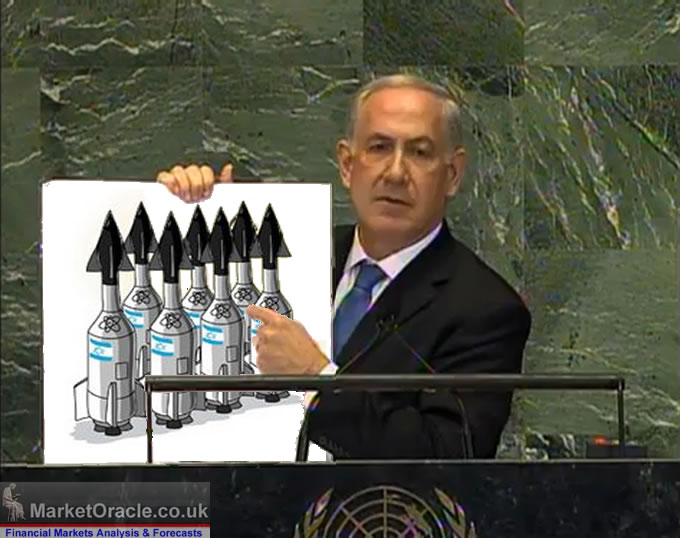
     Israel is a nuclear weapons state with an estimated 200‑400 nuclear weapons, who has refused to join the NPT. There is no UN supervision over Israel's nuclear activities. It has pre‑emptively attacked other neighbouring states, and has threatened Iran with military attack many times.

     United States is a nuclear weapons state with more than 10,000 nuclear weapons, and it has not allowed any inspection of its nuclear facilities by the IAEA. The U.S. has used nuclear weapons against other countries, when it exploded two nuclear bombs on Japan and when it used uranium‑enriched weapons in Iraq. The U.S. also has repeatedly threatened Iran with military attack, and has nuclear‑equipped forces currently stationed in the region.

     The Canadian Peace Congress supports the October 6 Day of Protest Against War, initiated by the Canadian Peace Alliance. After more than a year of conflict and violent foreign intervention, thousands of Syrian people have died. If governments like Canada are allowed to continue their current policies of aggression, interference and colonization, thousands more will die. All peace‑supporting groups in Canada - including trade unions, faith communities and student groups - need to speak out and mobilize against intervention in Syria and Iran and the threat of a far broader war in the region.

     The Canadian Peace Congress demands that the Canadian government:

* Immediately withdraw Canadian military forces from the region, and oppose military intervention in Syria and Iran, under any pretext;

* Restore diplomatic relations with Syria and Iran, remove sanctions, and support the peace initiatives of those states and organizations advocating a cease fire and negotiated end to the war;

* Withdraw from NATO, which has a nuclear first‑strike policy and complimentary sea‑ and land‑based ballistic missile systems, and all other military alliances;

* Promote full nuclear disarmament, beginning with the nuclear stockpiles of the United States, Israel and NATO;

* Adopt a new independent Canadian foreign policy of peace, non-intervention and diplomacy in international relations.

October 3, 2012

Debate and discussion: imperialism and the war on Iran.


As peace and anti-war activists build for the October 6th rally against war on Syria or Iran, Rebel Youth is providing the following article and commentary for discussion about the looming military threat on Iran. A lot of critical analysis is being given to this danger, and as youth and student activists we need to make the link with the day-to-day fight for peace in our communities, campuses, workplaces, unions, and other organizations. 

What is a good approach?

The main article below presents one way of approaching this question. The article is by the website Global Research published by the Canadian-based Centre for Research on Globalization. To get discussion started we are also presenting a commentary reply, by a writer for People's Voice newspaper on international issues. You can read more about the protest events against the war here and we provide some more links at the end of this article.

From Global Research:

According to U.S. officials, Israel is training and supporting Iranian terrorists who are trying to topple the Iranian government. Those Israeli-funded terrorists have faked documents to falsely indicate that Iran is building a nuclear bomb.

Israel has admitted to previous use of false flag attacks to justify war against Middle Eastern nations.

For example,   Israel admits that an Israeli terrorist cell operating in Egypt planted bombs in several buildings, including U.S. diplomatic facilities, then left behind “evidence” implicating the Arabs as the culprits (one of the bombs detonated prematurely, allowing the Egyptians to identify the bombers, and several of the Israelis later confessed).

Please read the rest of the article on Global Research, which presents a series of facts to support this claim.

Commentary reply:


The article "Will Israel Launch a False Flag Against Iran to Start War?" (Global Research, Sept. 28h 2012) presents an interesting speculation, but really, why would Israeli Prime Minister B. Netanyahu think he needs a "false flag" incident?  He and other warmongers in the Israeli leadership, and the most belligerent sections of the U.S. ruling class, have argued that they have all the evidence they need to launch pre-emptive strikes against Iran.

In a region overflowing with deadly weapons and conflicting interests, there are constant clashes and military confrontations. Any such incident could be seized upon by the war hawks to attack Iran. Could the constant chatter about "false flags" divert people from the difficult but necessary task of mobilizing against the drive to militarism and war?

That's a problem some anti-war activists have with those who are often predicting "false flags" at any moment. Just in the past couple of months, this included failed predictions about the opening ceremonies of the Olympics, the closing ceremonies, the 9-11 anniversary, and various others. We cannot become mesmerised by trying to guess which date will see some type of provocation, or else we will become immobilized observers.

Yes, there are conspiracies at the highest levels of the ruling class, and always have been. But this is not what drives imperialism. A meteor from space could hit the next Bilderberg meeting and the capitalist system would carry on as usual after the mess was cleaned up.

That said, the danger in the Middle East is very real. War could break out before the US Presidential election, but not necessarily. Will be too late to protest the day after it begins, considering the ability of Iran to strike back against the U.S. and Israel with unpredictable consequences? Clearly the answer is yes. That's why now is the time to do everything we can to mobilize in the streets for Oct. 6th.

For discussion:

1.  What did you think about the Global Research (GR) article? What is a "false flag" attack? What do you think of the main idea? What do you think of the sources and documentation? Have you ever read similar articles on the internet? Who is the intended audience and what does the author want to achieve in terms of action?

2. The "Commentary Reply" is written from a different point of view. How would you characterize the main argument? Unlike the GR article, the Reply does not site any sources -- do you think that weakens its argument? Who is the intended audience and what does the author want to achieve in terms of action?

2. What do you think? Both writers claim that conspiracy exists, but one author emphasizes that conspiracy does not "drive" imperialism. What is a conspiracy theory? How is it different from (or similar to) a class-based analysis of imperialism? What does drive imperialism?

3. Thinking more broadly from this concert example, how theory and analysis connected with action, strategy and tactics?

4.  In your community, is there a mobilization against the threat of war on Oct. 6th? How could you, a youth organization you are involved in, or your YCL club, help build for this mobilization? How does this connect with the YCL's strategic goal of fighting the Harper Conservative government and building unity behind a Charter of Youth Rights?

5.  What ways can we make the struggle against war and for peace stronger in the youth and student movement in Canada?

Read more: http://www.canadianpeacecongress.ca/

October 1, 2012

Don't Attack Iran: Join the International day of Action, October 6

Edmonton

Saturday, Sept 6th at 2:30pm
Sir Winston Churchill Square

Halifax

Saturday, October 6
1:00 p.m. Rally at Halifax Commons Triangle
1:30 p.m. March to Megan Leslie's Community Office on Gottingen St.

Hamilton

Saturday, October 6 at 1pm
Federal Building, 55 Bay Street North, Hamilton

Toronto

2:00 p.m. Rally at Queen's Park
3:00 p.m. March
3:30 p.m. Public meeting: 'Why Harper cut ties with Iran' - featuring special guest speakers (TBA)

Vancouver

Saturday October 6, at 12 Noon
Meet at Peace Flame Park (also known as Seaforth Peace Park) - south end of Burrard Bridge, between Cornwall & 1st Ave

September 18, 2012

No war in Iran - a message from the Communist Party of Canada


Dear comrades and friends,

We are writing you with regard to the ever-growing danger of aggression and war in the Middle East – especially foreign aggression against Syria and Iran – and the need for all peace-loving individuals, groups and organizations across Canada to speak out against any such aggression, and to condemn the role of the Harper government in imposing crippling sanctions, breaking off diplomatic relations and helping to whip up an atmosphere of war hysteria with its bellicose and dangerously irresponsible statements.

The prevailing propaganda campaign in the mass media and from government circles would have Canadians believe that this drive to war is motivated by the most noble of considerations: the humanitarian “responsibility to protect” (R2P) innocent civilians from a bloodthirsty government (in the case of Syria), and the need to prevent a nuclear holocaust brought on by a fanatical regime (in the case of Iran).  Nothing could be further from the truth!

The real intent of this aggressive campaign is to further weaken and destabilize these governments and bring about ‘regime change’ to impose ‘US friendly’ client states in these countries; to completely isolate and crush the Palestinian movement once and for all; and to consolidate Western imperialist domination over the oil resources of  this entire region.

Whatever differences or criticisms one might have of the governments in either Syria or Iran, it is essential to see through this elaborate construction of demonization and lies, and to oppose imperialist designs on this region which, if unopposed, will invariably lead to another catastrophic war (or wars). Instead, we must reject foreign interference and aggression, uphold the national sovereignty of all states, and support peaceful resolutions to conflicts in the region.

The Canadian Peace Alliance has called for demonstrations and rallies across the country on October 6th to denounce the recent decision by the Harper government to sever all diplomatic ties with Iran, to oppose any NATO military intervention in Syria and to call for an end to the ongoing war and occupation in Afghanistan (the 11th anniversary of which will be on October 7).

The Call for an International Day of Anti-war Action on October 6th is an important initiative, and we urge all members and friends of the Communist Party, and all progressive-minded people to mobilize the largest and widest mobilizations possible on October 6th. If local peace and solidarity groups are organizing a local event, we urge you to support and help build for their success. If nothing is yet planned in your area, we encourage you to initiate an anti-war action.

The Communist Party of Canada has taken clear and principled positions on both Syria and Iran, which we reproduce below. As always, we welcome your consideration and feedback.

Central Executive Committee,
Communist Party of Canada

September 10, 2012

We need diplomacy, not sabre-rattling, says Canada's largest peace group


September 7, 2012

The decision by the Harper government to sever diplomatic ties with Iran and to expel all Iranian diplomats from Canada is a dangerous and unwanted escalation of the current crisis. The Canadian Peace Alliance condemns this decision and calls on the government of Canada to normalize relations and to call for a peaceful and negotiated settlement.

This is not the first time that the government of Canada has led the drive to war with Iran. Prime Minister Stephen Harper has stated publicly that Iran is the "greatest threat to world peace." The severing of diplomatic ties shows that, in fact, the Harper government is the real threat to peace and stability.

"The global community is calling for negotiation and dialogue to avert war," said Sid Lacombe, coordinator of the Canadian Peace Alliance. "Keeping diplomatic channels open for that discussion is an absolute prerequisite to finding a peaceful solution to the conflict. The Harper government has just told the world that they don't care for peace and are instead paving the way to war."

Iranian-Canadians also spoke out against the decision to sever ties.

"We are worried that these actions by the Harper government are a sign of imminent attack," said Niaz Salimi, president of the Iranian Canadian Community Council. "We are opposed to any actions which brings us closer to war."

A war with Iran would cause untold civilian deaths and could escalate into a much larger regional conflict. There is no credible evidence that Iran is using nuclear technology to create a weapon, yet the Canadian public is being asked, once again, to put its faith in fictitious claims about Weapons of Mass Destruction. The fact that no weapons were ever found in Iraq - and that the evidence of such a program was deliberately fabricated - renders any accusations against Iran extremely questionable.

This October 6th, Canadians will demonstrate their opposition to the possibility of war against Iran by joining anti-war events across Canada.

For more information, visit http://www.acp-cpa.ca.

August 22, 2012

The Syrian conflict must be resolved by the Syrian people themselves


Statement of the Central Executive Committee,
Communist Party of Canada
August, 2012

The crisis in Syria continues to deepen with every passing day. Thousands have been killed or injured, including countless civilians caught in the crossfire between armed opposition groups and government forces. Thousands more have been displaced from their towns and villages and forced into internal or foreign exile by the fighting. In this very real sense, the situation has become a human and social tragedy of the first order.

But what is actually taking place in Syria? Who is really provoking the violence and prolonging the agony of the Syrian people?

The Western corporate‑controlled media would have us believe that the root cause of the conflict is the “tyrannical” government of President Bashar El‑Assad which clings to power at any price, willing to sacrifice the health and security of its own people. This “big lie” is central to the intensifying propaganda campaign to vilify El‑Assad in order to conceal the role of reactionary and clerical forces bent on destabilizing and ultimately overthrowing the current government and seizing power for themselves. And if necessary, this demonization campaign will be used as a pretext for imperialist military intervention and occupation to directly impose “regime change”, as was done in Iraq and most recently in Libya.

The global media offensive against Syria is only one aspect of a multi‑faceted imperialist strategy to crush (and possibly dismember) the Syrian state. The broader objective is to fashion a “New Middle East” of weak and pliant Arab states under the domination of U.S. and European imperialist powers and their local gendarme in the region, the expansionist state of Israel. This would guarantee unfettered access to the petroleum and other natural resources of the region, and extend imperialist geopolitical hegemony into the “underbelly” of Asia, further encircling both the Russian Federation and China.

Undermining the Syrian state is pivotal in achieving this imperialist ambition. Due to its central location in the region, its secular character and socially progressive policy orientation, and its firm solidarity with the just struggle of the Palestinian people and its opposition to the expansionist policies of Zionist Israel, Syria has long been in the cross‑hairs of U.S. imperialism. For their own reasons, reactionary Arab regimes – especially Saudi Arabia and Qatar – as well as Turkey are also anxious to weaken and crush Syria.

“Regime change” in Damascus and its replacement with a more pliant, pro‑imperialist regime would compound this catastrophe for the Syrian people. It would also dramatically alter the regional balance of forces, weakening the anti‑imperialist forces, and serving as a prelude – and launching pad – for NATO/Israeli aggression against neighbouring Iran, the most powerful state in the region.

When anti‑government protests erupted in Syria last year, U.S. imperialism and its local and regional backers seized the opportunity to launch its “tried and true” destabilization campaign, using popular discontent (and the at times crude methods used by local Syrian officials to quell the protests) as a cover to move into action. Many Syrians were justifiably angry at the impact of neoliberal “reforms” which weakened national production, increased unemployment, and widened social and economic disparities between the mass of working people and national and foreign capitalists, aided by weak, misguided and sometimes corrupt government officials.

But legitimate opposition voices were quickly either co‑opted or shunted aside by hardcore, heavily foreign‑financed and armed gangs determined to make Syria ungovernable. Terrorist attacks to spur further government crackdowns, sectarian violence to incite distrust and enmity between the Sunni majority and the Alawite and other minorities, the smuggling of heavy weapons and even mercenaries from abroad, and finally open calls for direct foreign intervention in violation of Syria’s national sovereignty – this has been the orchestrated game plan carried out by the “internal opposition”. The extent of foreign covert intervention already evident in the conflict proves that this is not a “civil war” but rather a highly coordinated imperialist conspiracy against Syria.

The misnamed “Friends of Syria” – the cabal of U.S. and other imperialist powers, the reactionary and despotic Arab regimes, and the counter‑revolutionary Syrian National Council – have dismissed every attempt of the Assad government to dialogue with the “opposition”, to achieve a ceasefire under the Kofi Annan peace plan, or to introduce constitutional reforms ending the state of emergency and opening the way for more open parliamentary elections. Instead, they have forced through several rounds of anti-Syrian sanctions at the UN Security Council, and have denounced Russia and China for vetoing strident and dangerous resolutions which would have given a green light for foreign imperialist aggression under the sanction of the United Nations, as was done in March 2011 against Libya.

The Harper government has played a particularly despicable role in this sordid affair, beating the drums for sanctions and war on Syria. Unfortunately, the main opposition parties in Canada’s parliament – the Liberals and NDP – have done little better. Indeed, all three parties have thrown in their lot with the imperialist conspiracy against Syria, arguing in favour of “humanitarian interventionism” and the “responsibility to protect” (R2P) as a justification for yet another aggression.

The Communist Party of Canada fundamentally rejects the building war frenzy over Syria and Iran, and warns that such military adventurism could well lead to a dangerous conflagration throughout the Middle East region, and beyond. We call for:
·        full respect of Syrian national sovereignty and independence;
·        the removal of sanctions; an immediate halt to all covert financial and military support to the Free Syrian Army and other armed groups inside Syria; and
·        the renunciation of a military “solution” in favour of a ceasefire by all combatants and a comprehensive national dialogue to restore peace to that troubled country.

July 29, 2012

The youth struggle today: reform and revolution, local and general


Based on a greetings given by Drew Garvie on behalf of the Central Executive Committee to a meeting of YCLers in Vancouver, July 2012

Thank you to the Young Communist League British Columbia for having me here today, on behalf of the Central Executive Committee, for your provincial convention which also takes place on the same weekend as Moncada Day.

This is entirely appropriate. Moncada Day celebrates the movement that grew into the triumphant Cuban revolution, which was born on the 26th of July 1953 when Fidel and Raul Castro and around 160 other brave revolutionaries attacked the Moncada Barracks in Santiago de Cuba.

This meeting of the Young Communist League comes at a juncture in the youth and student movement when the forces of monopoly capitalism are instituting a strong offensive against the people and the environment through their reactionary, pro-war governments: the Harper Conservatives in Ottawa and their allies, the Clark Liberals in Victoria.

At the same time, the fight back is developing at an accelerating rate.

Signs of this can be seen especially in the youth and student movement. The development of Occupy successfully popularized the struggle of the “99%” against the 1%. There is some increased militancy from the student movement across English-speaking Canada, drawing inspiration from the ongoing historic and massive Québec student strike. The Charter of Youth Rights campaign is emerging.

Quebec, although on the other side of the country, is especially important. The bold unity and sheer numbers of the mobilization has scared the ruling class and sent a call-out for youth to rise-up.


Millions of people are also participating in general strikes and demonstrations in countries like Greece, Portugal, Britain and India.  Much of Latin America continues to advance as an anti-imperialist front.

The revolutionary uprisings across North Africa and the Middle East which started around 18 months ago have not faded away. In Egypt there are continued strikes by factory workers, and street demonstrations by students.


Comrades,

The growing youth resistance has borne-out what the YCL said almost two years ago at our Central Convention, that the youth should take courage at the weakness of capitalism and build the fight back.  We are in dynamic times, with many dangers and challenges but also the potential for a better future for British Colombia and Canada – and resurgent socialism.

We are being told by the corporate media that the economic crisis is to blame for aggressive budget cutbacks.  For example, the recent Harper Budget, the Omnibus Bill C-38.  We are again told that we can no longer afford the social programs that working people have won after generations of struggle.

Governments are broke and there’s nothing they can do about it, except make the working class pay the bill.

This is what people are hearing in British Colombia, in Ontario, in Quebec, but also internationally in Greece, in Spain, in Britain, in Chile, in India, and elsewhere.  It’s a refrain that the pro-capitalist governments, whether they are right-wing or social democratic, basically have in common around the world.

Is it true?

Young workers and student activists can clearly see the dangerous lie to the claims behind 'austerity' when we have a global perspective. Even in a provincial meeting like yours today, it is important that the international and the local are always dialectically connected.

Consider the global economic crisis; the question of war and peace; and environmental struggles. Or the campus struggles today, with the student uprising in Quebec and the challenges for the student movement here in BC.  How is the general connected with the specific?

First, the 'financial crash' or 'long rescission'  or 'slow recovery' or as we have been accurately calling it from the beginning  the capitalist economic crisis.

This crisis was not created by social programs, or by the people.  It was created by capitalism itself. In fact, because of the internal contradictions of the capitalist economy, it operates in cycles of boom, crisis, depression and recovery which is politely re-labeled by economists 'the business cycle'.

And whether in the form of the velvet glove of “welfare state” reformism or the iron fist of neoliberal reaction, the policies of finance capital and its state have merely created new contradictions.

Over the last 40 years, corporate profits have skyrocketed, and big business has paid less and less taxes to the State. By eroding the tax system, keeping wages down, speeding up the working day, busting unions, privatizing profitable parts of the public sector, and breaking into new markets through trade agreements and even war, the capitalists hoped to survive systemic contradictions -- especially falling rates of profit. Because while Capital has made larger and large profits, the rate of accumulation was not rising (as new technologies were introduced).

Capital put the bill in the hands of government and the people, forcing them to borrow from the capitalists. This debt itself became a commodity.  When the economic crisis hit, it was public money that went to try and resuscitate Capital through bailouts -- causing more debt. Who holds this debt? Well the capitalists, of course!

Now we are told it is our duty to feed the machine more.

As the crisis broke in 2007, debt spiked further.  Now, in Europe, they’re back to demand repayment on their loans, that were given to themselves.  This is called 'the Eurozone crisis' but it is really just another example of the global economic crisis of capitalism. Even Prime Minister Stephen Harper quietly said the last Greek election could effect the world -- including Canada.

The Harper Conservatives would like us to believe the economic crisis has really not effected Canada, but you here in BC know otherwise.

The youth movement understands its local struggles clearer and better when it has a 'big-picture' focus.

Capitalism is a system without democratic social planning, which as Engels said produces an “anarchy of capital” which is the cause of the crisis – of misery, exploitation, unemployment, poverty wages, and environmental devastation around the world. It is what the People are up against, but there are alternatives.

Communism and socialism are not words to be embarrassed of.

Capitalism is the real failed system.

And we putting socialism back onto the negotiation table!

Comrades,

At our most recent meeting of the YCL Central Committee we drew the connection between economic crisis and war.

The World Federation of Democratic Youth, the World Peace Council and the Canadian Peace Congress, and the international meeting of Communist and Worker’s Parties have all warned of the increased aggressiveness by imperialism.

As we report in the latest Rebel Youth magazine, a military intervention in Syria is being planned right now by imperialist alliances like the North Atlantic Treaty Organization or NATO.


As we have seen in Libya, Palestine, Afghanistan, Haiti, Colombia, Paraguay, and many other places: the people are not done any favors by imperialist intervention. ‘Regime change’ in Syria would led to a terrible blood-bath and provide a road for imperialism to hit at Iran.


On the way to BC, I saw the Economist magazine in the airport with an article entitled “Syria: the end game”.
How many millions of dollars will be spent on another war? Money that, as your meeting documents say, should go towards BC’s crisis of child poverty – and job creation with good union jobs.

We have called for all peace-loving youth in Canada to support a peaceful and political solution by the Syrian people themselves.

The question of peace is also a challenge for BC young workers and students to address as a movement, and find ways to mobilize opposition in the streets.

Even when these issues seem forgotten, the YCL has a duty to remember the importance of the struggle for peace. The YCL must never abandon the principle of working-class internationalism, the principle that working people of the world must stand united against capitalist wars and for the class struggle.

And so with the question of internationalism we return to the relationship between the specific and the general.

On the other side of the Pacific, there have been tremendous anti-nuclear protests in Japan. The March 2011 Fukushima Daiichi nuclear disaster has lead to the evacuation of close to 2,000 people and over 500 disaster-related deaths, as well as the release of radioactive material into the Pacific. We would like to take the occasion of this meeting to express our solidarity as the YCL with the environmental movement in Japan.

Turning our eyes to home, we also call for the evacuation of all US troops and the closure of the Nanose Military Base which is a weapons testing area for US nuclear submarines.

The environment is understandably of vital important to the youth, because it is a struggle for the future. Climate change, for example, shows clearly the link between the global and the local.

Just a few days ago, scientists announced a rapid and massive thaw of Greenland’s glaciers. After just a small rise in oceanic water temperatures, and this office could be threatened by tidal storm waters!

In this context, we also join with the people’s movements and shout out that militant solidarity can block the Enbridge Northern Gateway pipeline!

The YCL has a long and proud history of opposing project like this, exporting unprocessed raw materials, which strengthens U.S. imperialism and its Canadian cronies, but fails to create jobs.

It is great to see the youth and student resistance to the pipeline, here in BC!

The cynics and the disheartened progressives who thought that the working class and youth of North America were “hopeless” now have examples in Wisconsin, across the continent in the form of the Occupy movement, and the Quebec student uprising.

The Quebec student struggle is another case where a local struggle is framed in an international context of struggle for accessible education, and then becomes part of that international resistance.

Globally, accessible education is under dangerous attack with the Austerity agenda. Students in Britain and Spain been a part of that renewed militant fight back.

In Chile, students joined a general strike of the miners in the summer, and a political strike was launched to replace the Pinochet-era constitution with a new constitution that would enshrine guaranteed free and accessible education.  600 000 marchers hit the streets in a country of 15 million.  The Young Communists of Chile have been at the forefront of this struggle.

I would like to touch on the Quebec student uprising which is perhaps foremost in our minds in the discussion people`s resistance today.

It is also a topic where the CEC has devoted much attention to, in consultation with the YCL`s all-Canada student working group telephone meeting, which is growing and meets a couple times a month.

We would really like to see the call grow and develop, to include more participating from BC.

One way to get a good handle on how strong a movement is, is to see what the thinkers of the capitalist class are saying about it.  Former advisor to the US state Department on the Quebec student struggle, David Jones has spoken about the Quebec spring. This is not a man who is on our side of the class struggle.

What was David Jones greatest worry?

That "students elsewhere (may) determine Quebec has provided a ‘learning experience.’”

As the YCL, that is exactly what we want: for lessons of Quebec to be shared with other students – and young workers!

We can not simply say – oh, that’s those French speakers. They have a different, culture, history, language, territory and economy, etc.

That is what the corporate media is saying. Quebec is ‘special’ – so the student uprising can not come to BC.

It is striking that when Quebec demands its sovereignty -- which we broadly support, proposing a new constitution on an equal basis with English-speaking Canada, up to and including the right of separation – but when Quebec`s self-determination and the national question comes into question, these factors that make Quebec a nation are suddenly forgotten by the corporate media and Quebec is no longer ‘special.’

However, a communists we know that there is a common class struggle which unites the different nations in Canada.

The fight for accessible education is a class and democratic struggle.

I was in Montreal last May as part of a delegation of student journalists from Guelph, Ontario and we interviewed student leader Gabriel Nadeau Duboise of the CLASSE union. He told me about the repression they have been facing by the police and with Bill 78, but also the slogan – “Student Strike, People’s Struggle.”

The students in Quebec, through struggling for a freeze in tuition fees, have learned a great deal through their battles and are now advancing other people’s movement demands, as their new “Share Our Future” manifesto says. You can read it on our RY blog or in the latest People’s Voice. I would like to quote:

“This is the meaning of our vision, and the essence of our strike: it is a shared, collective action whose scope lies well beyond student interests. We are daring to call for a different world, one far removed from the blind submission our present commodity-based system requires”

This is an important political view for the YCL and also shows the strength of our analysis: that the quantitative struggle for reforms, like accessible education, are necessary because they help build towards a qualitative change in the people’s class consciousness, organization and unity; ultimately it is towards the realizing the necessity of fundamental social transformation and revolutionary change – socialist consciousness.

The struggle for immediate social progress, within the framework of capitalism, and the struggle for making a rupture, a sharp break overthrowing of the system, are objectively linked as a process.
This can be difficult to grasp in the youth and student movement not just because youth (as much as we hate to admit it!) can lack experience with struggle.

That’s true, but it is difficult because it gets at the question of how we understand, as revolutionaries, our basic reality. If reform and revolution are opposite tendencies – ideologically, politically and economically – how can they be a united process?

Reforms are won through the power of the movement. Any fundamental change depends on the mobilisation of the masses of people. Nevertheless, under capitalism reform gains will be temporary and precarious.

Let’s keep in mind Quebec here, which has the lowest tuition fees in the country – this is not the first student strike in Quebec, it is the eight strike. And still the capitalists keep trying to push up fees! While we haven’t seen a significant gain come out of the battle – yet! – the struggle has become a mass and social mobilization far beyond the campuses which maintains, albeit unclearly, a perspective of challenging corporate power.

If the movement, while thick in the action for immediate reform battles, can maintain a revolutionary qperspective of class struggle and overcoming capitalism it will intensify the militancy of the working class.

And that is the kind of position the youth and student movement needs to be in – militant and united.

Conditions are always changing. The earth spins around on its axis, marking each day. It may seem that day after day, or year after year, life is the same. But life proves Marxism`s claim that the capitalist system is unsustainable and crisis-ridden. The moment we are living in is making history. Political ‘ruptures’ have been breaking out around the world – take the Arab spring – and the strength of the movement and its leadership is often decisive.

Perhaps it is too early to judge the results of the Arab spring in Egypt and Tunisia, but we can see how true this strategic perspective is, by remembering the first successful socialist revolution in North America – in Cuba.

The Moncada day we are celebrating this weekend set the revolutionary process into action in Cuba.  But the main demands of the youth who stormed the barracks were free and fair elections. Just a year before, in 1952, US-supported dictator Fulgencio Batista had organized a coup and rigged the elections. And so, disguised as businessmen interested in Clay Pigeon shooting, a group of young radicals came together under the leadership of Fidel, Raul and others, training at the University of Havana.

In the short term, their raid was tremendously unsuccessful. It did not start an uprising. Instead, many of the youth and students died. Fidel, Raul and the rest of the rebels went to prison. But we know the rest of the story. A mass movement of the Cuban people against Batista developed with force, conditions changed and a crisis developed.

Facing armed insurrection that had liberated most of the island, as well as a mass uprising and a general strike, in January 1959 on New Years day Batista fled into exile (to eventually settle in fascist Portugal). And the revolutionaries lead by Fidel and Che marched into a celebratory Havana!

After the overthrow of Batista, the Cuban revolution kept advancing. It developed into a socialist revolution and the Cuban people built the first free territory in the Americas.

By celebrating Moncada, we remember that the Cuban revolution was made possible by the people’s struggles that came before, and took many hard years of organization and work. The small immediate battles and the big sweeping changes were not separate, but in a contradictory relationship together.

The YCL is a unique group in the youth and student movement because it ‘gets’ this unity of reform and revolution.

While we don’t try to impatiently impose our demands on the youth movement, we don’t sit on the sidelines or simply ‘go with the flow.’  We are not compliant or complacent with the situation today where many movements have adopted tepid demands without a common strategy (other than voting NDP).

The vanguard role of the YCL arises in action, working in the political direction of the Communist Party of Canada, and applying that strategic direction within the youth and student movement of unity and militancy.
What can be learned from the Quebec student movement by student activists in English speaking Canada and BC?

This is an important question for your meeting to discuss.

In our statement for the Feburary 1st “Education is a Right” cross-Canada day of action, the YCL made a criticism of the current tactics of the Canadian Federaton of Students or CFS, in a constructive and respectful way.  We called these protests an excellent step in the direction of developing into a truly broad and united fightback.

In other words, February 1st fell far short of being what was necessary but could have been a good start.

Afterwards, in People`s Voice, we said the poor turn-out was a ‘wake-up call’ exposing the ‘lack of an action plan’

We called for ramping‑up actions on campus. Sit ins. Occupations. More rallies. [and] bringing the struggle into the community and winning the moral support of the public which, at least in sentiment, is probably already there - but not yet in a visible way that cannot be ignored.

Our policy is for a united and militant student movement that moves the campuses into action and reaches out beyond, to stand with the struggles of labour and other people`s struggles.

Our current policy in the student movement is that:

1. The student movement and the CFS needs an escalating plan of action for a broad and united fight back;
2.  This struggle should open a broad democratic debate about free, accessible, quality, public, not-for-profit education;
3. That the political reason for the student movement’s struggle must be brought into the hands of the members themselves through democratic empowerment;
4. The student movement must urgently find unity with Quebec and Aboriginal students, and it must be on the basis of their rights to sovereignty and self-determination as nations;

Since the CFS Day of Action, Quebec has exploded. We must say that the solidarity movement in Canada has really been outstanding – but not with any help from Mulclair`s NDP! – but now each point on this list, which may have seemed abstract in January, is very concretely on the table.

The Charter of Youth Rights campaign compliments this perspective on unity.

In addition to free education from cradle to grave (including childcare) the YCL also demands abolishing student debt, grants not loans, kicking military recruitment and research of our campuses, restoring and expanding funding to education including Aboriginal education, and a living stipend for students.

Winning these demands is not a question of magic structures or magic leaders but finding the way to organize for a major battle, drawing hundreds of thousands if not millions of students into struggle.

In such a battle a student strike would be, as we said in January, the most effective way to put moral pressure on the government. It should therefore be part of the student`s arsenal.

But here is an important point.

Beyond the debate about tactics we think there is an ideological battle here, which is also observable in the Labour movement.

On the one side are the strategies of ‘lobby or wait until the Election and vote NDP’ and right-wing social democracy.

On the other side are the left and progressive forces that are calling out for action.

We are not in the arm chair on these questions, we are in action.

The CEC and the YCL student conference call helped support and organize the recent “Student Solidarity Tour”, bringing Quebec activists to 9 cities in Ontario, largely organized by our comrades on the ground and comrade Ryan from YCL Hamilton who is also a member of the Central Committee.

This was a very positive step forward for the League in Ontario as well as Centrally and had a significant impact on the situation in Ontario.  It was the first time that CLASSE leaders and the Canadian Federation of Students were connected on a project as large as this, from Ottawa to Windsor.

Turnout to the events were very good and CEC member and leader of the LJC-Q, comrade Marianne Breton Fontaine had a chance to address about a thousand Ontario student activists with our call for unity and militancy as the way forward.

This was built from other work including the “student activist conference” the YCL CEC and the LJC-Q convened in Montreal in January. Could we do the same thing with a YCL young workers conference?

This weekend, many of our activists are in Toronto at “student strike training workshops” which Marianne will be presenting at. Over lunch, the YCL is holding a special fraction meeting of all our members attending the conference , to coordinate our contribution.

To update you on other activities across the country, the YCL-Ontario just finished their convention a month ago.  14 delegates from 4 clubs were in attendance and dealt with over 60 amendments through thorough debate and we elected a renewed leadership with a PC of ten comrades, including young workers and student activists from our new clubs in Ottawa and Windsor. I was re-elected as the Ontario YCL organizer.

The YCL also had a visible presence through participation in the Toronto Pride parade which concluded the convention weekend.

Rebel Youth, after a delay in printing which some of you in this room will know about directly, has come out with a double issue, which features the Quebec student strike and is in colour.  It is being well received as the youth movement is eager to learn about what is really going on in the streets of Montreal and Quebec city.

I am happy to see that your meeting will be discussing contributions from British Colombia to our magazine and we do need help making sure that issues are produced more frequently.  Above all, we need participation and involvement in the commission, and building the magazine among young workers with new subscriptions.  Our magazine should be at the centre of our agitation, organizational and educational work of the League across Canada.

In Cuba solidarity – which we should draw extra attention to this weekend as it is the anniversary of the July 26th movement and the storming of the Moncada Barracks which marked the beginning of the Cuban revolution – we have sent two members of the YCL on this year’s Che Brigade, including Central Committe member Dan Mozarowski, and will be using this participation to strengthen our solidarity work.

We will be visiting Nova Scotia this Fall for a school, and have started organizing efforts to grow the League on the East Coast.

We need to prioritize more the work of young workers who are being hit hard by the economic crisis.
Where we are visible, active and working collectively as the YCL we are growing, sometimes significantly.

The current economic and political conditions have caused more and more young workers and students to look for alternatives to cut-backs, privatization and austerity.  We have answers to the questions that are now being raised.  The case against war, poverty, misery, environmental devastation, unemployment, exploitation and oppression is really the case for socialism.

With these thoughts, comrades, I think I will conclude.

I also should mention that next year will be a special occasion for the YCL, the 90th anniversary of the League and our founding in 1923.

Our 90th anniversary will be a special occasion that we will have to celebrate in some way as we mark 90 years of fighting history for young workers.

Again, good luck with your work today and we hope your debates are fruitful. As our slogan says:
The Youth are the Future, The Future is Socialism!

May 27, 2012

A critical perspective on the Houla massacre


Whomever is responsible for the Houla
massacre, it is difficult for us not to see
imperialism's outcry as crocodile tears

Stephen Gowans,
Reprinted from What's Left  
Syrian government forces may or may not have been responsible for the killing of 108 civilians at Houla. Witness accounts point to militias that may have been acting independently of the Syrian government. One account describes the killings as avenging a rebel sectarian attack on an Alawite village.

All the same, no witness account has been independently verified. The events are, in the words of a UN monitor, “murky”.

The US government, nevertheless, has reached far beyond the evidence to blame the Syrian government for the atrocity, a brazenly hypocritical public relations assault on Syria. In light of the serial massacre of hundreds of Pakistani and Afghan civilians, including children, by US drone strikes, the US government has no credibility as a self-appointed champion of the innocent.

Examining the conflict with reference to US foreign policy goals, and the objectives of other parties, it is likely that the Assad government’s opponents are depending on armed conflict and the exploitation of the public relations opportunities the conflict provides to meet their goal of regime change.

Damascus, on the other hand, has more to gain from working out a modus vivende with its internal opposition than trying to win a shooting war with armed rebels that have the backing of the formidable diplomatic and material resources of the United States and wealthy Gulf petro-monarchies.

February 16, 2012

Act to prevent war against Iran and Syria

Imperialism is targeting Syria and Iran

By Darrell Rankin, People's Voice

     The Middle East is the epicenter of the militarization of relations between China and Russia on one side and NATO's imperialist, or advanced capitalist countries, on the other. Imperialist countries which twice plunged the world into war in the last century are getting ready for round three. The arms race is growing around the globe and the battle lines are getting clearer.

     Even without considering the potential for a new global war, fear and tension are flowing from the threat of smaller wars of regime change and occupation in Iran and Syria. Positions are hardening on both sides of the intervention issue. So far, China and Russia will veto any UN Security Council resolution that may trigger military action, but that may not be enough.

     It may be only a matter of weeks or months before imperialism targets Syria or Iran, adding to its list of imposed regime changes which are not approved by the UN. For the Security Council to even talk about military action against sovereign countries signals that imperialism (NATO and Japan) dominates world politics. And if imperialism acts outside the UN, as in Yugoslavia, Afghanistan, Iraq, Haiti and Libya, it is another nail in the coffin to the actual words of the UN Charter.


January 24, 2012

Statement of the Press Office on the Decision of the EU for an embargo on Iran’s oil

USS Abraham Lincon off the shores of Iran
The decision of the governments of the EU to impose an embargo on Iran’s oil constitutes an extremely aggressive act. It is outrageously brazen for the EU, some of whose countries possess nuclear weapons, to use, along with the USA, Iran’s nuclear research as a pretext, in order to impose their imperialist demands.

The agreement of the Greek government to the embargo constitutes open support for the aggressive plans of the EU against the people of Iran and marks the deeper involvement of the country in the imperialist rivalries and wars. This is reinforced by the development of the military cooperation with the aggressive state of Israel which possesses nuclear weapons with the support of the USA and the EU.

January 15, 2012

Our view: the youth and student struggle now


Main Political Resolution, 

YCL-LJC Central Committee

Jan. 15th, 2012


Since our last Central Committee, we are still being told by politicians and the corporate media that the economic crisis is over.  At the same time, the crisis is blamed for aggressive budget cut-backs.

The economic crisis of capitalism is the main fact dominating the struggle of the youth and students today The latest Euro-zone sovereign debt crisis is a continuation of that crisis.

The Eurozone crisis: more crisis of capitalism

The sovereign debt crisis forcefully imploded across the European Union over the past several months. It began with the capitalist governments of Portugal, Ireland, Greece and Spain suddenly announcing they could not refinance their national debt to the Banks (ie. the country is bankrupt). Consequently, they experienced a major downgrading of there credit ratings by finance capital, further aggravating the situation. Even France‘s credit rating has just been downgraded.

The crisis was not simply sparked by the quantitative amount debt of these countries. Because of the domination of banking and financial capital (that is non-value producing or parasitic) and its ever-greater concentration and centralization within the interconnected Eurozone, when a country like Greece defaulted there was a qualitative change: a domino-effect of defaulting (and a resulting political crisis; for example, in Italy the Berlusconi was suddenly replaced by high level administrators or “technocrats.”)

Nobody has a crystal ball, but the future of the entire EU is being drawn into question. The EU is now in a recession that has even hit Germany.  Can it be confidently said that Canada is immune? Not at all.

Popular stories