Showing posts with label obama. Show all posts

March 31, 2016

Letter from a young Cuban to the US President Obama

Julio Alejandro Gomez Pereda

Reposted from cubanos.org.uk with some change in translation

March 22nd, 2016, Havana, Cuba.

Mr. President,

Some hours ago, I had the opportunity to listen to all of your speech through our national television channels, and I should recognize, that precisely your words motivated this letter that now, right after I have reflected on what you have said, I decided to write you.

I speak to you from the respect that a young Cuban feels for a man who has been able to change the history of his country, regarding its foreign policy toward Cuba, which will be an indelible merit during all his life, and the best is that it will be a multilaterally attained merit.

March 28, 2016

Obama’s Cuba Visit Illustrates US Arrogance

Garry Leech

Reposted from counterpunch.org

In his speech to the Cuban people in Havana, President Barack Obama declared, “I have come here to bury the last remnant of the Cold War in the Americas. … I’ve urged the people of the Americas to leave behind the ideological battles of the past.” But Obama made clear that his desire to end the decades-long US economic blockade of the island is not based on the fact that it constitutes the bullying of a small country by the world’s most powerful capitalist nation, nor is it a response to the sheer inhumanity of the blockade, it is simply an acknowledgement that the policy has failed to bring down Cuba’s socialist system and return the country to capitalism. Obama then proceeded to spend much of his speech telling Cubans that they should live under a US-style democracy and a capitalist economy. In other words, he has no intention of leaving behind “the ideological battles of the past.” He is simply shifting strategy.

January 21, 2015

Afghanistan war is far from over

By T.J. Petrowski

 After 13 years, the U.S. and NATO are announcing the end to combat missions in Afghanistan and the withdrawal of troops. But despite the symbolic flag lowering ceremony, the U.S. led war is in fact not ending, and the brutal war is set to continue through 2015. NATO is set to "transition" to a non combat, "Resolute Support" mission to assist the Afghan National Army in its operations, with 4,000 NATO troops to remain in Afghanistan into 2015.

 President Obama has authorized 10,800 U.S. troops to remain in Afghanistan in 2015 (an increase of 1,000 from his May 2014 pledge to reduce troop levels), to resume combat operations against Afghan militants (including night raids by Special Operation soldiers, previously banned by former Afghan President Hamid Karzai), and aerial strikes. A senior American military officer was quoted saying that "the Air Force expects to use F 16 fighters, B 1B bombers and Predator and Reaper drones to go after the Taliban in 2015."

September 17, 2013

The new surveillance

Jacob Appelbum, pictured, is a well-known security expert
Jacob Appelbaum of the Tor Project and Wikileaks addressing the European Parliament on the issue of surveillance:

When Obama says that we don't need to be afraid, first of all, it's insulting to every single one of you in the room. When he says to Americans "Don't worry, we don't spy on Americans." I think "What about every other human being on this planet?"

And I apologize on behalf of my incredibly insulting President for saying that about each and every one of you, because that is not acceptable. He's also wrong, because in my experience with Wikileaks, Americans actually have more to be afraid of.

September 12, 2013

A Plea for Caution From Russia

We are reprinting this New York Times OpEd by Vladimir Putin for the consideration of youth and student activists in Canada, as well as discussion and debate, reflecting the contradictions and cleavages within imperialism over the question of Syria and international politics today.

By VLADIMIR V. PUTIN

Recent events surrounding Syria have prompted me to speak directly to the American people and their political leaders. It is important to do so at a time of insufficient communication between our societies.

Relations between us have passed through different stages. We stood against each other during the cold war. But we were also allies once, and defeated the Nazis together. The universal international organization — the United Nations — was then established to prevent such devastation from ever happening again.

September 11, 2013

Fact-check: Obama's war speech on Syria

Obama:

My fellow Americans, for nearly seven decades the United States has been the anchor of global security. This has meant doing more than forging international agreements. It has meant enforcing them. The burdens of leadership are often heavy, but the world's a better place because we have borne them. 

Source

Reality:


Read more:


You be the judge.


August 27, 2013

26 years after his death, gay civil rights activist and former YCLer honored

Though he was chief strategist for King's march, Bayard Rustin was kept in the background as some organizers considered him a liability. He died in 1987, and is sometimes forgotten in civil rights history


Gary Younge
Friday 23 August 2013
Reprinted from the UK newspaper The Guardian
----

When civil rights leaders met at the Roosevelt Hotel in Harlem in early July 1963 to hammer out the ground rules by which they would work together to organise the March on Washington there was really only one main sticking point: Bayard Rustin.

Rustin, a formidable organiser and central figure in the civil rights movement, was a complex and compelling figure. Raised a Quaker, his political development would take him through pacifism, communism, socialism and into the civil rights movement in dramatic fashion. In 1944, after refusing to fight in World War Two, he had been jailed as a conscientious objector. It was primarily through him that the leadership would adopt non-violent direct action not only as a strategy but a principle. "The only weapons we have is our bodies," he once said. "And we have to tuck them in places so wheels don't turn."

Rustin was also openly gay, an attribute which was regarded as a liability in the early sixties in a movement dominated by clerics. His position became particularly vulnerable following his arrest in Pasadena, in 1953, when he was caught having sex with two men in a parked car. Charged with lewd vagrancy he plead out to a lesser 'morals charge' and was sent to jail for 60 days.

Some in the room that day believed all this made him too great a liability to be associated with such a high profile event. Roy Wilkins of the NAACP, was candid. "I don't want you leading that march on Washington, because you know I don't give a damn about what they say, but publicly I don't want to have to defend the draft dodging," he said. "I know you're a Quaker, but that's not what I'll have to defend. I'll have to defend draft dodging. I'll have to defend promiscuity. The question is never going to be homosexuality, it's going to be promiscuity and I can't defend that. And the fact is that you were a member of the Young Communist League. And I don't care what you say, I can't defend that."

Wilkins did not get his way. Rustin would lead the march and do so brilliantly while Wilkins would be called upon to defend him and do so. Fifty years on the White House has announced that Bayard Rustin will be posthumously awarded the Presidential Medal of Freedom, the highest civilian award in the United States. The award marks the end of a journey for Rustin, who died in 1987: from marginalisation in both life and history to mainstream official accolade just in time for the 50th anniversary of arguably his crowning achievement – organising the march on Washington.

By the time the march was proposed, writes John D'Emilio, author of Lost Prophet: The Life and Times of Bayard Rustin: "He had recently turned 50. He was still waiting for his day in the limelight, though likely believing it would never come. Prejudice of another sort, still not named as such in mid-century America, had curtailed his opportunities and limited his effectiveness."

With a vertical mop of salt-and-pepper hair and his tie hung loose on his chest, Rustin always cut a distinctive figure. The idea for a march on Washington had been hatched by his long term mentor, A Philip Randolph, who was 20 years his senior. But there had been few takers from the civil rights movement for a national march until demonstrations erupted in Birmingham in Spring.

Demonstrations in Washington DC are now a common occurrence but what Randolph and Rustin were proposing was audacious – 100,000 protesters descending on the Capitol – unprecedented.

The following eight weeks, writes D'Emilio, "were the busiest in Rustin's life. He had to build an organization out of nothing. He had to assemble a staff and shape them into a team able to perform under intense pressure. He had to craft a coalition that would hang together despite organizational competition, personal animosities and often antagonistic politics. He had to manoeuvre through the mine field of an opposition that ranged from liberals who were counselling moderation to segregationists out to sabotage the event. And he had to do all of this while staying enough out of the public eye so that the liabilities he carried would not undermine his work."

The headquarters for this extraordinary endeavour was a rented, run down former church on West 130th Street and Lenox Avenue in Harlem. The building soon resembled a cross between a student union in occupation and a military headquarters on high alert. "It was very exciting and frenetic," says Rachelle Horowitz, the march's transport chief who was also Rustin's long-time assistant. "It ran on adrenalin and excitement with everybody working from early in the morning 'til late into the night. It was very collegial, very primitive and very egalitarian."

As such it was a tribute to Rustin's eccentric, hyperactive, and efficient personality. He was in constant motion, interrupting conversations to answer phones even as he passed notes to staff, doodled and chain-smoked. "I had had many differences with Bayard in the past and was destined to have more differences with him in the future," recalled the late civil rights leader James Farmer in his autobiography. "But I must say that I have never seen such a difficult task of coordination performed with more skill and deftness."

Throughout that time as the coalition supporting the march grew, so the nature of the March would change, diluting it of much of its more militant elements even as the prospective size was bolstered. As Rustin announced the abandonment of each new aspect, his young staff would berate him, partly in jest, partly in frustration. "We'd shout: 'Oh Bayard, you're turning it into a circus!'" Horowitz told me with a laugh.

Ever the coalition builder, Rustin explained: "What you have to understand is that the march will succeed if it gets 100,000 people – or 150,000 or 200,000 or more – to show up in Washington. It will be the biggest rally in history. It will show the Black community united as never before – united also with whites from labor and the churches, from all over the country." 250,000 people would ultimately be there.

It was precisely this ability to see the big picture while keeping an eye on details like the number of toilets necessary and the kind of sandwiches people should pack (they advised against using mayonnaise since the heat could spoil it and cause diarrhea) that encouraged Randolph to defend him that day against Wilkin's attacks.

For while Wilkins' manner may have been abrasive, his concerns were routine at the time. Shortly before he died, Farmer explained to me how he vetted people for the Freedom Rides in 1961. "We had to screen them very carefully because we knew that if they found anything to throw at us, they would throw it. We checked for Communists, homosexuals, drug addicts. They had to be 21 or over, and have the approval of their parents. I personally interviewed people, and then would talk to their friends."

When Randolph insisted on Rustin, Wilkins retorted: "You can take that on if you want. But don't expect me to do anything about it when the trouble starts."

The trouble came to a head less than a month before the march when segregationist senator Strom Thurmond took to the Senate floor to brand Rustin a "Communist, draft-dodger and homosexual," entering into the congressional record a picture of Rustin talking to King while King was in a bathtub. But the attack came too late and from too poisoned a well to have any impact beyond rallying support for Rustin even from Wilkins. "I'm sure there were some homophobes in the movement," said activist Eleanor Holmes. "But you knew how to behave when Strom Thurmond attacked."

History turned out to be kinder to Rustin than it was to Thurmond. On Thurmond's death it transpired that the whole time he was railing against integration he had a black daughter by a family maid. Rustin, meanwhile, will now be honoured at a time when gay equality has majority support by a black president in his second term.

"We are a people," wrote Alice Walker in her essay, Zora Neale Hurston: a Cautionary Tale and a Partisan View. "A people do not throw their geniuses away. And if they are thrown away, it is our duty as artists and as witnesses for the future to collect them again for the sake of our children and, if necessary, bone by bone."

November 6, 2012

Commentary on US elections


Facing the presidential elections in the US – a country which holds a place at the pinnacle of imperialism, and in the imperialist organizations and groupings (NATO, IMF, World Bank, etc.) – the worker's and Communist parties listed below, express the following:

The economic crisis of capitalism marks the elections: devaluation of labor force, unemployment, decrease of the standard of living of the working class and immigrants, rise of racist discourse and attacks, also the dangerous tendency towards war.

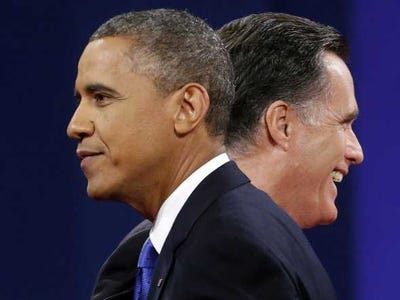
Among the candidates of the Democrat and Republican parties, Obama and Romney, inter-monopoly disputes as well as contradictions in the administration of capitalism and crisis are expressed. But neither of them is an alternative for the working class and the middle strata.

And both of them have the support of the monopoly groups.

The anticommunist attack of the Republican candidate against the Democrat does not express anything but populist demagogy appealing to the reactionary and conservative vote. Nevertheless it produces confusion as it introduces the liberal position of the so called "lesser evil".

During Obama's dwelling in the White House monopolies have benefitted from rescues to avoid bankruptcy, assaulting workers, not only with impoverishment and unemployment, but with the usage of public funds to the detriment of pensions, health care, social funds, etc.

The shades between Obama and Romney must not pigeonhole North American workers into the fake contrast of choosing the lesser evil. The rhetoric of differences between them turns to dust when confronted with the facts.

Obama, the Nobel prize winner, continues the policy of war in Middle East, the military intervention of imperialist troops to reorganize the sacking of natural resources and exploitation of labor that monopolies practice. Linked to his predecessor Bush, in Iraq and Afghanistan, he has taken military aggression to Libya, Syria and now is seriously destabilizing world peace with the plans against Iran.

In Latin America, Honduras and Paraguay are the signs of the return to antidemocratic coup-tendencies. He has confirmed ties with the Israeli government against the legitimate rights of the Palestinian people. It continues the criminal blockade against the Cuban people and the illegal Guantanamo military base, where outrageous human rights violations are perpetrated every day.

In the domestic life of the US, the Obama policy around the much-publicized health care reform essentially opened up new fields for the commercial exploitation of health and for the profitability of the monopoly groups as is demonstrated by the recent purchase of Amerigroup Corp. by WellPoint, while cutbacks are being made to any basic services for the poorest strata.

The constant assault against the welfare and the stance in relation to migrant workers, are elements that allow us to be sure that it was all about vain electoral promises, to attract the liberal voters, to which the class forces regrettably joined.

The fact that US monopoly's power, the North American state, does not admit spaces in its democratic façade for working class representatives must be denounced.

It is very negative that an autonomous and independent position of the US working class is not expressed.

The class character of both parties binds them, in view of capitalist crisis, to prepare a program of more aggressions against the working class, the American people, and the peoples of the world.

We consider that the fake dilemma of avoiding the triumph of the "ultra-right" by supporting the less right-wing must be rejected.

Whoever may win, the monopolies win, and illusions must not be sowed among the US working class. On the contrary, knowing beforehand what the content of the next government will be, a struggle against all the savage attacks must be prepared, a struggle against the sacrifices that monopoly power will try to impose, a confrontation that must ignite from the first minute of the next government.

We have great faith in the US proletariat, in its ability to recover the glorious traditions of the class and communist movement, of John Reed, William Foster, Gus Hall and struggle for its objectives of emancipation and new life, for socialism and communism.

Workers of the world, unite!

Workers' Party of Belgium
Communist Party of Greece
Hungarian Communist Workers' Party
Socialist Party of Latvia
Communist Party of Luxembourg
Communist Party of Mexico
Communist Workers Party of Russia - Revolution Party of Communists (RKRP-RPC)
Communist Party of the Peoples of Spain
Communist Party of Turkey
Union of Communists of Ukraine
Communist Party of Venezuela

October 11, 2012

Anger about Malala Yousafzai should not be used for more war


We reprint this letter to the editor calling for the deplorable attack on young Pakistani woman Malala Yousfzai to not be an excuse to whip up war fever by imperialism.


Dear Editor,

Your editorial (Why the Taliban are afraid of a 14 year-old girl, Oct 10th 2012) perversely exploits the attack on Malala Yousafzai by calling for "overwhelming force to bear" on the Taliban.  Malala herself in an interview with CNN last year said deal with the Taliban through talks and building more schools.  Using force has only lead to killing more young women, not making them safer.  For example in May a New York Times article described how President Barack Obama hand-picked a 17 year-old girl to be killed by drone without a trial.  The UK Bureau of Investigative Journalism estimates about 175 children have been killed by drones, and says the US sends a 2nd round of drones every attack which kills rescue workers.  Last month NATO admitted its bombs killed 8 Afghan women and girls collecting firewood.  Anger at the attack on Malala should not be used for more war which will kill more girls and women, that is senseless and not what Malala stood for.

S. Saleh Waziruddin
Niagara Falls, Ontario

Find out more:

CNN interview clip

Secret ‘Kill List’ Proves a Test of Obama’s Principles and Will

'Double tap' By Gwynne Dyer

Afghanistan: Nato admits up to eight women killed in airstrike


Popular stories