Showing posts with label socialism. Show all posts

November 25, 2019

Two Degrees between Me and Fidel


By Abram Lutes 

History is not made by individuals, but sometimes history places individuals at the heart of momentous events. The leadership and moral character of these individuals can thus, sometimes, change the world.

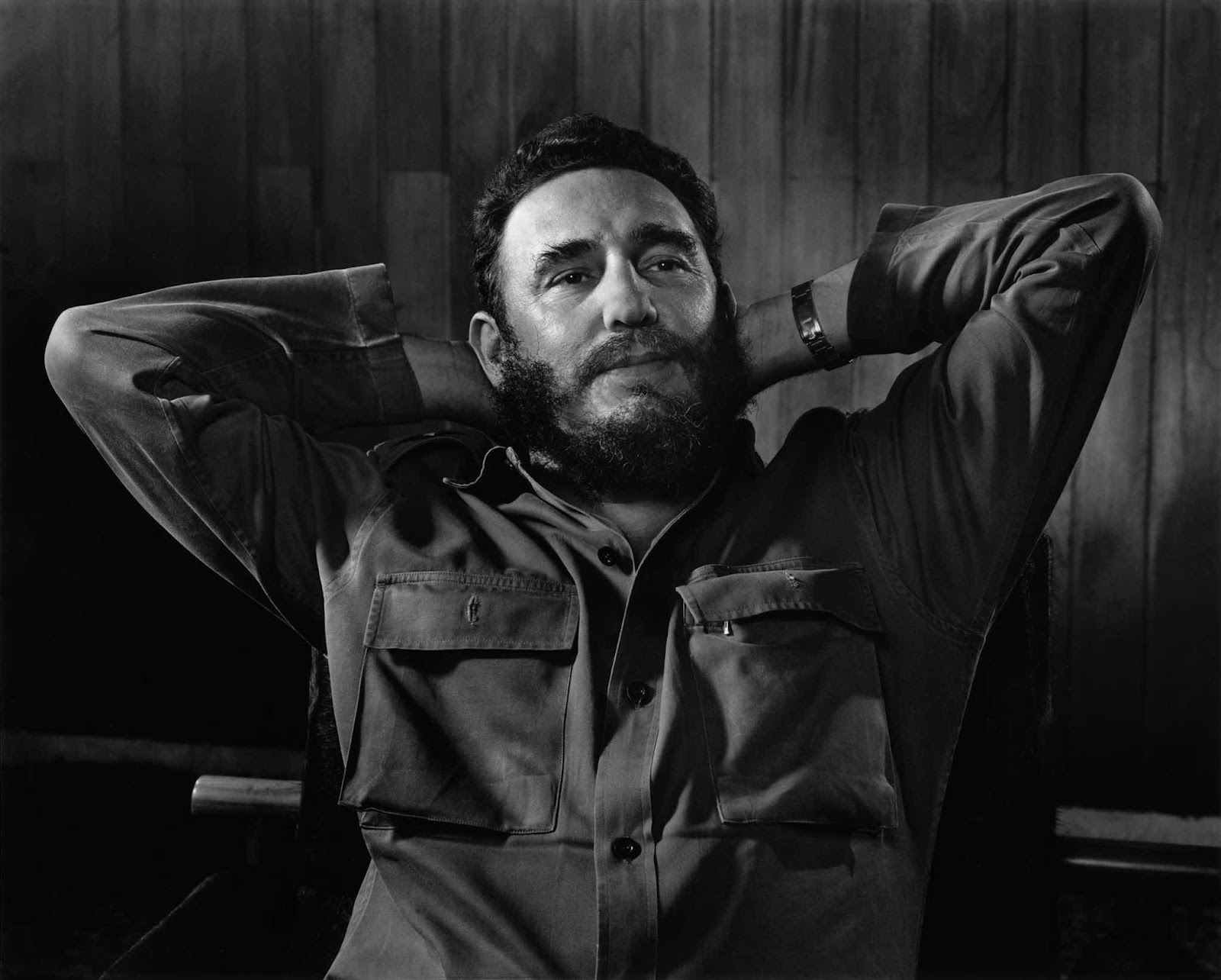
Fidel Alejandro Castro Ruz is one such individual, also known simply as “Castro”, or affectionately just “Fidel” in much of Latin America. Having spent some time in Latin America, I too think of him as Fidel.


July 24, 2019

Anti-communism and Vice Media : is all alternative media really progressive?

Special to RY 

This article is a response of the YCL-LJC Canada to an article published on July 24th by Vice Media.

In an article published online on July 24th, the so-called alternative media reported on two young men, Kam McLeod and Bryer Schmegelsky, both researched by the RCMP in relation with two murders that occured in BC on July 14th. Reporting on facts revealed by the Globe and Mail linking these two individuals to ultra-right, neonazi and violent groups especially, the Vice article also states that « on Facebook, Schmegelsky also liked the Young Communist League of Victoria page » before continuing to enumerate his gun loving activities.

April 28, 2016

May Day 2016: Events across Canada

Special to RY

Rebel Youth sends revolutionary greetings to all those participating in May Day events across the country this year!

In recent years there has been a renewal of the May Day tradition which this year is 130 years old. In the context of capitalism's economic and environmental crises International Workers' Day is as relevant as ever. Long live May Day!

Events throughout the country:

March 3, 2016

Meet the Communists on McMaster campus


Ajit Singh & Mike Van Arragon

While tabling on campus, and being active in the student movement, the YCL Hamilton noticed that some students have unfounded anti-communist prejudices.

At the same time, when engaging with students the comrades in Hamilton found that many students are concerned with many of the same political struggles as the young Communists; against climate change, war, inequality and exploitation, racism, sexism, transphobia and homophobia, for example.

This opinion piece was prepared for the student press in order to fight anti-communism on campus and give the YCL Hamilton a space to describe themselves in their own words.

The following article is republished from McMaster’s student newspaper the Silhouette.

October 7, 2015

Harper’s History Lesson: anti-communism and war

Brendan Campisi

The Harper government's planned 'Memorial to the Victims of Communism', which will take its place in Ottawa between the Supreme Court and Library and Archives Canada, has come under scrutiny lately because of the significant and growing cost of the project. Shirley Blumberg, an architect who was on the jury that selected the design for the 'memorial', said in December that there is no way it will be completed for the government's estimated cost of $5.5 million. A growing chorus of establishment figures have criticized the project for its costs, the aesthetic damage they say it will do to central Ottawa, and the (at least) questionable necessity of such a memorial. The government has committed to paying $3 million of the cost of the project, while the rest is supposed to be paid by Tribute to Liberty, the anti-communist organization formed in 2008 to advocate for the project. However, they have so far had trouble raising the money. In fact there seems to be very little public interest in or support for the memorial, as any glance at the comments under a story on the project will reveal. Even many Canadians with no particular sympathy for communism cannot understand why the Harper government wants to spend several million dollars to put up a memorial to the victims of communism on prime central Ottawa real estate.

March 8, 2015

¡REVOLUCIONARIAS!

Róisín Lyder

Rebel Youth presents 10 biographies of revolutionary women!

Angela Davis

“The idea of freedom is inspiring. But what does it mean? If you are free in a political sense but have no food, what’s that? The freedom to starve?”

Angela Davis first became involved in the black liberation and communist movements in the late 1960s as a professor at the University of California Los Angeles. As an outspoken critic of US imperialism and white supremacy, Davis was targeted for persecution and was imprisoned in 1970 on charges of murder and kidnapping. After a massive mobilization across the world demanded her freedom, Davis was acquitted in 1972. She has continued her political work to this day, as well as pioneering theoretical work on the relationship between race, class, and gender and on incarceration. Lefties today are sometimes still spotted sporting a nostalgic ‘Free Angela!’ button.

April 1, 2014

Ex-CIA agent reveals how Venezuelan “students” get putschist training

First published in Spanish on Aporrea.org, translated into English by Sabina C. Becker

Raúl Capote is a Cuban. But not just any Cuban. In his youth, he was caught up by the US Central Intelligence Agency (CIA). They offered him an infinite amount of money to conspire in Cuba. But then something unexpected for the US happened. Capote, in reality, was working for Cuban national security. From then on, he served as a double agent. Learn his story, by way of an exclusive interview with Chávez Vive, which he gave in Havana:

Q. What was the process by which you were caught up?

It started with a process of many years, several years of preparation and capture. I was leader of a Cuban student movement which, at that time, gave rise to an organization, the Saiz Brothers Cultural Association, a group of young creators, painters, writers, artists. I worked in a city in southern-central Cuba, Cienfuegos, which had characteristics of great interest to the enemy, because it was a city in which an important industrial pole was being built at the time. They were building an electrical centre, the only one in Cuba, and there were a lot of young people working on it. For that reason, it was also a city that had a lot of young engineers graduated in the Soviet Union. We’re talking of the last years of the 1980s, when there was that process called Perestroika. And many Cuban engineers, who arrived in Cuba at that time, graduated from there, were considered people who had arrived with that idea of Perestroika. For that reason, it was an interesting territory, where there were a lot of young people. And the fact that I was a youth leader of a cultural organization, which dealt with an important sector of the engineers who were interested in the arts, became of interest to the North Americans, and they began to frequent the meetings we attended. They never identified themselves as enemies, or as officials of the CIA.

January 28, 2014

Cooperatives: A Cure for Capitalism?

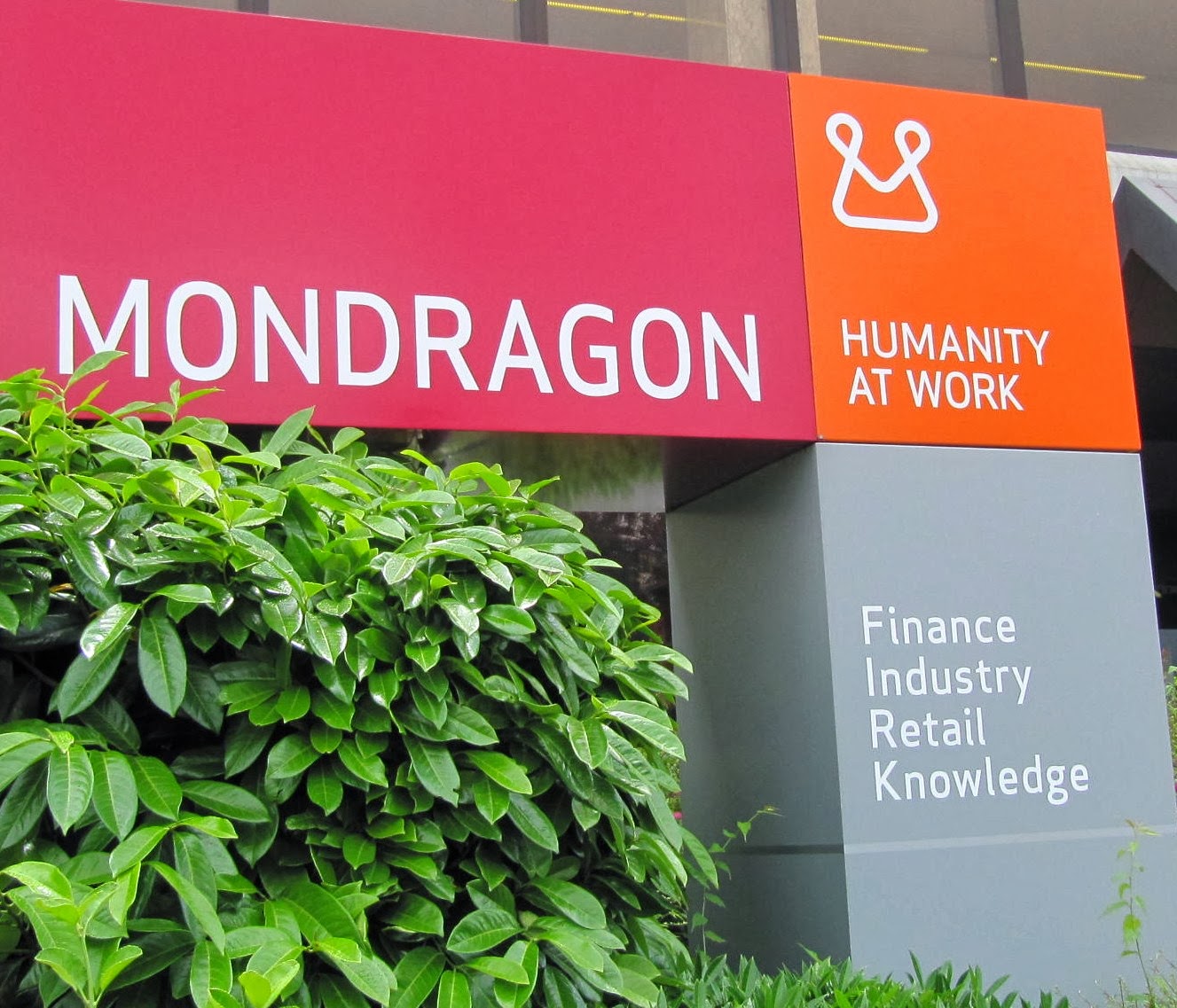
The Mondragon is the one of the largest worker-owned
cooperatives in the capitalist world, located in the Basque region
of Spain and has been a source of anti-capitalist inspiration
By Zoltan Zigedy,
Marxism Leninism Today

Co-ops -- cooperative economic enterprises -- have been embraced by significant groups of people at different times and places. Their attraction precedes the heyday of industrial capitalism by offering a means to consolidate small producers and take advantage of economies of scale, shared risk, and common gain.

At the advent of the industrial era, cooperatives were one of many competing solutions offered to ameliorate the plight of the emerging proletariat. Social engineers like Robert Owen experimented with cooperative enterprises and communities.

In the era of mass socialist parties and socialist construction, cooperatives were considered as intermediate steps to make the transition from feudal agrarian production towards socialist relations of production.

Under the capitalist mode of production, co-ops have filled both employment and consumption niches deferred by large scale capitalist production. Economic activities offering insufficient profitability or growth have become targets for cooperative enterprise.

November 7, 2013

Anniversary today of the Great October Socialist Revolution

Editorial Board,
Rizospastis - Greece

Ninety-six years ago today, the Great October Socialist Revolution took place. It was the most momentous event in the 20th century. It paved the way for the development of a higher level of social evolution, in the form of socialism, with a view to the classless communist society. It embodied the dreams and hopes of the "damned of the Earth" to storm heaven on earth. Red October became a base and a launchpad for the operation of an enormous effort of resistance by millions of ordinary working people, to abolish class exploitation. It was the creation of the organized political struggle of the popular masses led by the working class, which in turn was led by the Communist Party, that confirmed humanity had entered a new historical era. The revolution showed, from the early 20th century onward, that capitalism is historically obsolete as socioeconomic system and can not drive social change towards progress, so it needs to replaced by its gravediggers.

September 1, 2013

The Soviet experience with socialism

Excerpt from Chapter Seven, "Building Socialism" from Canada's future is socialism, the Programme of the Communist Party of Canada

It is particularly important to assess the experiences and draw certain lessons from the development of socialism in the first workers’ state – the Soviet Union – and to understand why socialism was overturned, and capitalism restored, after more than seventy years. The question demands the most searching thought and discussion, for two reasons.

On the one hand, understanding both the great achievements of the Soviet people and the external and internal causes responsible for their grave setback can help Canadians in building socialism while avoiding the repetition of what went wrong there.

Secondly, the defeat of socialism in the USSR is a powerful ideological weapon in the hands of monopoly capitalism, which it uses in order to convince workers and progressive-minded people that socialism does not work. By negating socialism as the revolutionary alternative to capitalism, big business seeks to discourage the workers and weaken their class struggle, and instead lead them to find an accommodation with the prevailing capitalist order.

We reject the bourgeois contention that socialism is a failure, that it is an inherently inferior and unworkable alternative to capitalism. Socialism was weakened and ultimately crushed in the USSR (and in other former socialist countries) as a result of a complex combination of interrelated internal and external circumstances and contradictions which culminated in its defeat and the temporary victory of counterrevolution.

The October 1917 Socialist Revolution in Russia marked a genuine new dawn in human social development. For the first time in history, workers set out to build a new society free from exploitation and oppression. The Soviet Union scored many great social achievements, overcoming unemployment, illiteracy, starvation, homelessness, and deep alienation. Socialism in the Soviet Union transformed an economically and culturally “backward” country to one of the world’s leading powers, and made great advances in culture and science.

These achievements were all the more remarkable, considering the relentless imperialist pressures against the USSR throughout its history. In its unflagging efforts to crush socialism, imperialist powers twice undertook direct military invasions (in the first of which Canada participated). They applied harsh economic sanctions, and precipitated an immensely expensive and dangerous nuclear arms race to bleed the USSR white, while sustaining a prolonged ideological and propaganda war, and resorting to outright subversion and sabotage.

Internationally, the Soviet Union played the decisive role in the defeat of European fascism in World War II, championed the cause of decolonization, supported liberation movements throughout the Third World, and provided vital assistance to the newly emergent states. Its peace policy also restricted – though it could not entirely suppress – imperialism’s tendency to military aggression.
Socialism also benefited the working class in the advanced capitalist countries, greatly strengthening the pressure on the ruling classes to grant substantial concessions to working people in the form of labour rights, the forty-hour work week, unemployment insurance, women’s rights, health care, public education, and pensions.

The internal causes of the crisis and defeat of socialism in the Soviet Union were not rooted in the intrinsic nature of socialism, but rather involved distortions and outright departures from socialist theory and practice. They arose, in part, from the extremely difficult conditions under which socialism was built.

Pre-revolutionary Russia was a sprawling, but economically under-developed country. It had a massive peasant population, but a relatively small working class. Poverty and illiteracy were rampant. The First World War, and Civil War that followed, worsened the conditions which confronted the young Soviet republic. However, owing to the unslacking hostility of imperialism – not least, from Nazi Germany, which invaded in 1941 – it was necessary to bring about modern industrialization at a stupendous pace.

In large measure, the adverse objective conditions forced the Soviet government to accelerate the socialist transformation of economic and social life, rapidly jumping over many transition stages in building socialism which would have made for a much more balanced process of development. One of the serious errors was the failure to retain the independent character of Soviet trade unions as the self-defence organizations of Soviet workers.

In these conditions, the Communist Party of the Soviet Union had to assume the task of comprehensively representing the leading role of the working class. The Soviet working class itself was battered and massively decimated by the two brutally destructive wars fought on Soviet soil, with the places of the fallen and the administratively promoted being taken by inexperienced new workers recruited from the countryside.

This partly explains, but does not justify, the way that the operations of the Party increasingly merged with the functions of the state, in particular with the administrative-bureaucratic apparatus which necessarily arose to centralize and tightly control the country’s scarce and depleted resources. Nor do these difficult conditions justify the serious violations of socialist legality, purges, and serious crimes against innocent people.

Important economic successes were achieved with central economic planning for several decades. It was not planning as such, but rather stifling rigidities and a myriad of other distortions in the principles of socialist construction, combined with external imperialist pressures, that undermined the ability of socialist societies to master the scientific and technological revolution.

As a result, the USSR and other socialist countries fell dangerously behind the developed capitalist countries in labour productivity and the material standard of living. This had destabilizing consequences.

The Party itself became ever more integrated into the administration of the state. The functions of the elected Soviets (people’s governing councils) became increasingly formal in character. Genuine popular governance with open criticism gave way to bureaucracy and commandism.

Over time, the political connection between the Party and the working class and people as a whole suffered. Inner-party democracy was also eroded, too often replaced by careerism and opportunism inside the Party.

Great strides were made in advancing the conditions of Soviet women, especially on the job. But sexist limits to the emancipation of women were allowed to pass unchallenged.

All these negative developments reflected a degeneration of the central role of socialist democracy in the construction of a workers’ state, and stunted the development of the political role of the working class and its allies in leading this transformation and the building of a new socialist society.

Indeed, the violation of socialist democracy and legality was a major factor in eroding the people’s participation in the government and in the state, and led to widespread cynicism and social alienation.

There was also a dogmatic ossification of theory which increasingly sapped the Party’s dynamism and prevented a real analysis of concrete conditions and problems in the building of socialism.

Serious theoretical errors resulted – in estimating the world situation, in underestimating the resilience of capitalism, in proclaiming the irreversibility of socialist advances and relying on a military balance of forces between socialism and capitalism, as well as errors and insensitivity.

For instance, the national question was proclaimed to have been fully “solved,” and socialism was all but declared to have eliminated the need for any ecological concern. The shutdown of public and inner-party debate on such questions adversely affected the foreign and domestic policies that flowed from these mistakes.

The most costly result of the stagnation of Marxist-Leninist theory was the weakening of the Party itself, including its ability to identify and combat the rise of bourgeois, reformist and openly counter-revolutionary ideology within and beyond its own ranks.

In the presence of these internal and external factors, opportunist and counter-revolutionary forces gained the upper hand within the leadership of the Party, and finally brought about the collapse of the Soviet system and with it the other socialist states of Europe. Since the collapse of socialism, working people in these former socialist countries face massive privatization and the theft of social property, mass unemployment and poverty, the drastic erosion of education, health care and other social rights, the rise of organized crime and corruption, and the rise of ethnic and racial hatred.

June 17, 2013

Force and the struggle for a socialist Canada


This article is part of an seven-part series of short quotes Rebel Youth is issuing about class struggle, revolution, civil-war, and parliamentary democracy. See also: Lenin on elections; the Communist Party of Canada on a counter-offensive against capitalism; Engels on voting and street fighting; Lenin on Democracy and Class struggle; Communist and Worker's parties on the struggle for socialism; and Lenin on tactics and guerilla war; the Communist Party of Canada on force, and a peaceful transition to socialism.

A democratic, anti-monopoly, anti-imperialist alliance will have as its objective the democratic restructuring of Canadian society so that the interests of the majority of Canadians come first, and the stranglehold of finance capital on every aspect of life is broken. It will seek to advance the working people’s interests through all available avenues of struggle, based on massive and united extra-parliamentary action.

The alliance will strive to score electoral advances, and the winning of power by a people’s government dedicated to carrying out sweeping measures to democratize society and transform economic relations in the interests of the working class and the Canadian people as a whole.

Such a breakthrough will be difficult to accomplish given the sophisticated means at the disposal of the ruling class to manipulate public opinion, discourage political activism and otherwise influence the outcome of bourgeois elections. A crucial task for the alliance will be to defend and expand democracy and to fight against corporate and governmental attacks on the electoral process.

A democratic, anti-monopoly government, based on a parliamentary majority, and acting in concert with the united and militant extra-parliamentary movements of the people, would signal a qualitative shift in the balance of class forces in Canadian society, and open the door to the revolutionary transformation to socialism. It would involve the people in a truly meaningful way.

The people’s government would be committed to a program of action geared to serve people before profit. That program would arise in the course of the social, economic and political struggles of the working class and its democratic allies, and be subject to the widest discussion and approval among all of the forces of the alliance.

Communists will struggle to win support for the most advanced program of political, economic and social transformation possible in line with the changing conditions. The program must aim: (1) to confront and restrict the power of finance capital (both foreign and domestic), and to extend public ownership of key sectors of the economy; (2) to redistribute wealth and raise the living standards and conditions of life for the vast majority of the people; and (3) to introduce sweeping democratic reforms to enhance popular control and administration of the Canadian state at all levels of government. (...)

Although such measures would not constitute socialism, the victory of a people’s government devoted to carrying out such a broad program would mark a significant step in the struggle for fundamental change and socialist transformation.

To succeed, a people’s government would require the full and conscious mobilization of the working class and its allies outside Parliament. With each meaningful reform enacted, with each democratic measure secured, with each encroachment on the power and privilege of capital, the ruling class and its imperialist international partners would stiffen their resistance by all means at their disposal. But, at the same time, such measures can help to galvanize the masses, and promote working class actions in support of the people’s government.

This would be a period of intensified class struggle on all fronts – political, economic and ideological.

The successful implementation of the people’s program, and the pace with which it is carried out will depend on the unity and militancy of the working class and its revolutionary vanguard, and on the enduring unity of the entire democratic, anti-monopoly, anti-imperialist alliance. Prevailing regional and international conditions will also affect the pace of social transformations.

Throughout this process there will be social and political mobilization of the working class and people’s forces to support and implement the program of the people’s government – through electoral and workplace struggles, street demonstrations and other actions. At the same time, the threatened ruling class will attempt to shake the confidence and unity of the people’s forces and to frustrate their ability to carry out the people’s program.

To preserve its class privileges and re-establish its supremacy, the capitalist class will be inclined to resort to economic blackmail and sabotage, subversion from within those sections of the state apparatus it still influences and controls, political violence and terrorism, and even open rebellion and foreign intervention. The people’s government, with the full support of the working class, will be fully within its rights to counter any such anti-democratic and illegal assaults on people’s power

From Chapter 6 of the Programme of the Communist Party of Canada

June 10, 2013

Tactics, guerilla war and the struggle for socialism


This article is part of an seven-part series of short quotes Rebel Youth is issuing about class struggle, revolution, civil-war, and parliamentary democracy. See also: Lenin on elections; the Communist Party of Canada on a counter-offensive against capitalismEngels on voting and street fightingLenin on Democracy and Class struggleCommunist and Worker's parties on the struggle for socialism; and Lenin on tactics and guerilla war; the Communist Party of Canada on force, and a peaceful transition to socialism.


Let us begin from the beginning. What are the fundamental demands which every Marxist should make of an examination of the question of forms of struggle? In the first place, Marxism differs from all primitive forms of socialism by not binding the movement to any one particular form of struggle. It recognises the most varied forms of struggle; and it does not “concoct” them, but only generalises, organises, gives conscious expression to those forms of struggle of the revolutionary classes which arise of themselves in the course of the movement. Absolutely hostile to all abstract formulas and to all doctrinaire recipes, Marxism demands an attentive attitude to the mass struggle in progress, which, as the movement develops, as the class-consciousness of the masses grows, as economic and political crises become acute, continually gives rise to new and more varied methods of defence and attack. Marxism, therefore, positively does not reject any form of struggle. Under no circumstances does Marxism confine itself to the forms of struggle possible and in existence at the given moment only, recognising as it does that new forms of struggle, unknown to the participants of the given period, inevitably arise as the given social situation, changes. In this respect Marxism learns, if we may   so express it, from mass practice, and makes no claim what ever to teach the masses forms of struggle invented by “systematisers” in the seclusion of their studies. We know—said Kautsky, for instance, when examining the forms of social revolution—that the coming crisis will introduce new forms of struggle that we are now unable to foresee.

In the second place, Marxism demands an absolutely historical examination of the question of the forms of struggle. To treat this question apart from the concrete historical situation betrays a failure to understand the rudiments of dialectical materialism. At different stages of economic evolution, depending on differences in political, national-cultural, living and other conditions, different forms of struggle come to the fore and become the principal forms of struggle; and in connection with this, the secondary, auxiliary forms of struggle undergo change in their turn. To attempt to answer yes or no to the question whether any particular means of struggle should be used, without making a detailed examination of the concrete situation of the given movement at the given stage of its development, means completely to abandon the Marxist position.

Lenin, Guerilla warfare (1906)

May 22, 2013

The peaceful struggle for socialism

This article is part of an seven-part series of short quotes Rebel Youth is issuing about class struggle, revolution, civil-war, and parliamentary democracy. See also: Lenin on elections; the Communist Party of Canada on a counter-offensive against capitalismEngels on voting and street fightingLenin on Democracy and Class struggleCommunist and Worker's parties on the struggle for socialism; and Lenin on tactics and guerilla war; theCommunist Party of Canada on force, and a peaceful transition to socialism.

From November 14-16, 1957, representatives of 12 Communist and Workers Parties of Socialist countries, came together in Moscow for the celebration of the fortieth anniversary of the great October Socialist Revolution in Russia, and adopted a declaration, from which is taken this excerpt about the struggle for socialism. Among the endorsers were the Communist Party of China and the Communist Party of the Soviet Union. The text below is one section of the full statement.

The forms of the transition of socialism may vary for different countries. The working class and its vanguard—the Marxist-Leninist party—seek to achieve the Socialist revolution by peaceful means. This would accord with the interests of the working class and the people as a whole as well as with the national interests of the country.

Today in a number of capitalist countries the working class headed by its vanguard has the opportunity, given a united working-class and popular front or other workable forms of agreement and political cooperation between the different parties and public organizations, to unite a majority of the people, to win state power without civil war and ensure the transfer of the basic means of production to the hands of the people. It has this opportunity while relying on the majority of the people and decisively rebuffing the opportunist elements incapable of relinquishing the policy of compromise with the capitalists and landlords. The working class then, can defeat the reactionary, anti-popular forces, secure a firm majority in parliament, transform parliament from an instrument serving the class interests of the bourgeoisie into an instrument serving the working people, launch a non-parliamentary mass struggle, smash the resistance of the reactionary forces and create the necessary conditions for peaceful realization of the socialist revolution.

All this will be possible only by broad and ceaseless development of the class struggle of the workers, peasant masses and the urban middle strata against big monopoly capital, against reaction, for profound social reforms, for peace and socialism.

In the event of the ruling classes resorting to violence against people, the possibility of non-peaceful transition to socialism should be borne in mind. Leninism teaches, and experience confirms, that the ruling classes never relinquish power voluntarily. In this case the degree of bitterness and the forms of the class struggle will depend not so much on the proletariat as on the resistance put up by the reactionary circles to the will of the overwhelming majority of the people, on these circles using force at one or another stage of the struggle for socialism.

The possibility of one or another way to socialism depends on the concrete conditions in each country. In the struggle for better conditions for the working people, for preservation and extension of democratic rights, winning and maintaining national independence and peace among nations, and also in the struggle for winning power and building socialism, the Communist Parties seek cooperation with the Socialist parties. Although the Right-Wing Socialist Party leaders are doing their best to hamper this cooperation, there are increasing opportunities for cooperation between the Communists and Socialists on many issues. The ideological differences between the Communist and the Socialist parties should not keep them from establishing unity of action on the many pressing issues that confront the working-class movement.

Declaration of the Twelve Communist and Workers Parties, Meeting in Moscow, USSR, Nov. 14-16, 1957

May 20, 2013

Force and the peaceful transistion to a socialist Canada

This article is part of an seven-part series of short quotes Rebel Youth is issuing about class struggle, revolution, civil-war, and parliamentary democracy. See also: Lenin on elections; the Communist Party of Canada on a counter-offensive against capitalismEngels on voting and street fightingLenin on Democracy and Class struggleCommunist and Worker's parties on the struggle for socialism; and Lenin on tactics and guerilla war; theCommunist Party of Canada on force, and a peaceful transition to socialism.

Ample historical evidence testifies to the fact that reactionary capitalist forces will not give up their power and privilege voluntarily. They will try to halt the democratic process. The danger will inevitably arise of capitalist violence against the socialist state and the expressed will of the majority of the people. This cannot be overlooked except at severe cost. The working class and its allies, when they achieve socialist power, will be justified in using the power and authority of the state to protect the democratic will of the majority against the minority, who will strive to restore their lost positions. The nature of the laws and measures enacted to protect working class power will depend on the amount of resistance that the reactionary capitalist elements offer to socialist law and order.

The peaceful transition to socialism, which is desirable, depends not only on the wishes of the people but on the relationship of forces at the time. The maximum unity and single-minded purpose of the people, the united participation of the widest masses of the working class in political struggle and the forging of unity with the small producers (farmers, fishers and artisans) and with the middle strata of the population will be crucial to withstand and paralyze capitalist violence and political reaction. The working class must be ready to use all forms of struggle to combat capital’s inevitable resistance to social progress.

For the first time in Canada’s history, however, the majority of the people will rule the country and establish a genuine democracy. The dictatorship of capital over labour – the rule of the minority over the majority – will be abolished and replaced by a socialist democracy in which political power will reside with the working class and its allies. For the first time, the interests of the Canadian people will be the prime determinant of our economic, political and cultural life.

Irrespective of the form it will take, the socialist state, from the point of view of its class essence, will represent working class rule. Marx referred to this as “the dictatorship of the proletariat.” In practical terms, state power will be exercised by the great majority of the Canadian population – over the former capitalist minority.

From Chapter 7 of the Programme of the Communist Party of Canada

May 15, 2013

Revolutionary tactics: Engels on voting and street fighting

This article is part of an seven-part series of short quotes Rebel Youth is issuing about class struggle, revolution, civil-war, and parliamentary democracy. See also: Lenin on elections; the Communist Party of Canada on a counter-offensive against capitalismEngels on voting and street fightingLenin on Democracy and Class struggleCommunist and Worker's parties on the struggle for socialism; and Lenin on tactics and guerilla war; theCommunist Party of Canada on force, and a peaceful transition to socialism.


There had long been universal suffrage in France, but it had fallen into disrepute through the way it had been abused by the Bonapartist government. After the Commune there was no workers’ party to make use of it. It had also existed in Spain since the republic but in Spain election boycotts had been the rule for all serious opposition parties from time immemorial. The experience of the Swiss with universal suffrage was also anything but encouraging for a workers’ party. The revolutionary workers of the Latin countries had been wont to regard the suffrage as a snare, as an instrument of government trickery. It was different in Germany.

The Communist Manifesto had already proclaimed the winning of universal suffrage, of democracy, as one of the first and most important tasks of the militant proletariat, ["the first step in the revolution by the working class is to raise the proletariat to the position of ruling class to win the battle of democracy" source] and Lassalle had again taken up this point.

Now that Bismarck found himself compelled to introduce this franchise as the only means of interesting the mass of the people in his plans, our workers immediately took it in earnest and sent August Bebel to the first, constituent Reichstag.

And from that day on they have used the franchise in a way which has paid them a thousandfold and has served as a model to the workers of all countries. The franchise has been, in the words of the French Marxist programme, transformé de moyen de duperie qu'il a été jusquici en instrument d'emancipation — transformed by them from a means of deception, which it was before, into an instrument of emancipation. [Engels quotes the theoretical Preamble to the French Workers’ Party’s programme adopted at the 1880 congress in Le Havre. The Preamble was written by Marx.]

And if universal suffrage had offered no other advantage than that it allowed us to count our numbers every three years; that by the regularly established, unexpectedly rapid rise in our vote it increased in equal measure the workers’ certainty of victory and the dismay of their opponents, and so became our best means of propaganda; that it accurately informed us of our own strength and that of all opposing parties, and thereby provided us with a measure of proportion second to none for our actions, safeguarding us from untimely timidity as much as from untimely foolhardiness — if this had been the only advantage we gained from the suffrage, it would still have been much more than enough. But it did more than this by far.

In election propaganda it provided us with a means, second to none, of getting in touch with the mass of the people where they still stand aloof from us; of forcing all parties to defend their views and actions against our attacks before all the people; and, further, it provided our representatives in the Reichstag with a platform from which they could speak to their opponents in parliament, and to the masses outside, with quite different authority and freedom than in the press or at meetings. Of what avail was their Anti-Socialist Law to the government and the bourgeoisie when election campaigning and socialist speeches in the Reichstag continually broke through it?

With this successful utilisation of universal suffrage, however, an entirely new method of proletarian struggle came into operation, and this method quickly took on a more tangible form. It was found that the state institutions, in which the rule of the bourgeoisie is organised, offer the working class still further levers to fight these very state institutions. The workers took part in elections to particular diets, to municipal councils and to trades courts; they contested with the bourgeoisie every post in the occupation of which a sufficient part of the proletariat had a say. And so it happened that the bourgeoisie and the government came to be much more afraid of the legal than of the illegal action of the workers’ party, of the results of elections than of those of rebellion.

For here, too, the conditions of the struggle had changed fundamentally. Rebellion in the old style, street fighting with barricades, which decided the issue everywhere up to 1848, had become largely outdated....

.... Does that mean that in the future street fighting will no longer play any role [in revolution] ? Certainly not. It only means that the conditions since 1848 have become far more unfavourable for civilian fighters and far more favourable for the military. In future, street fighting can, therefore, be victorious only if this disadvantageous situation is compensated by other factors. Accordingly, it will occur more seldom at the beginning of a great revolution than at its later stages, and will have to be undertaken with greater forces. These, however, may then well prefer, as in the whole great French Revolution or on September 4 and October 31, 1870, in Paris, the open attack to passive barricade tactics.

Does the reader now understand why the powers-that-be positively want to get us to go where the guns shoot and the sabres slash? Why they accuse us today of cowardice, because we do not take without more ado to the streets, where we are certain of defeat in advance? Why they so earnestly implore us to play for once the part of cannon fodder?

Engels, Introduction to Karl Marx’s The Class Struggles in France (1895)

April 30, 2013

Lenin on elections and struggle

This article is part of an seven-part series of short quotes Rebel Youth is issuing about class struggle, revolution, civil-war, and parliamentary democracy. See also: Lenin on elections; the Communist Party of Canada on a counter-offensive against capitalismEngels on voting and street fightingLenin on Democracy and Class struggleCommunist and Worker's parties on the struggle for socialism; and Lenin on tactics and guerilla war; the Communist Party of Canada on force, and a peaceful transition to socialism.

In Western Europe and America, parliament has become most odious to the revolutionary vanguard of the working class. That cannot be denied. It can readily be understood, for it is difficult to imagine anything more infamous, vile or treacherous than the behaviour of the vast majority of socialist and Social-Democratic parliamentary deputies during and after the war. It would, however, be not only unreasonable but actually criminal to yield to this mood when deciding how this generally recognised evil should be fought. (...) Certainly, without a revolutionary mood among the masses, and without conditions facilitating the growth of this mood, revolutionary tactics will never develop into action. In Russia, however, lengthy, painful and sanguinary experience has taught us the truth that revolutionary tactics cannot be built on a revolutionary mood alone. Tactics must be based on a sober and strictly objective appraisal of all the class forces in a particular state (and of the states that surround it, and of all states the world over) as well as of the experience of revolutionary movements. (...) It is very easy to show one’s "revolutionary" temper merely by hurling abuse at parliamentary opportunism, or merely by repudiating participation in parliaments; its very ease, however, cannot turn this into a solution of a difficult, a very difficult, problem. To attempt to "circumvent" this difficulty by "skipping" the arduous job of utilising reactionary parliaments for revolutionary purposes is absolutely childish. You want to create a new society, yet you fear the difficulties involved in forming a good parliamentary group made up of convinced, devoted and heroic Communists, in a reactionary parliament! Is that not childish?

From Lenin, Should we Participate in Bourgeois Parliaments?

January 7, 2013

The class question and the democratic question

This article is part of an seven-part series of short quotes Rebel Youth is issuing about class struggle, revolution, civil-war, and parliamentary democracy. See also: Lenin on elections; the Communist Party of Canada on a counter-offensive against capitalismEngels on voting and street fightingLenin on Democracy and Class struggleCommunist and Worker's parties on the struggle for socialism; and Lenin on tactics and guerilla war; theCommunist Party of Canada on force, and a peaceful transition to socialism.

The right to divorce, by Lenin
August-October, 1916

[...] This question of divorce is a striking illustration of the fact that one cannot be a democrat and a socialist without immediately demanding full freedom of divorce, for the absence of such freedom is an additional burden on the oppressed sex, woman--although it is not at all difficult to understand that the recognition of the right of women to leave their husbands is not an invitation to all wives to do so! [...] Under capitalism it is usually the case, and not the exception, that the oppressed classes cannot "exercise" their democratic rights. In most cases the right to divorce is not exercised under capitalism, because the oppressed sex is crushed economically; because, no matter how democratic the state may be, the woman remains a "domestic slave" under capitalism, a slave of the bedroom, nursery and kitchen. The right to elect "our" judges, public officials, teachers, jurors, etc., cannot be exercised under capitalism, in the majority of cases, because the workers and peasants are economically downtrodden. The same is true of a democratic republic. Our programme "proclaims" the republic as "the sovereignty of the people" although every Social-Democrat knows perfectly well that under capitalism the most democratic republic leads merely to the bribery of the officials by the bourgeoisie and to an alliance between the Stock Exchange and the government.

Only those who are totally incapable of thinking, or those who are entirely unfamiliar with Marxism, will conclude that, therefore, a republic is of no use, that freedom of divorce is of no use, that democracy is of no use, that self-determination of nations is of no use! Marxists know that democracy does not abolish class oppression, but only makes the class struggle clearer, broader, more open and sharper; and this is what we want. The more complete freedom of divorce is, the clearer will it be to the woman that the source of her "domestic slavery" is not the lack of rights, but capitalism. The more democratic the system of government is, the clearer it will be to the workers that the root of the evil is not the lack of rights, but capitalism. The more complete national equality is (and it is not complete without freedom of secession), the clearer will it be to the workers of the oppressed nation that it is not a question of lack of rights, but of capitalism. And so on. [...]

[T]he right to divorce, like all democratic rights under capitalism without exception, is difficult to exercise, is conventional, restricted, formal and narrow. Nevertheless, no respectable Social-Democrat would consider any one who repudiated this right a democrat, let alone a socialist. This is the whole point. "Democracy" is nothing but the proclaiming and exercising of "rights" that are very little and very conventionally exercised under capitalism. But unless these rights are proclaimed, unless a struggle for immediate rights is waged, unless the masses are educated in the spirit of such a struggle, socialism is impossible.

Discussion questions

1. What are Lenin's main point or points in this short quote? What do you think of the claim that just because we call for the right of something, does not mean we necessarily advocate for it?

2. In the past the Young Communist League has divided its educational work into two parts: the class question and the democratic question. What would be examples of "class questions"? what about "democratic questions"? How are they related and/or separate? Could they be opposites? Could they be connected?

3. Lenin claims that without a struggle for immediate rights and democracy being waged, socialism is impossible. Why do you think he makes this claim? What do you think? Is the argument correct or mistaken? How?


Reading more

You can find the original full statement by Lenin From A Caricature of Marxism and Imperialist Economism.

The topic of capitalist democracy is also discussed by Lenin in Chapter 7, "Should we participate in bourgeoisie parliaments?", of his book Left-wing Communism an Infantile disorder.

The connection between democracy and economic struggle, which can be read as a direct comparison with the above article on divorce is found in another short work by Lenin, "Reply to P. Kievsky," especially the section from paragraph 9 "Imperialism is highly developed..." to the end of paragraph 14 "...surrender to opportunism."

The YCL-LJC Canada, "Youth and the Trans-Canada fightback," in the 24th Central Convention Documents of the YCL uses this perspective and connects it with the struggle for reform and revolution. Another Rebel Youth article similar to this theme is Building broad and powerful youth struggles, which we ran back in 2011.

Another good read is State and Revolution by Lenin, particularly Chapter 1 and Chapter 4, section 5.

December 5, 2012

"Bolivarian Revolution"


Luis Carapinha, Communist Party of Portugual

Suddenly, Venezuela has disappeared from the dominant media networks. Instead, if Capriles had won the election on October 7th, all would have been otherwise.

But, on the contrary, Chavez was re-elected with more than eight million votes and winning by 11 percentage points, in elections in which eight out of ten eligible Venezuelans voted. Among the right-wing candidate's supporters, tears are still being wiped off their cheeks.

The Bolivarian victory was predictable by any minimally informed onlooker. The truth is the campaign, monitored from the conspiracy centres, broke all bounds to spread the idea of a "technical draw". The false perspective helped confusion inside and outside Venezuela.

But the evidence of popular triumph disappointed those who planned to de-legitimise the results and de-stabilize the country. That infamous torrent of falsehood will certainly be back shortly.

After fourteen years of an intensive class struggle, the Venezuelan process carries on, giving exemplary lessons of democratic participation and popular unity. Nobody can deny it.

Peaceful but not unarmed, the Bolivarian revolution marches to the rhythm of emancipation, without tiring, in the "representative democracy" framework, to which it's bound, particularly hurting the bourgeoisie and imperialism.

The renewal of President Chavez's constitutional mandate, till 2019, is a window of opportunity to carry on building strength along the transformative path to national independence and to carry out the work of consolidating change demanded by the great masses.

It is a transcendental victory for Latin America, the peoples of the South and the revolutionary and progressive forces' liberation movement throughout the world, at this tumultuous time, with plenty of threats, together with capitalism's structural crisis.

At the same time, there exists an awareness that the revolution, with its own weaknesses and contradictions, is far from being an irreversible achievement.

The 6.5 million votes chalked up by Capriles, even allowing for a demagogic end campaign during which he presented himself as a "democratic left-wing" champion, proves the right-wing holds an important electoral basis of a popular nature. The deep capacity for self-criticism, identification of mistakes and correction of faults are essential elements in a revolutionary process.

But, as Oscar Figueroa, the Venezuelan Communist Party's (PCV) General Secretary states, the advances of the Venezuelan process "are unquestionable and surmount any errors" (in Correo del Orinoco, 12.10.14).

Regarding elections, for now, the battle goes on with the December elections, for governorships and regional councils of the twenty three Venezuelan states.

At the strategic level, attention centers on the approval, in January, of the Second Socialist Management Plan for 2013-19, which is takes as a socialist transition program through the deepening of participative democracy.

In the Plan's introduction, one can read: " the socio-economic model that, nevertheless, prevails within Venezuela, has a capitalist and rentier nature. Socialism, certainly, has only but begun to implant its own internal dynamism(...)."

Precisely. This is a program to ensure and deepen it, focused on a radical suppression of the logic of capital, which ought to be accomplished, step by step, but never retarding the advance towards socialism.

The theoretical and practical challenges placed before the Venezuelan revolution are huge. Popular awareness of progress is an encouraging factor amid this historical process. The PCV insists on the basic need of building unity and strengthening instruments amid collective leadership, in order to safeguard the revolution.

The imperialist threat must not be underestimated, at the precise moment when the IMF 's chief states in Tokyo, that in the core [capitalist] economies average public debt at 110% of GDP, is reaching the war-time level...

Solidarity towards the Bolivarian Venezuela is, more than ever, a current imperative.

August 14, 2011

Democracy in Cuba

A woman votes in a Cuban election.

Reprinted from Green-Left Weekly


Democracy in Cuba and the 1997-98 Elections
By Arnold August
Editorial Jose Marti, Havana Cuba, 1999. 410 pp.
Canada Distribution and Publishing


Book review

Ever wanted an accurate description of Cuba's socialist democracy? Or to know how the Cuban People's Power structures work?

Tracing democracy in Cuba from the struggle against Spanish and US colonialism to the present, August Arnold breathes clarity into a discussion distorted by the US propaganda offensive. This book is significant and should be on every revolutionary's bookshelf.

While most other Spanish colonies were rising up in the 1880s, the Cuban Creole elite, fearing the 40% slave population, kept the Spanish, and their military might, onside. Hence, the 1868 First War of Independence failed due to the division in its leadership.

August chronicles the 1895 Second War of Independence, under the principled leadership of Jose Marti, which challenged the inherent conservatism of the Creole elite. However, on the eve of a Cuban victory in 1898, the US entered the war and brought elections under military rule.

The US forced the infamous Platt Amendment on the newly elected Cuban parliament by only one vote, in June 1901. The amendment gave the US the right to intervene "for the preservation of Cuban independence and the maintenance of a stable government adequately protecting life, property and individual liberty".

From 1901 to 1952 Cuba was subjected to farcical US-backed elections in which politicians bribed, beat and rigged their way into parliament. US investment dominated the economy. By 1926 the majority of the sugar crop was produced by US mills. Twenty-two per cent of all land and 90% of all electrical power were in the hands of the US.

The Cuban masses did not take US subjugation lying down. As August explains, the most nerve-racking period for US was the 1933 uprising. The Communist Party of Cuba (PCC) was a significant political force. A strike wave was followed by a military takeover led by Fulgencio Batista.

Strikes continued in the 1940s and '50s, and both Liberal and Conservative governments lost credibility and the ability to hold back change. In 1952 Batista's behind the scenes role ended; he took power and a period of open dictatorship ensued.

In 1953 a group of revolutionaries attacked the Moncada Barracks and the July 26 Movement was born. Fidel Castro, arrested, gave the famous "History will absolve me" speech in the courtroom and inspired the nation to fight its neo-colonial oppressors.

Democracy in Cuba explains the democratic structures of the Cuban Revolution as evolving during the struggle against Batista. In the liberated areas in the countryside (1954-59), the revolutionaries adopted new laws and introduced the first Workers and Peasant Congresses. Illiteracy in these areas was eradicated and agrarian reform initiated.

Mass participation

After the victory in January 1959, revolutionary militias were formed, the workers and peasants learning military skills. Revolutionary tribunals delivered justice to Batista cronies and army officials. The gradual transfer of economic power into the hands of the people included land reform: holdings were restricted to 1000 hectares, with a few exceptions. Between August and October 1960, 41% of land was expropriated, 95% of industry was nationalised, 98% of construction, 95% of transport, 75% of retail and 100% of wholesale trade.

Castro said at the time ,"To the people whose desperate paths through life have been paved with the bricks of betrayals and false promises, we were not going to say: 'We will eventually give you what you need', but rather, 'Here, have it, fight for it with all your might so that liberty and happiness may be yours'."

Between January and September 1959, about 1500 decrees and laws were enacted. Urban rent was reduced 30-50%; telephone and electricity rates were reduced. Canecutters' wages were increased 15%. The unemployed received jobs, and discrimination against blacks was outlawed.

August explains that masses of ordinary Cubans were involved and leading the revolution; this was made clear in the mass assemblies the provisional government held.

The first, on January 17, attended by more than 1 million Cubans, called on the people to defend the revolution and to decide what to do with Batista's agents.

The next, on January 22, examined the prospect of elections. More than 1 million Cubans attended and booed down the elections proposal. August explains, "In the minds of the people, elections were associated with the neo-colonial regime's multi-party system or the even more fraudulent elections under the open dictatorship, the last of which took place in 1958".

The First Havana Declaration, of September 2, 1960, was discussed at another mass assembly. "The National General Assembly of the People of Cuba expresses its conviction that democracy cannot consist only in an electoral vote, which is almost always fictitious and handled by big landlords and professional politicians, but in the rights of citizens to decide, as this Assembly of the People is now doing, their own destiny."

At this meeting another proposal for elections was put to the people. People spontaneously chanted for over seven minutes against the holding of elections. More than 1 million people voted to approve the Havana Declaration.

Local governments were reorganised, representatives of the mass organisations being elected to local bodies. The Committees for the Defence of the Revolution (CDRs), created in September 1960, in the wake of sabotage and US threats, organised and mobilised the people. In 1972 CDRs included 70% of the Cuban population.
Elections

The book cites the 1970 failure to meet the target 10 million ton sugar harvest as the catalyst for further institutionalising the revolution.

The Cuban assessment was that workers' decision-making at the local level had been increasingly reduced to a symbolic level. It was acknowledged that the party had placed too much emphasis on the day-to-day running of the state and economic enterprises to the detriment of its role as a moral and political authority.

August documents the 1970s revamping of mass organisations and a clarification of the PCC's role. In many administrative positions workers began to replace PCC cadre.

After a May 1970 pilot election project in the province of Matanzas, a new constitution was discussed in the mass organisations and in workplaces. After this consultation, a referendum was held in which 98% of the population voted, 97.7% approving the constitution.

Elections took place across the country in 1976. By the 1980s, one-third of the national economy was under the supervision of local municipal assemblies. Between 1977 and 1983 local industries under such supervision tripled the value of their output.

Mass meetings did not end with the introduction of elections to the Organs of People's Power. Mass workplace meetings took place during the 1986 "rectification" period. During the economic crisis in the '90s, more than 3.5 million Cubans participated in 80,000 assemblies in which 1 million speakers took the floor, raising 500 issues.

Local assemblies

August witnessed the 1997-98 elections in Cuba and gives a detailed account of the process.

The electoral system has a broadly pyramidal structure. Delegates are elected by the people to the municipal (local), provincial (10-15 municipalities) and national assemblies. All delegates are accountable and recallable by the people who elected them.

Most delegates don't receive a wage and continue their original job while working as a delegate. The paid delegates receive an average worker's wage. Hence there are no material privileges in becoming a delegate.

Anyone who is over 16, and neither in prison nor deemed mentally unfit, can vote and become a delegate. All voting is voluntary.

Elections to the local municipal assemblies take place every two and a half years; delegates to the national and provincial assemblies are elected for a five-year term. All delegates to all levels are directly elected; prior to 1992, only municipal delegates were directly elected.

Local assemblies take care of housing, food, health and education and have an important political role: involving the people in day to day running of their system.

The local municipal assemblies are subdivided into constituencies for elections. An average constituency in Havana covers six small blocks. Voting takes place in electoral colleges which are small enough for people to come, register and see who is registered to vote. On average there are 300 people per college.

For nomination meetings for municipal elections, constituencies are divided into smaller areas, with 100 or so people. Nominations come from the floor. Meetings are held where people live, in the street, park or meeting hall. Anyone can turn up, but only registered persons can vote.

At least two people must be nominated. Voters can nominate people not in their nomination area. By law, political motivations have to follow nominations.

The nominees submit a one-page biography, including a description of how they view the role of delegate, which is placed in the electoral colleges for all to see. Most of the people in the constituency know the nominees already, and the biographies stand as a reminder. No money enters the elections, and there's no number-crunching preselection process.

By law, the PCC has no formal role in the electoral process. Contrary to US propaganda, anyone can be elected to the Cuban parliament. People vote for candidates who are known to them, and whom they have listened to and questioned. Candidates are elected on the basis of the role they have played in the community and the work they have done in society.

On election day Cubans show their identity cards at the electoral colleges, and the vote takes place under the eyes of schoolchildren. In October 1997, 97.59% of the population voted. Only 3.98% of ballots were spoiled and 3.23% blank. Only 47.65% of the delegates were re-elected.
Provincial and national elections

Provincial assemblies oversee roads, child-care, education and health. The National Assembly, made up of 601 delegates, meets twice a year and has permanent working bodies which meet daily or weekly. The NA elects the 31 members of the Council of State, which meets during the times the NA is not sitting.

Delegates to the provincial and national assemblies are often national leaders in their fields — from sports to journalism to medicine to politics. They are nominated, not primarily by local meetings, but by meetings of mass organisations and workplaces and neighbourhoods. The process is overseen by candidacy commissions at municipal, provincial and national levels.

The National Candidacy Commission, prior to 1992s, was headed by someone appointed by the PCC. Now, the head of the Cuban Trade Union Federation heads it. The commissions cannot be headed by anyone who is a candidate. Mass organisations, particularly the CDRs, appoint activists to the candidacy commissions.

The commissions are required to consult as many people as possible. In 1997 there were 60,000 nominations from the consultation process. A list of the 300 people most nominated is taken back to the mass organisations, neighbourhoods and workplaces to see what support it gets. When that process is over, the list is taken to the newly elected municipal assembly and voted upon.

The municipal assembly can reject the 300 nomination slate in full or in part and can nominate other people. All pre-candidates must get 50% or more of the vote; if the 50% isn't reached, then the municipal candidacy commission must propose other candidates.

After the vote, the candidates are allocated districts. Electoral districts are proposed by the municipal candidacy commission; not all delegates live in the district they're assigned.

Some of the candidates are well known, but even if that is the case, all must meet with workers and students, and go to workplace and neighbourhood meetings, so people have a chance to meet and question them. Biographies of candidates are placed in the electoral colleges so people can read them at their leisure.

After almost two months of nominees meeting with the people, election day arrives. There are two ballots: one for deputies to the National Assembly and the other for the provincial assembly. In January 1998, 98.5% of the eligible population voted.

Of the 601 delegates elected, 166 were women. One hundred and eighty-nine delegates were between the ages of 18 and 40, 374 were between the ages of 41 and 60, and 38 deputies were older than 60.

August argues that the Cuban workers have political and economic power, and that this is the basis for any real democracy. However, it would have been useful to consider such influences on Cuba's democratic structures as the Paris Commune of 1871 and the Russian Revolution before Stalin consolidated power.

Popular stories