Showing posts with label unemployment. Show all posts

February 11, 2014

Full analysis of CLC on 2014 Federal Budget

Canadian Labour Congess

The 2014 Federal Budget lacks any vision about how to stop growing inequality and stimulate the economy.

The Conservative plan continues to focus on austerity measures to balance their budget by 2015, and rests their hopes for economic growth on no-strings attached corporate tax cuts. But this plan is not delivering the promised investments in R&D, machinery and training needed to create better paid and more secure jobs.

To compensate, this budget introduces a myriad of small, limited and targeted measured in R&D and training, proposes to create internships instead of good jobs, all paid for with more spending cuts, such as cuts to federal employees' sick benefits and increased costs to retirees benefits.

Overall, federal government spending will be lower in 2014-15 compared to this year, dragging down economic growth and job creation.

September 24, 2013

In the battle to stop EI attack, French-speaking communities rise up

Occupation of a New Brunswick Service Canada office
Special feature report,
Rebel Youth Magazine

As public pressure against the Harper Conservative government's recent Employment Insurance (EI) reforms continues this fall, labour and community activists move forward with one of the more dynamic and united union-led fightbacks Québec, New Brunswick and Nova Scotia have seen in recent years, this special feature of Rebel Youth magazine reports, which appears in the October 1st issue of People's Voice Newspaper.

While a protest movement against the EI cuts has developed over the past year in response to a "double round" of EI cuts effecting the whole country, they've spread like wild-fire especially across French-speaking Acadien and Québécois cities and towns, and even villages.

This is because the double round of attacks to EI by the Harper Tories after the 2012 federal budget is disproportionately impacting workers in seasonal industries. It is a reality linked with long-standing questions of the economic underdevelopment across Canada and social inequalities faced by the French-speaking national communities.

May 16, 2013

Reverse Harper's cuts to EI, put Canada back to work!

Statement by the Young Communist League of Canada
YCL-LJC CEC, May 2013

Over the past six months, the Harper Conservative government has put in place vicious "austerity" attacks on the people of Canada by severely restricting access to Employment Insurance (EI) benefits for workers.  Young workers, already at a disadvantage in collecting EI, will be further excluded and impoverished.

Cuts to Employment Insurance are not simply a cut in federal funding to a social program.  They are cuts to a system into which all working people must directly pay into, no matter who they are, and which is intended to guarantee employment.  The working class majority, whose sweat and toil by ‘hand and brain’ has produced all the wealth in this country, are being robbed.

The federal government has built up a huge surplus of $57 billion since the mid-1990s, the result of deep cuts in benefits paid to unemployed workers and rules that prevent most unemployed workers from qualifying for benefits at all:

* Maximum weekly benefits have shrunk from $604 in 1996 to less than $440 today, and an average benefit of just $335 per week;

*  Less than four in ten unemployed workers, and even fewer women, qualify for EI

Workers cannot let this happen without a fight!

That’s why over 50,000 workers rallied in Montreal just before May 1st to celebrate International Workers Day and demand an end to the Harper Tory wrecking of Employment Insurance!
50 000 march in Montreal to say "no to the pillage of EI"!

The fight against the Harper reforms to EI is linked with the battle to build a united resistance against the reactionary agenda of austerity and the Harper Tories.

Recent experiences like the Quebec student struggle show that it is realistically possible to build a stronger resistance against the corporate offensive, and to win broad support from community allies.  Despite the adverse conditions and subjective weaknesses, new forces are coming into the fightback.

As the Communist Party said in its May 1st statement: “Militant tactics and coalitionbuilding can move labour from a defensive posture towards a fighting strategy of mobilizing the entire working class and its allies to block the rightwing agenda and to move onto the counteroffensive. [...] A Canadawide common front against the corporate/government attack in turn can win wider support for the goal of a labourled People’s Coalition to unite broad sections of the people’s movements, not around a nostalgic return to a “rosy” Keynesian past, but rather around a platform of radical progressive demands, and for a fundamental challenge to the economic and political hegemony of finance capital, both domestic and international.”


What is under the cutting block?

The first wave of cuts, implemented in January, created three "tiers" to EI, based on paid experience in the workforce (not 'under the table' work) as well as time collecting EI.  The cuts basically force those who have needed EI before, or remain unemployed for longer than a few months, to accept any work they can find -- even if it is 70% lower than their previous pay and an almost an hour drive (one-way) from the worker's home.  The system of appeals of EI decisions was replaced with a specialized court which is much less accessible and will take longer. Lastly, the special measures put in place to help workers in areas where economic activity is seasonal have been unilaterally canceled.

The second wave of cuts, implemented in April, drastically reduces eligibility for EI. Before, anyone in a region of Canada with an unemployment rate above 8 per cent was eligible for EI. Now, the benchmark rate has been lifted to 13.1 per cent. Only a few regions therefore quality: parts of Newfoundland-Labrador, eastern Nova Scotia, Gaspésie, Restigouche, northern Manitoba, northern Saskatchewan, Nunavut, Yukon and the Northwest Territories.  And where laid-off workers living in most regions used to be able to use their best 14 weeks of earnings when claiming EI, omitting weeks when hours were inconsistent or the plant was idle, most workers must now use a new formula with a longer time frame, making it harder to filter out lean weeks or temporary layoffs (For example, Windsor now requires 18 weeks, Oshawa 19 weeks, and Toronto 20 weeks).

Nothing in these cuts helps workers find a job.

The Harper government is hoping to weaken social solidarity by pushing nasty and spiteful claims like "there is no bad job" and talking about "repeat users" as if the unemployed were addicts to EI. The reality is that it is almost impossible to support yourself on EI. Benefits are low, run out quickly, and are very difficult to obtain.

Young people should know that current Minister of Finance, Jim Flaherty, who is using this demagogic rhetoric like " I drove a taxi, I refereed hockey, you do what you have to do to make a living " also went to private boys high school before graduating from the Ivy League Princeton University and then Osgoode Law school. His first career in politics was as a cabinet minister in the notorious Mike Harris Ontario Conservative government, when he proposed to solve the homelessness crisis -- by making it illegal.

It is this kind of vicious corporate ideology that has drafted the EI cuts, which mark a fundamental shift in Employment Insurance further away from a programme to protect workers and further towards a system of "workfare" and forced labour.

It has recently been confirmed that the so-called "fraud prevention" investigators in the Ministry have EI quotas or "saving targets" of $40,000 per month per investigator, which means they must penalize many EI recipients and disqualify many to achieve the goal. The government's response to the media exposing this news was an investigation into the whistleblowers! Targets for the recovery of benefits are $120 million for Quebec, $110 million for Ontario, $115 million for the Western provinces and Territories and $58 million for the Atlantic provinces.

Investigators are now also making "home visits" with an interrogation-style 23 question survey to verify the eligibility of EI recipients. Apparently this year, 1200 selected unemployed workers will receive a visit (197 in Quebec, in the Maritimes 220, 384 in Ontario and 374 in the west).

Moreover, activist organizations for the unemployed in Quebec are now finding workers dropped from EI after missing only two phone calls from Service Canada.

The claim that workers "should just go where the jobs are" is not only an admission of capitalism's complete failure in large regions of Canada, like the East Coast, to provide young workers a life with a future. It is also a policy that reduces young workers to "human resources" who can be shuffled around the country at the will of the bosses, and denied the right to make a home where they want.

In addition to restricting access to EI for all domestic workers, Harper and Human Resources and Skills Development Minister Diane Finley have eliminated “special parental benefits” for migrant workers. Previously, this was the only subsection of EI that these workers had access to, despite paying full EI premiums and contributing an estimated $3.4 million annually to the fund. This is a racist and cynical move designed to divide and weaken all workers by pushing a vulnerable portion of the working-class further down.

Other groups particularly hard hit will be women, youth, and workers in industries where employment regularly fluctuates -- like those found in rural, remote, northern and Aboriginal communities.  But to be clear: this is an attack on all working people and the working class.

The cuts must not be seen in isolation from the Tories other priorities -- like tax cuts for the rich, massive increases in military spending and war, environmental destruction, and their other "payless wages" policies. For example, in a type of legalized racism, employers were allowed to pay temporary highly-skilled foreign workers 15% less than the prevailing local wage. Fortunately this was cancelled due to public outrage. The same can and needs to be done for other attacks.


The EI cuts further throw the brunt of the economic crisis onto the backs of working families -- making the people pay for a crisis they did not create.

Currently, about 1.4 million Canadians are officially unemployed -- about 25% higher than before the crisis. This number is going up, not down. Statistics Canada has said that there were at least 300,000 more Canadians looking for work in Oct. 2012 than Oct. 2008. Of the jobs that have been created, on average almost half are temporary. In many areas the ratio is much worse. In British Columbia 60% of new job creation is temporary, 75% in Quebec and 84% in Ontario. For women everywhere between the ages 25 and 44, temporary work accounts for 95% of the new jobs.
In this context, it is important to note that the 2012 rate of eligibility for regular benefits from Employment insurance -- even before the cuts -- is the lowest ever recorded because too few people meet the required qualifying hours in the workforce.

The class-bias of these policies towards the boss and against the worker is crystal clear.  The Harper EI cuts are like manna from heaven for the capitalists.  By swelling the ranks of the unemployed and underemployed, and increasing the danger of being unemployed, big business weakens the position of workers at the bargaining table. The cuts will help create a climate allowing big business to further tear-up collective agreements, bust unions, and force concessions like lower wages, two-tier contracts, and "Defined Contribution Plan" pensions.  As workers exploitation increases, so do corporate profits.

Unemployment is not simply a cyclical feature of capitalism that comes and goes with each crisis. Unemployment has become a permanent structural feature of capitalism with the introduction of revolutionary new science and technologies into production.  Capitalism's liberal apologists have quietly dropped the claim, not uncommon in Canada a generation ago, that we can achieve full employment. Social democracy has generally reversed its position on this demand, with the New Democratic Party of Canada even proposing in the last election that the "private sector" take care of job creation and also campaigning for a change of strategic orientation within the labour movement.

The best solution to unemployment is a job -- safe, well-paying, quality and with a union.


The working class in Canada, and young workers in particular, have a long history of militant struggle for employment and to be protected from the perils of unemployment

It is important for young workers to remember these past battles as we look forward in our struggles today. The Harper Conservatives would like to wind-back the clock 100 years when there was no programme of EI. What did exist was Church-delivered relief for the poor. Inconsistently administered only on the municipal level and therefore massively under-funded, Church relief was totally inadequate and further stigmatized poverty because it was charity.

Today the Harper Tories repeat these lies by talking about workers ungrateful for EI who will not accept honest work.  EI is not charity, it is a social right which the working class demands because the toil of working people by hand and brain creates the wealth of this country.  This call for social insurance by the labour movement in Canada and internationally at the beginning of the last century received a major push forward with the victory of the Great October Socialist Revolution in 1917. One of the very first decrees of the Bolshevik revolution was social insurance.

Under increased pressure from the Soviet example, capitalist countries began implementing and extending social insurance programmes. The YCL and Communist Party of Canada called for social insurance from the very first days. However, Canada's flawed Constitution (which was at that time the British North America Act and controlled by the British parliament) grants provinces jurisdiction over a vast range of powers while fails to recognize any national right to self determination for Quebec and other nations. The BNA act thus blocked the development of social insurance programmes.


With the special capitalist crisis of the Great Depression in the 1930s unemployment spiked. The YCL and CPC proposed a comprehensive way out of the Depression and started a campaign for a pan-Canadian Non-Contributory Unemployment Insurance Bill. Instead, the Bennett Conservative government of the time forced tens of thousands of unemployed youth into isolated slave-labour camps.  By this time, the labour movement as well as progressives, socialists and communists were pounding on the doors of government and business for Employment Insurance.

In May 1935 the BC labour camps exploded in protest, with thousands of young workers marching out and, riding on the tops of trains, they began an organized protest movement for 'work and wages' called the On-To-Ottawa Trek.  The Trek was led by members of the YCL, like Arthur 'Slim' Evans.

Brutally attacked and suppressed by the RCMP when they reached Saskatchewan, the Trekers protest nevertheless helped force legislation to be passed on EI in 1935 (with other measures like minimum wages) in a 'death-bed repentance'.  A few months later, the Bennett Conservatives were swept out of office in a federal election by the King Liberals.  But one of the King Liberal's first acts was to refer the 1935 EI law to the supreme court, and then British appeals court. They struck down the law because it over-stepped federal authority into provincial powers.

The ruling triggered a Constitutional crisis. It took more struggle and pressure by people's forces, to make the newly elected King Liberal government enact a Royal Commission of inquiry in 1938, which notably adopted a number of the Communist Party's recommendations. The Liberals shelved the report. Instead, with the support of right-wing provincial governments of Quebec, Ontario and BC, King introduced substitute makeshift measures enabling the federal government to raise revenues to cover expenditures that were approved of by finance-capitalist interests, without committing it to substantive social reforms.

In 1940, King demanded an act of the British Parliament to amend the BNA act (which became Constitution Act, 1940). This was the foundation of Employment Insurance. 
Subsequent campaigning by the labour movement expanded EI coverage from just 42% of the unemployed in 1940 to 95% of the unemployed in 1975, including seasonal workers and some coverage for sickness and maternity. Workers who quit their job were unfairly penalized, but could also receive benefits. The rate was 66% of insurable earnings, ie. your previous wage, and 75% for workers with dependants. The fund was sustained by three-way contribution from employers, the federal government, and workers.

In the late 1970s, however, these terms were changed in a negative way for working people.  The Trudeau Liberal government eliminated the higher rate for the unemployed with dependents and reduced the benefit rate. A large EI fund had now built up, and the government began to use it for other purposes than employment insurance like training.  The first major raid on EI would occur after the signing of Free Trade, to re-train workers in the post-NAFTA economy.

The attack on the unemployed continued in the 1990s. EI was increasingly "privatized" as big business and the state denied any social responsibility for EI. In 1990 the Mulroney Conservative government withdrew the government's contribution for the fund and restricted accessibility to over 100,000 workers. In 1993, attacking the freedom of working people to choose their job, benefits were now denied if you quit your work or were fired due to misconduct.

In 1994, the new Chretien Liberal government lowered benefits to 55% of past wages. The Liberal government then raided the EI fund to pay-off the federal debt (which was not incurred from social program expenses) in a massive billion-dollar theft of funds, originally taken from working people.  By the year 2000, only around 40% of workers were actually eligible for EI despite paying into it, and the number has obviously dropped since then.

Women workers are disproportionally affected. Current policy, for example, does not allow new parents to use the same work weeks to qualify for both maternity leave and EI. Workers who are laid off while on parental leave therefore are generally excluded.

Over the past decade, workers have seen increasingly restrictive eligibility criteria, shortening of benefit duration, restrictions imposed in calculating benefits, lower levels of benefits, and increased exclusions of categories of workers.


The way forward is through mass struggle and unity of working people, with the youth and social movements.

Major mobilizations around Employment Insurance have taken place in Atlantic Canada and especially Quebec.


This history teaches working people and the youth a series of hard lessons about reform struggle. It teaches us that only through a persistent, united and visible battle in the streets, workplaces, campuses and communities can we make advances in social policy.

It teaches us that the 'negotiation' for Employment Insurance has been a struggle over power where what counted was the balance of conscious and militant class forces, and in which the capitalist class made surrenders only for its benefit -- for example, refusing the demand of a non-contributory employment insurance bill.

It teaches us a lesson about the necessity for socialism in that no social progress under capitalism is sacred or protected -- no matter what the politicians from the parties of big business say -- and the capitalist will try to take back any concessions as soon as they can, in this case as quickly as a few years after EI reached its most progressive level of coverage.

The Young Communist League calls for emergency mass mobilization by labour and the youth
Workers protest in PEI
movement to block these cuts and transform EI to a fully accessible programme which comprehensively protects all workers from unemployment.


We have never wavered in this fight and have consistently been a voice calling to defend the rights of young workers, including a new Charter of Youth Rights which would make a job a right:

1.  Spend the entire employment insurance fund on workers and unemployed - providing for EI benefits equivalent to 90% of final salary for the duration of unemployment, no matter where workers live in Canada or their experience in the work force;

2.  Make full employment a top priority, and raise the wages of all workers by $100 per week, the real value of wages 25 years ago;
3.  Increase the minimum wage to $ 16/hour;

4.  Ban "two-tier wages" for new hires;

5.  Legislate for a working week of 32 hours without loss of pay and without loss of net service for the public;

6.  Ban evictions of renters by landlords because of lay-offs;

7.  Ban mandatory overtime, and legislate at least four weeks of paid annual leave;

8.  Guarantee the right of marginal benefits for workers in part-time, home and contract work;

9.  Make massive investments in the reconstruction of social programs, public infrastructure and social housing – including free post-secondary education;

10.  Adopt a policy of fair wage, pay equity and full employment for workers;

11.  Take action against poverty, especially among aboriginal peoples, immigrants, women, youth, the elderly and people with disabilities;

12.  Abolish "workfare" and introduce a livable guaranteed annual income;

13.  Protect and develop the universal public pension system, including a substantial increase in CPP;

14.  Enact voluntary early retirement at the age of 60 years;

15.  Restore and develop funding to provinces allocated to health, education, housing and social welfare, and improve all standards of Canada, while ensuring that Quebec maintains control and administration of its own programs;

16.  Maintain equalization payments to the provinces, and expand transfers dedicated to health, education, childcare and social assistance.

February 25, 2013

“What about migrant worker families?” ask activists from Guelph

Protest outside Diane Finley`s offices. (From the Simcoe Reformer)

Peter Miller


On Friday, February 22, Fuerza/Puwersa, Justicia for Migrant Workers, and community members from Simcoe, Ontario organized a rally in front of Federal Conservative Minister Diane Finley’s constituency office.

Finley is the Federal Minister of Human Resources & Skills Development. Last December, she announced the withdrawal of EI benefits for migrant workers.

Migrant workers have been paying into
 Employment Insurance since 1966, but just recently became aware
that they were eligible for E.I. special benefits in 2002. It is estimated that they pay 400 million dollars into E.I. each year.

Migrant workers have used E.I. maternal and paternal
 benefits to provide much needed support for their newborn children, Justicia For Migrant Workers explained in a recent press release. Migrant Workers could also apply to use the special E.I. Benefits to provide support for ailing spouses.


Tzazna Miranda Leal, a member of Justicia for Migrant Workers (J4MW)
argues in J4MV’s recent press release that “these benefits meant families could stay healthy, and in
some cases have kept children alive. We are calling on the Federal
Government to restore them immediately.”

 At the rally, protesters chanted and held banners. One large banner was also a giant petition that said “Restore E.I. Parental Benefits for Migrant Workers.”

 An estimated 30,000 migrant workers come to Canada to work in agriculture and other industries. Many migrant workers work for the agricultural industry in Simcoe County.

The thousands of foreign workers that come through the SAWP to Canada face many issues while on the job. They are often placed in rural communities which are extremely isolating. Workers can face up to 9 months away from their families in various countries where they come from the Caribbean, and South and Central America.

They work in some of the most dangerous industries. Agricultural labourers face exposure to pesticides, other chemical and organic additives, and prolonged work hours under extreme temperatures. They do not have the right to form unions or collectively bargain. Moreover, they get paid lower wages than Canadian workers, often working 12 to 15 hour days, six days a week.

In June of 2012 the Federal Government passed law that allows employers to pay temporary high-skilled foreign workers up to 15 per cent less than local wages. The new law also allows employers to pay low-skilled foreign workers 5 per cent less than local wages. Migrant rights activists say that this policy is highly discriminatory.

Labour leaders like Ontario Federation of Labour President Sid Ryan agree, and also point out that the policy will cause wages for Canadian workers to lower as well.

Activists plan to organize more actions against the cut to E.I. for migrant workers. They also have noted the importance of recognizing that this action so far was organized by friends and allies of migrant workers, and that as those working as migrant workers begin to return to Canada in the next few months, actions will be led by their voices and opinions on the taking away of their rights and benefits. One a member of Fuerza/Puwersa Guelph told Rebel Youth:

“In understanding this action, and understanding our continued work around this campaign, the most important consideration is that as more migrant farm worker community members start returning in the next couple of months, their voices and opinions around the taking away of their EI benefits will come forward, will take the lead, and be supported. Diane Finley cowardly announced the taking away of EI benefits during the farming off-season, while most of the migrating farm workers we work with are in their home countries, demonstrating how the government continues to disrespect and exclude them, it becomes so crucial not to perpetuate this, and to recognize that we work as allies, and support the recognition and confrontation of attacks on migrant workers, but they can speak for themselves”.

According to Fuerza/Puwersa it is important to recognize the continued risk  migrant workers face in speaking out, perpetuated by their lack of employment security and precarious status. Migrant workers are taking the risk as well as being strategic and coming up with ways to protect themselves while also having their concerns heard.

The Guelph-based activist group is looking toward the Justicia campaign where workers wrote their thoughts around the EI cuts on posters, taking pictures holding these posters while covering their faces. During the rally participants were holding these posters that were written by workers, and shared their messages in their absence.

“This is money migrant workers and their employers paid into the
system, now Finley has decided to be a miser and steal it all away,”
added migrant justice activist Amar Bathia. “Norfolk County’s
agricultural industry would not survive without migrant workers. They
have been subsidizing Canada’s EI system for almost half a century. Is
 this how we re-pay that debt?”


Fuerza/Puwersa stands for "strength" in Spanish and Tagalog. The group of community members in Guelph is dedicated to working as allies to migrant communities, and building awareness of the injustices faced by migrant workers in Canada. They believe that “all beings deserve dignity, agency, and the ability to both “move” and “stay” wherever on earth we choose, according to our basic and self-determined needs.”

The group’s activities include working as allies to those under migrant worker programs, including the Seasonal Agricultural Worker’s (SAWP) program, as well as the Live-in Caregiver program (LCP), and  raising critical awareness about issues these individuals raise.

January 30, 2013

UK: Half of jobless youth suffering depression


Morning Star newspaper

A "frightening" wave of austerity-stoked chronic depression is battering young people across the country, researchers found today.

The Prince's Youth Trust (a UK charity - RY) found that 27 per cent of working young people are "always" or "often" depressed - while the figure rocketed to 48 per cent for those not in paid work, education or training.

More than one in 10 young people said they felt unable to cope with day-to-day life, rising to a fifth of those with neither employment, education or training, according to the trust's annual Youth Index.

Pollsters who surveyed more than 2,000 16-to-25-year-olds found a clear link to the economic crisis.

More than a quarter said they believed it had "permanently damaged" their career prospects - and a fifth of those out of work said they believed their self-confidence would never fully recover.

Youth unemployment currently hovers around 20 per cent, with the total number expected to reach more than a million again this year.

Those in work continue to see hours, pay and conditions dwindling.

Official figures in November showed that of the 316,000 new jobs since 2011, more than two-thirds were part-time - with an average 15.8 hours paying just £155 a week (or about $246 CND - RY).

Prince's Trust chief executive Martina Milburn said it was often those from the most vulnerable backgrounds who found it hardest to get work, creating a "demoralising downward spiral."

"A frightening number of unemployed young people feel unable to cope - and it is particularly tough for those who don't have a support network," she said.

The survey follows an alarming study in August directly attributing more than 1,000 suicides since 2008 to the economic crisis.

Researchers at the University of Liverpool found 846 men and 155 women took their lives during the last four years over and above pre-recession trends - meaning around two-fifths of the rise in suicides among men could be attributed to rising unemployment.

Suicidal protests are also on the rise. In December an 18-year-old Torbay man set himself on fire after being refused housing, while a Birmingham man set himself alight outside a jobcentre in June.

Is the same thing taking place in Canada? Share your point of view and experiences in our comment section.

November 13, 2012

Quebec news and updates


Labour opposes Harper’s EI reforms
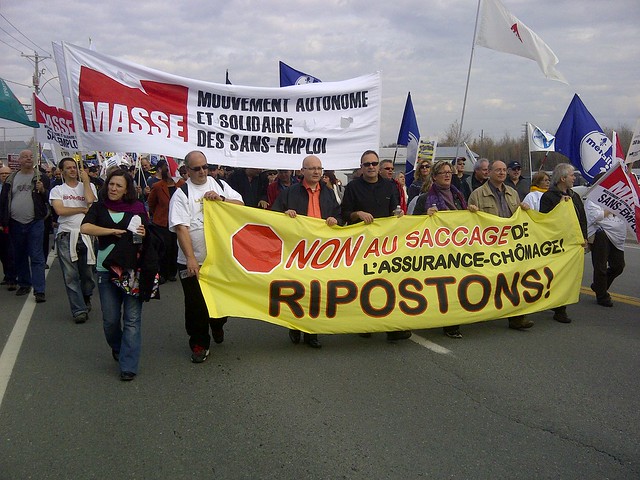
The major trade union centrals of Quebec and the MASSE coalition, a group formed in solidarity with the unemployed, held a series of mass rallies with the biggest one in the town of Thetford Mines in late October. Over 3,000 people from about twelve towns and cities from across Quebec marched to the offices of Christian Paradis, MP for Mégantic-L'Érable (and Stephen Harper's Quebec lieutenant).  Coordinator of MASSE Marie-Hélène Arruda told the rally that "The Conservatives, with their ideology [...] will define by regulation what is a decent job, that is to say a position that an unemployed person cannot refuse for fear of losing their benefits.”

Student legal struggle continues
Drawing attention to the hundreds of students still facing charges from the Quebec student uprising last fall, former spokesperson of the CLASSE, Gabriel Nadeau-Dubois, was convicted November 1 of contempt of court because he publicly criticized a court injunction ordering picket-lines to disperse during the student strike. The judge (who has been linked as a donor to the former Charest Liberal government) based his ruling on a 1972 court decision which tried to smash the Common Front of public sector unions. A support campaign has been launched at www.appelatous.org to fundraise for an appeal.  Meanwhile, the PQ government have announced an education summit to take place in mid-February, with preparatory meetings and consultations starting at the end of November, about the question of post-secondary education funding.

Corruption inquiry exposes P3s
More revelations have been coming forward at the Charbonneau Commission, especially the testimony of ex-construction boss Lino Zambito which has implicated the Liberal party, as well as their political machines on the municipal level and construction firms, into a web of graft with the Mafia.  Media headlines have focused on Montreal mayor Gérald Tremblay’s resignation, the implosion of his Union Montreal party, and now the Mayor of Laval quitting. But the Montreal Gazette has also said that Zambito reported “Public-private partnerships, the sort that are blooming in Quebec to yield hospitals, roads and cultural facilities, are fertile ground for corruption and collusion” because, once big consortiums are ‘awarded’ the contract, the only risk is held by the public sector. One of the biggest P3 projects in Quebec, the McGill University Health Centre, has long been a target of criticism by labour and is currently under police investigation.

QS co-spokesperson steps down
The long standing co-spokesperson of the left-wing political party Quebec Solidaire has stepped down. Amir Khadir was the first “Solidaire” elected to the Quebec National Assembly and the founding leader of the predecessor of QS, the Union of Progressive Forces – which was formed as a federation of left groups including the Communist Party of Quebec.  Khadir will maintain his seat in the National Assembly. Québec solidaire's constitution requires two national spokespersons: one from the legislature and a second from outside it, called a "porte-parole extra-parlementaire", who is not an MNA. The latter also assumes the role of president of the party. A young person is expected to be chosen.

May 11, 2012

People's Voice Editorial: unemployment and resistance


The ruling class appears nervous these days, faced with unruly strikes by workers and students, and setbacks at the ballot box. Underlying this unease is a very real objective factor: the continued growth of mass unemployment. Hunger and poverty are on the rise even in the "developed" capitalist countries, eroding the ideological grip of the bosses.

The International Labour Organisation's "World of Work Report 2012" projects that global unemployment will hit 212 million by the end of this year, up 6 million from 2011. Total unemployment in Ireland, the former "Celtic Tiger", is around 550,000 out of a population of six million. In Spain, 5.64 million (24.4%) are jobless. Some 50 million jobs have been lost since 2008, and unemployment is higher in two‑thirds of countries since 2010.

April 6, 2012

Mega profits, mega unemployment

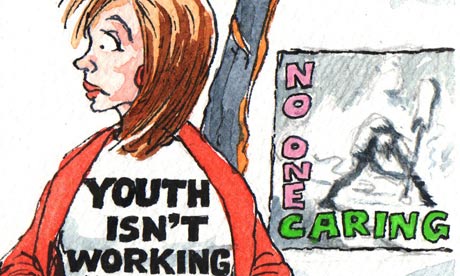
Unemployment isn't working!

People's Voice

     Official unemployment figures for January and February showed tiny improvements, but 1.4 million Canadians are still out of work nearly four years after the economic shock of 2008. Statistics Canada says that 7.2% of the Canadian workforce are jobless and actively seeking employment, down slightly from the rates from 2011; however, this does not account for hundreds of thousands who have dropped out of the workforce, unable to find employment, or many more stuck working a few hours a week in part-time, casual, low-paid, dead-end jobs.

     On the other hand, operating profits at Canadian corporations increased to $71.4 billion for the fourth quarter of 2011, up 9% from the previous quarter, says Statistics Canada. In total, profits for the year 2011 hit $264.8 billion, recovering to almost the historic peak reached during the pre-recession period.

February 14, 2012

Jobs or profits?

Young workers have the highest levels of
unemployment of any age demographic 

People's Voice Editorial

     With the next federal budget looming, the question must be asked: will the Harper Tories put jobs or profits first?

     The so-called "recovery" from the crisis of 2007-08 is sputtering to a halt across the capitalist world, including in Canada. Yes, stock prices and corporate revenues have rebounded, but the ominous signs of slowdown are mounting, including an alarming loss of full-time employment.

     Officially, unemployment in Canada ticked up to 7.6% in January, significantly higher than the 6% levels in mid-2008. This figure only includes the 1.4 million who are "actively looking" for work. Add in those waiting for a recall from a previous employer, who have given up looking for non-existent jobs, or who are stuck working part‑time, and the real unemployment level would soar to 10.6%, or some two million people.


August 6, 2011

Corporate runaways can’t trump the greater good


Protesting: Workers at IQT Solutions were suddenly jobless and denied their final paycheques when the company abruptly closed its doors. More and more young workers are employed at call centers. Photo by the Toronto Star.

By Ken Lewenza
Reprinted from the Toronto Star

The abrupt closure of three IQT call-centre operations in Oshawa, Trois-Rivières and Laval has left 1,200 workers reeling, and government agencies scratching their heads. How can a company (in this case a multi-million dollar, multi-national telecommunications contractor) simply pack up and leave, literally overnight? How can they walk away from legal obligations, washing their hands of back pay and severance? Seriously, how?
Weeks have gone by but no one, as of yet, has any real answers to these questions.
Governments appear incapable of even tracking down basic information about the company, who’s in charge and whether or not they’re actually bankrupt.
There’s an assumption among Canadians that there must be rules and regulations holding corporations to account. But this latest fiasco is a rude awakening.
Indeed, we’ve seen this storyline many times before. In 2009, 2,400 non-union auto parts workers at Progressive Moulded Products (PMP) in Toronto faced a similar ordeal — returning from vacation only to learn that their employer had fled town, taking their separation payments with them. CAW members have seen it first-hand, too, at companies like Collins & Aikman in Scarborough, Aradco and Aramco in Windsor, and others.
Each case prompted a public outcry and a spontaneous fight back. Workers demanded what was legally owed to them. But after fighting long and hard, they inevitably end up with less than they are owed.
So IQT is not the first company to successfully exploit this effective loophole in the regulations that govern business. And it won’t be the last — unless we tighten up the rules.
In this era of deregulation, it seems private companies are enabled to padlock their doors, pack their bags and take their business elsewhere. The same week as the IQT closures in Canada, the company announced 900 new jobs in Nashville, Tennessee — taking advantage of millions in lucrative public incentives to relocate. Those plans were scrapped when municipal leaders in Nashville caught wind of the company’s disregard for workers and their communities. Yet Canadian officials seem toothless when it comes to tracking down the company and enforcing its legal obligations.
To its credit, Ontario’s labour ministry is in the midst of an investigation while providing retraining and job search assistance to workers through a newly-opened action centre. Quebec officials are urging displaced workers to lodge individual complaints with the labour board in the hopes of building a file on the company.
Meanwhile, Ottawa has been strangely silent about the case, telling workers only that they can file for EI. IQT workers don’t yet qualify for federal Wage Earner Protection Program funds since there’s not been an official bankruptcy filed. So far, no one in the Harper government cares to comment.
For years, governments have been watering down corporate regulations, all in the name of fighting “red tape.” Restrictions on corporations that would protect the greater good, we’ve been told, are job-killers. Establishing criteria to govern corporate behaviour is considered a barrier to investment.
But this whole approach puts reckless multinational corporations like IQT in the driver’s seat, and leaves vulnerable workers in the dust.
It’s time we stopped this trend, which is justified by an underlying faith that the private sector is always efficient. Governments need the tools to hold corporate deadbeats to account, to discourage imitators and adequately remedy situations like the tragedy at IQT. Efficient, effective regulatory tools wouldn’t disadvantage good corporate citizens, but would offer some protection for workers’ rights.
A public discussion on the need for better worker protection regulations is both necessary and overdue. We need an open and honest dialogue among stakeholders, to get some new ideas on the table.
Here are some proposals to throw into the mix:
  Establish clear protocols for public notice and justification of lay-offs.
  Enhance protections that prioritize monies owed to workers in cases of bankruptcy and bankruptcy protection proceedings.
  Strong workplace closure legislation, with special provisions to account for non-industrial, non-capital intensive workplaces like call centres and retail shops (where there’s little capital equipment that can be seized and sold to pay outstanding debts).
  Strengthen legal reprisals for executives (or other representatives) of runaway corporations.
  Increase the funds covered by the wage protection system and extend its reach to closures that are not formal bankruptcies.
It is both immoral and economically counterproductive to allow deadbeat corporations like IQT to commit these wrongs with impunity. As a society, we must take a hard line with employers who think they’re beyond the greater good.
Ken Lewenza is president of CAW-Canada.

July 6, 2010

Sticking the public with the bill for the bankers’ crisis


How else can we interpret the G20 communiqué that includes not even a measly tax on financial transactions?

Naomi Klein

Toronto — From Monday's Globe and Mail

My city feels like a crime scene and the criminals are all melting into the night, fleeing the scene. No, I’m nottalking about the kids in black who smashed windows and burned cop cars on Saturday.

I’m talking about the heads of state who, on Sunday night, smashed social safety nets and burned good jobs inthe middle of a recession. Faced with the effects of a crisis created by the world’s wealthiest and most privilegedstrata, they decided to stick the poorest and most vulnerable people in their countries with the bill.

How else can we interpret the G20’s final communiqué, which includes not even a measly tax on banks orfinancial transactions, yet instructs governments to slash their deficits in half by 2013. This is a huge andshocking cut, and we should be very clear who will pay the price: students who will see their public educationsfurther deteriorate as their fees go up; pensioners who will lose hard-earned benefits; public-sector workerswhose jobs will be eliminated. And the list goes on. These types of cuts have already begun in many G20countries including Canada, and they are about to get a lot worse.

They are happening for a simple reason. When the G20 met in London in 2009, at the height of the financialcrisis, the leaders failed to band together to regulate the financial sector so that this type of crisis would neverhappen again. All we got was empty rhetoric, and an agreement to put trillions of dollars in public monies onthe table to shore up the banks around the world. Meanwhile the U.S. government did little to keep people intheir homes and jobs, so in addition to hemorrhaging public money to save the banks, the tax base collapsed,creating an entirely predictable debt and deficit crisis.

At this weekend’s summit, Prime Minister Stephen Harper convinced his fellow leaders that it simply wouldn’tbe fair to punish those banks that behaved well and did not create the crisis (despite the fact that Canada’shighly protected banks are consistently profitable and could easily absorb a tax). Yet somehow these leaders had no such concerns about fairness when they decided to punish blameless individuals for a crisis created by derivative traders and absentee regulators.

Last week, The Globe and Mail published a fascinating article about the origins of the G20. It turns out the entire concept was conceived in a meeting back in 1999 between then finance minister Paul Martin and his U.S.counterpart Lawrence Summers (itself interesting since Mr. Summers was at that time playing a central role in creating the conditions for this financial crisis – allowing a wave of bank consolidation and refusing to regulate derivatives).

The two men wanted to expand the G7, but only to countries they considered strategic and safe. They needed tomake a list but apparently they didn’t have paper handy. So, according to reporters John Ibbitson and TaraPerkins, “the two men grabbed a brown manila envelope, put it on the table between them, and began sketchingthe framework of a new world order.” Thus was born the G20.

The story is a good reminder that history is shaped by human decisions, not natural laws. Mr. Summers and Mr.Martin changed the world with the decisions they scrawled on the back of that envelope. But there is nothing tosay that citizens of G20 countries need to take orders from this hand-picked club.Already, workers, pensioners and students have taken to the streets against austerity measures in Italy,Germany, France, Spain and Greece, often marching under the slogan: “We won’t pay for your crisis.”

And they have plenty of suggestions for how to raise revenues to meet their respective budget shortfalls.

Many are calling for a financial transaction tax that would slow down hot money and raise new money for social programs and climate change. Others are calling for steep taxes on polluters that would underwrite the cost of dealing with the effects of climate change and moving away from fossil fuels. And ending losing wars is always a good cost-saver.

The G20 is an ad hoc institution with none of the legitimacy of the United Nations. Since it just tried to stick us with a huge bill for a crisis most of us had no hand in creating, I say we take a cue from Mr. Martin and Mr.Summers.

Flip it over, and write on the back of the envelope: Return to sender.

Naomi Klein is the author of The Shock Doctrine: The Rise of Disaster Capitalism

July 1, 2010

Against the dirtiest methods of the capital


Against the dirtiest methods of the capital

Valuable experience form the hard class conflictation

The massive successful strike of PAME on 29th June acquires a much greater significance as it confronted one of the dirtiest operations against the workers’ movement. The 11th strike of the class oriented forces in a period of 6 months paralysed factories, workplaces, ports, train stations and airports throughout the country. Picket lines were mounted in front of numerous workplaces.

The port of Piraeus once again became the field of hard class conflict. The class oriented trade unions of the lower engine crews and merchant maritime engineers and the forces of PAME resisted bravely and guarded their strike. Despite the intimidation exerted by the social democrat government, the ship-owners and the other bourgeois parties, the strike has been a huge success. Those forces used the dirtiest methods such as:

-court decisions that declared the strike illegal

-warrants of arrest against trade unionists of PAME, heads of the boards of the seamen’s trade unions

-terrorist bomb attack outside the house of the head of PAME in Thessalonica one day before the strike aiming at the intimidation of the class oriented forces

-terrorism, repression and chemicals by the repressive forces and the port police corps. Despite that they did not manage to prevent the class oriented forces from entering the port in order to guard the strike. The forces of PAME managed to block the vast majority of the ships. A few ships left the port “with the gun on the head of the crews” though without passengers and vehicles!! In fact they sailed aided by the repression forces that beat and wounded enough workers. The crews of the ships played a crucial role despite the extortions of the employers.

-the lies of the bourgeois media that it is PAME and strikes that allegedly damage tourism and not the poverty spread by the government’s measures.

These methods met the immediate response of the class oriented forces that guarded their strike successfully, with determination and discipline and the tens of thousands of workers who participated in the strike.

In addition, tens of thousands took part in the strike demonstration of PAME in Athens, that took place outside the parliament as well as in the demonstrations held in 60 cities throughout the country against the destructive measures that increase retirement ages, cut down salaries and pensions, deregulate the redundancy threshold, increase taxes, extend flexible labour relations, freeze wages for three years and abolish the 13th and 14th pension.

“They legitimate the crime against our social security rights, the plundering of a big part of our income. The plunderers are accusing their victims of resisting the plundering and blaming the plunders and those who commit the crimes. Our answer to their legitimacy is: law is the rights of the workers and not the profits of the capitalists. For that reason they will always have to confront us” stressed Yiannis Tassioulas, president of the Construction Workers’ Trade Union from the platform of the demonstration.

The strike demonstration of PAME in Athens addressed a class, internationalist appeal to the working class and the militant trade unions in Europe, to the European trade unionists who struggle against the severe anti-workers’ attack calling them to coordinate their struggle and reject the compromised ETUC and all the forces that have disarmed the workers’ movement through the policy of conciliation, of class collaboration and submission.
The experience from these struggles makes the struggle for radical changes even more urgent. The working class produces the wealth and must assert it. The means of production, the wealth must pass into the hands of the people. This goal can reinforce the struggle.

Contra los métodos más sucios del capital

La experiencia de la dura lucha de clases es valiosa

La exitosa huelga masiva del Frente Militante de Todos los Trabajadores (PAME) el 29 de junio adquiere grandísima importancia ya que se enfrentó a una de las operaciones más sucias contra el movimiento obrero. La 11ª huelga de las fuerzas de orientación de clase en un período de seis meses paralizó fábricas, centros de trabajo, puertos, estaciones de tren y aeropuertos en todo el país. Los huelguistas participaron en las guardias de huelga y formaron piquetes fuera de numerosos centros de trabajo.

No obstante, una vez más la atención se concentró en la dura lucha de clases en el puerto del Pireo. Los sindicatos de orientación de clase de las tripulaciones de motor inferior y de ingenieros y las fuerzas del PAME protegieron su huelga con valentía. A pesar de la intimidación de parte del gobierno de los socialdemócratas, los armadores y los demás partidos burgueses la huelga fue muy exitosa aunque emplearon los métodos más sucios como:

* Sentencias judiciales que declaraban la huelga ilegal
* Órdenes de detención contra los sindicalistas del PAME dirigentes de los sindicatos de los marineros
* Bomba terrorista en la casa de la cabeza del PAME en Tesalónica con el fin de intimidar a las fuerzas clasistas un día antes de la huelga
* Intimidación, represión y uso de gases químicos por las fuerzas de represión de la policía y del cuerpo de policía portuaria al final no consiguieron impedir las fuerzas de clase de entrar en el puerto y proteger su huelga. Las fuerzas del PAME consiguieron impedir la salida de la gran mayoría de barcos. Algunos barcos salieron del puerto “con la pistola apuntando a la cabeza de los miembros de la tripulación” pero sin pasajeros ni vehículos. De hecho, las fuerzas de represión facilitaron su huida e hirieron algunos compañeros de trabajo. Las propias tripulaciones de los barcos jugaron un papel crucial a pesar del chantaje de la patronal.
* Mentiras de los medios de comunicación que el PAME y las huelgas perjudica al turismo y no la expansión de la pobreza a causa de las medidas gubernamentales.

Las fuerzas de clase con determinación y disciplina protegieron con pleno éxito su huelga y la participación masiva de decenas de miles de trabajadores en la huelga dio una respuesta inmediata.

Decenas de miles de gente participaron en la concentración del PAME fuera del Parlamento en Atenas, así como en las concentraciones en 60 ciudades en Grecia contra las medidas que aumentan la edad de jubilación, recortan los salarios y las pensiones, liberalizan los despidos, aumentan los impuestos e impulsan la flexibilidad laboral mientras promueven para los próximos 3 años la congelación de los salarios y la abolición de la 13ª y 14ª pensión.

En la concentración, Yiannis Tasioulas, presidente del Sindicato de Trabajadores de la Construcción de Atenas, mencionó: “Legitiman los crimen a expensas de nuestros derechos de seguridad. Legitiman el crimen de despojo de gran parte de nuestros ingresos y luego los ladrones acusan a sus víctimas porque reaccionan al robo y contra los ladrones y los criminales.

Nosotros respondemos a esta legitimidad que ley es lo que es justo para los trabajadores y no las ganancias de los capitalistas. Por eso siempre van a tener de confrontarnos.”

La concentración del PAME en Atenas dirigió una llamada clasista, obrera, internacionalista a la clase obrera y a los sindicatos militantes de Europa, a todos los sindicalistas europeos que luchan contra la ofensiva antiobrera feroz para la coordinación de la lucha y el rechazo de la CES pactista y de estas fuerzas que han desarmado al movimiento obrero a través de la política de conciliación con el capital, de la política de colaboración de clases, de sumisión.
La experiencia de estas duras luchas de clases hace que la lucha por cambios radicales sea más necesaria. La clase obrera produce la riqueza y debe reclamarla. Los medios de producción, la riqueza debe pasar a ser propiedad del pueblo. Este objetivo puede dar un nuevo impulso a la lucha.


Watch the video from the Strike Demonstration - Ver el video de la Manifestacion
http://www.youtube.com/user/kkemedia#p/u/1/q6uKBFxestk

More information on the websites - Mas informacion al sitio web
inter.kke.gr es.kke.gr


Comradely Greetings,
Saludos Militantes,

International Relations Committee of the CC of KNE
Comite de Relaciones Internacionales del CC de KNE

--
Communist Youth of Greece
www.kne.gr/english.html
Tel: 00302102592307
Fax:00302102592611

March 18, 2010

Stop the Siemans closure!


Communist Party of Canada (Ontario) Hamilton Committee, CPC

Siemens is trying to distract public attention from the real reason for its unilateral decision to shut the Hamilton turbine facility in 15 months and layoff 550 workers – an operation Siemens recently boasted was highly productive and efficient – by blaming public concerns about coal fired generation for their departure to North Carolina next year.

It’s true that that the US sunbelt states don’t much care about the environment – not enough to legislate strong laws and regulations reigning in the corporations at any rate.

September 27, 2009

Video review: Valley Town- social condition series 4

this is the last installment in our series on social conditions leading to movements for change.


This film premiered at the Steel Workers' Organizing Committee convention in Chicago on May 14, 1940. It discusses factory closure during the Great Depression of the 1930s and the role of new technologies in keeping them from resuming production and their jobs. More importantly, the role of corporate management's decisions to move to non-union low wage areas, or failure to retool the existing plants to new technologies is the next logical question.

The film portrays the stress and low morale that job loss forces upon a family. In one scene, while discussing the wonders of the modern machine age and all the gadgets available to consumers, the unemployed worker sneaks out of the home with an electric toaster to take to a pawn broker. This scene, clearly a point of irony, shows how in a age of so called progress, the rich get richer while the poor get poorer, and is a built in flaw of the capitalist system. A capitalist economic engine overheats and either seizes to a stop, runs out of consumers to fuel it, or shakes itself to pieces.

One sees many metal working machines in the film. One, a turret lathe, is a semi-specialized machine used in mass production of parts. Yet manual turret lathes have been largely replaced by computer controlled, CNC lathes etc. The machinist of old is trained to be a programmer of CNC lathes today, along with making more parts per machinist (higher productivity), and contributing to the layoff of some co-workers. New technologies like desktop publishing software have made typesetting a dead trade, while spreadsheet programs on computers have made the need for comptometer operators obsolete in the office. As a result, retraining is needed. These workers get higher skilled work (research, administration, etc.) or they find work in jobs with lesser pay (retail, fast food, etc.), usually the latter.

This movie was made at the tail end of the depression and before the boom of needed war production and post-war times. What this film had be warning about has slowing became true as far as heavy industry is concerned: the development of the Rust Belt in Eastern Canada, the adjustment of economies to reflect these changes due to globalization, and the resulting human wreckage capitalism has left behind.

The movie stresses the need for education to cope with changing economies as a "national problem". In fact education and retraining is the final message of the film. The replacement of skilled artisans and cottage industries with mass production assembly lines, of cheap semi-skilled workers and the use of job specific training is discredited as short sighted here. The ford system is cheap on human resources for the sake of the profit margin. On a wider scope, the economy of a nation requires educated workers who can easily make job changes into other industrial sectors.

Further, to criticize conventional ideas of "progress" includes the negative effects of boom economies that are rapidly industrializing. Examples this are the social conditions in both the United Kingdom during the Industrial Revolution, and booming industrial economies in countries in the Pacific Rim today. The final question: Is all this waste of resources (global transportation, factory ruins, casual and idle workers) really necessary?

Popular stories