1. The capital of Ecuador is Quito, the highest capital city in the world and one of the largest, least-altered and best-preserved historic centers in the Americas, declared by UNESCO as a World Cultural Heritage site in 1978;
2. The president of Ecuador is Rafael Correa, a progressive politician who fought for anti-poverty strategies and canceled Ecuador's debt, breaking with IMF policies and instead drew Ecuador into alliance with the Bolivarian Revolution and lead the re-writing of the Constitution of the country along more democratic lines. He is fluent in Spanish and the indigenous language of Quechua as well as French and English.
3. Since 2000, the currency of Ecuador has been the US dollar. The current administration is trying to break away from the dollar and is discussing a pan-Latin American currency. It also cancelled the contact for the major US military base in Ecuador, forcing them to withdraw.
4. Ecuador is about to sieze $200 million of Chevron assets because of pollution by that company in the Amazon.
5. Ecuador country has three main geographic regions, plus an insular region in the Pacific Ocean: La Sierra, ("the highlands") is the high-altitude belt running north-south along the centre of the country, its mountainous terrain dominated by the Andes mountain range; La Amazonía, also known as El Oriente ("the east"), comprises the Amazon rainforest areas in the eastern part of the country, accounting for just under half of the country's total surface area, though populated by less than 5% of the population; and The Región Insular is the region comprising the Galápagos Islands, some 1,000 kilometres (620 mi) west of the mainland in the Pacific Ocean.

October 20, 2012
Communist Party Condemns Proroguing of Parliament: Recall the Legislature!

The Communist Party of Canada (Ontario) condemns Liberal Premier Dalton McGuinty’s indefinite proroguing of the Provincial Parliament and suspension of parliamentary democracy, and demands the government recall Parliament and end its abuse of power.
Unable to pass his government’s anti-democratic “Protecting Public Services Act” (Bill 155) – which would legislate a wage freeze and suspend free collective bargaining across the public sector – the Premier wants to dispense with Parliament and try to impose his program of austerity without legislation. The government also hopes to evade any accountability or responsibility in the on-going exposure of wrong-doing by government Ministers and agencies.
The Liberals were counting on the Tories to support Bill 155, but the Tories are demanding the government go much further. The Tories are already campaigning to disembowel existing labour laws under the slogan of ‘flexible’ labour law ‘reform’. They want to eliminate the Rand Formula, make Ontario a right to work jurisdiction, and break the back of the labour movement as has been done in Wisconsin, Ohio, and other US states.
The Premier has said he will use the next months to force a negotiated wage freeze onto public sector unions. A negotiated wage freeze has the support of NDP leader Andrea Horwath according to statements made at a recent news conference filmed by CP24. While the NDP opposed a legislated freeze, they support a negotiated freeze. The NDP caucus apparently believes that working people should pay for an economic crisis caused by corporate greed and ably assisted by right-wing governments in Ontario and elsewhere. The 99% would disagree with the caucus, just as they disagreed with Bob Rae’s social contract in 1993.
The Liberals’ anti-labour, anti-democratic austerity agenda has provoked massive public opposition, including ongoing protests and demonstrations. The prorogation is bound to generate even more opposition as public outrage at the government’s abuse of power spills over.
The Communist Party calls on the Premier to immediately recall the Legislature, and move quickly to withdraw Bill 155, repeal Bill 115, and allow the province’s public employers and public sector unions to move forward to freely negotiate unfettered collective agreements.
The Premier must also take the strong medicine needed to clean up the corruption caused by years of privatization and deregulation by stealth, including ORNGE and other P3 arrangements, and by vote-buying in ridings with gas plants.
The Communist Party also demands that the Premier and the Liberal government, as well as the Tories and the NDP remove themselves from collective bargaining and let the public employers and public sector unions exercise their bargaining rights to negotiate free and unfettered agreements.
We stand with labour and all those who oppose this government’s austerity policies, and the efforts to download the costs of the economic crisis onto the backs of working people through this on-going attack on public sector wages, pensions, jobs and public services. A massive struggle against austerity in the streets and at the bargaining table is the only way to beat back the attack on wages, incomes, jobs and living standards, and save public services and assets.
Another Ontario is possible. And urgent. The Communist Party offers a 10 point prescription that is a pro-people alternative to austerity and is detailed on our web site www.communistpartyontario.ca.
October 19, 2012
De-bunking the myth of the good old days - part 2
Labels:
labour,
labour history,
racism,
sexism,
young workers


 |
| St Catharines auto plant workers, 1944 |
by Ryan Sparrow
This article is part two of a two-part series.
Racialised and gendered work is a common feature of the development of capitalism. The need for a super-exploitable vulnerable group of workers is beneficial to the big business community as it helps bring about a much lower floor of wages and working conditions.
In the post-war era, the overt racism and overt gender discrimination of workers was still around, although less prevalent. Institutionalized racism and sexism, however, was still very widely practised. Racialised and gendered labour therefore represented a super-exploited strata of the working class in the post-war era. This article continues from the historic framework of analysis and presents some examples.
Racism in Auto
Racialized male workers had a variety of differing experience which allowed for their discrimination in the labour market. For example, in the auto industry of southern Ontario black male workers were segregated into certain jobs. The policy, when it came to hiring black workers, varied from employer to employer.
Chrysler, for instance, entirely prohibited black male workers from working on their assembly lines until they were forced to change their policies with the Ontario Fair Employment Practices Act in 1951. By 1953, a Federal Fair Employment Practices Act had also (officially) been put into effect.
Other auto manufacturers like Ford and McKinnon Industries were more accepting of black workers. But these workers faced other barriers within these companies, like being segregated into specific occupations based on racial stereotypes.
Genetic resistance to heat
According to sociologist Pamela Sugiman, foundry work was one of the racialised occupations since employers stereotyped black men as“…strong, robust, and muscular worker[s]…” who were more suitable for the job, while some even claimed that “…coloured men, in particular, could endure these excesses because of a genetic predisposition to withstand heat”.
Another racialised occupation in the plants was janitorial work as firms tended to employ black males for this line of work. It is important to note that while there was nothing formal about the segregation of employment for racialised workers in the Ontario auto industry, it was a widespread practice.
Aboriginal workers
The experiences of Aboriginal male workers confirm a pattern of racialised segregation in the labour market, where the shift from rural life in the prairies to wage labour is marked by both mismanagement and intentional exploitation.
Historian Joan Sangster for example explains that the “Fordist” economic arrangement completely excluded Aboriginal and Métis populations in the northern prairies and was a “… class accommodation that marginalized many working people, often on the basis of gender and race.”
The government intentionally created racialised labour segregation on behalf of private interests with acts of coercion like the “cessation of welfare payments as a means of forcing families to accept sugar-beet work”, Sangster writes.
Lower pay, bad jobs
Instead of the employers offering wages and working conditions to attract workers, the state intervened to provide a very precarious workforce for the growers. Further, the economic data points to systemic racism where “…Metis and Indian households always earned less than white ones in similar geographical areas”.
Aboriginal communities had very unstable employment, according Jean Lagasse’s interviews of native peoples in the 1950s, holding many different jobs with the changing of the seasons. In the post war period, Aboriginal and racialised male workers were typically stuck in the lower rungs of the labour market, the secondary labour market and some in the subordinate primary market jobs.
Women workers and racism
Historically, the dominant patriarchal view of women was that they should be confined to domestic work, tied to a man with the state and employers encouraging such an arrangement. At the same time, capitalism has regularly relied on women's labour not just to reproduce and maintain workers but also in the working class. The trade union movement historically fought for a family/breadwinner wage; therefore even in the labour movement, women’s wages were seen as a secondary income.
Women from racialized communities had it hardest. There was not a single black woman employed in all of the 50 post-war United Auto Worker (UAW) organized plants in Windsor. The segregated labour markets also created segregated communities, with the newly formed suburbs housing a predominately non-racialised, white middle class community, while the city housed a more racialised workforce.
Maggie Holmes, a domestic worker describes how all the white males travel to the city during the morning and came back to the suburbs during the evening, while she and many other racialised domestic workers were going the opposite direction towards the cities. Their jobs were tough, often leading to aliments like arthritis.
Summary
While there was representation of white Anglo-male workers in all three labour markets, the experiences of racialised workers and women workers in the post-war era confirm segregated labour markets existed in Canada.
White women and racialised workers rarely went beyond the subordinate primary market. Racialised women had faced the most discrimination in the labour market with very few examples of them advancing out of the secondary market for labour.
Ultimately, the configuration of the labour market in the post-war era provides an revealing insight into systemic racism and sexism today.
This article has been edited.
Bibliography
Acker, J,(1990). “Hierarchies, Jobs, Bodies: A Theory of Gendered Organizations,”
Gender & Society, 4, 2,139-158.
Edwards, E. (1979). Labour Re-Divided Part 1: Segmented Labor Markets. Contested Terrain: The Transformation of the Workplace in the Twenthieth Century. Basic Books: New York.
Jacoby, S. M. (1984). The Development of Internal Labour Markets in American Manufacturing Firms. Internal Labour Markets. Cambridge University Press: Cambridge. 23-69.
Sangster, J. (2010). “Aboriginal Women and Work in Prairie Communities. Transforming Labour: Women and Work in Post-War Canada. University of Toronto Press: Toronto. 199-23
Sugiman, P. (2001). Privilege and Oppression: The Configuration of Race, Gender, and Class in Southern Ontario Auto Plants, 1939 to 1949. Labour/Le Travail . Retrieved from http://www.historycooperative.org/journals/llt/47/04sugima.html
Turkel, S. (2009). Studs Turkel’s Working: A Graphic Adaption. New York, New York: The New Press.
October 17, 2012
What has been put on hold by the prorogation of Ontario's Provincial Parliament?
Labels:
mcgunity,
ontario,
prorogation
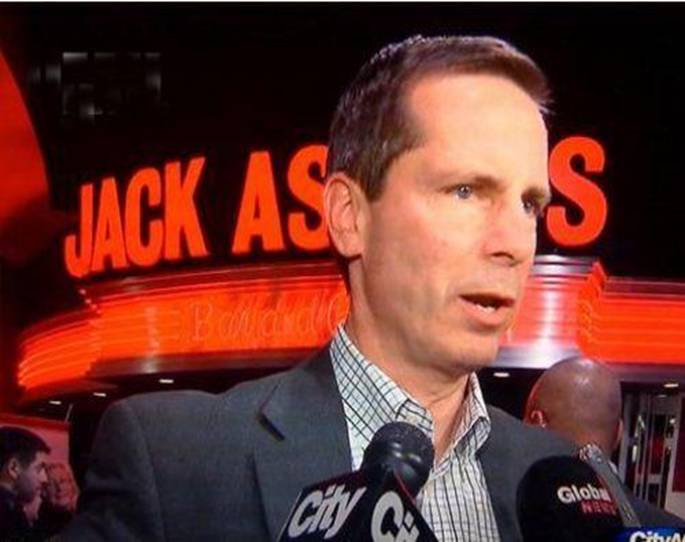
- A bill allowing HST rebates for home heating;
- A bill to boost security at courts and nuclear plants;
- A bill requiring school boards to introduce concussion-prevention practices;
- A bill banning people under 18 from using tanning beds;
- A bill to amalgamate Ontario’s three power authorities;
- A bill allowing workers up to eight weeks unpaid leave to care for sick family members;
- A committee examining the role of cabinet ministers in the cancellation of two controversial power-plant projects in Liberal ridings during the last election campaign;
- Probes into into problems at Ornge air-ambulance service and eHealth Ontario;
- Plans to introduce legislation to freeze wages and change collective agreements of public servants and teachers;
- Requirements to put sprinklers in retirement homes;
- A task force looking into auto-insurance fraud;
- Dozens of bills dealing with issues such as: a new Constitution Day, a new Major-General Sir Isaac Brock Day, tax credits for farmers who donate food, protection for the Great Lakes, changes to cellphone bills, adoption of alternative insurance plans, electoral fraud and protecting elephants.
Breakthrough for Workers' Party of Belgium (PTB) in local elections

In Belgium's municipal and provincial elections held on 14 October 2012, the Workers' Party of Belgium (PTB) made a strong showing and affirmed itself as an emerging Left force in the whole country. The PTB's electoral list “PTB+” obtained a total of 31 municipal councilors, 17 district councilors (in the city districts of Antwerp) and 4 provincial councilors, for a total of 52 local seats in 12 municipalities, 7 city districts and 2 provinces. Previously, the PTB's total number of local seats stood at 15, in just 8 municipalities.
The party's objective was to maintain the existing 15 seats, and to obtain a first seat ever in three major cities: Antwerp, Liège and Brussels (in the municipality of Molenbeek). But based on a dynamic grassroots campaign, focusing on social issues – housing, health care, cleanliness, mobility, education, jobs, taxes – voters gave the PTB much more than it had hoped for.
Party chairman Peter Mertens will be accompanied by three more PTB councilors in the city council of Antwerp, with a score of 8%, while the PTB also gets 17 seats in the various Antwerp district councils. In Liège, the party obtains two seats on the city council (one of them for Party spokesman Raoul Hedebouw), with a score of 6.5%, while in Seraing and Herstal, industrial municipalities surrounding Liège, the PTB obtains 5 and 4 seats (both 14%), making it the second biggest party. In Seraing, a member of the Communist Party of Wallonia-Brussels got elected on the PTB+ list. In Brussels, not only has a first seat ever for the PTB been won in Molenbeek, but also a second one in the municipality of Schaerbeek.
The party was able to maintain its seat in the city of La Louvière, and also maintains its 6 councilors (with 22% of the vote, becoming the second biggest party) in the industrial municipality of Zelzate, near Gent. In Genk, the party triples its number of seats from 1 to 3 (with 8.8% of the vote). Also unexepectedly, a first seat has been won in Charleroi, Mons and Flémalle. In St-Nicolas (Liège) et St-Gilles (Brussels) the PTB+ got more than 3% of the vote, while in several cities (Gent, Mechelen, Leuven and Namur) its score was close to 3%.
In Liège, PTB spokesman Raoul Hedebouw said that “we have felt, among the population, the need for a genuine party of the Left, in words and in deeds”. And at the victory party in Antwerp, Party chairman Peter Mertens said: “Finally, there will be a party in Antwerp that will wage a social opposition, a strong opposition facing the future mayor Bart De Wever”, who made huge inroads in Antwerp and elsewhere with his rightist Flemish nationalist party NVA. “We now have to transform our election victory into a strong organization that can put pressure from the bottom up. Our challenge now is to build a Left alternative and wage a militant opposition.”
Bart De Wever wants to use the progress of his party to advance his plan to split up Belgium after the federal, regional and European elections of 2014. The current federal government, led by social-democrat Elio Di Rupo, will pursue and intensify its policy of harsh austerity measures. In order to counter both dangers as firmly as possible, a strong social opposition from the Left will be necessary, from the local up to the national level. The Workers' Party of Belgium (PTB) aims to work closely with trade unions and other social movements to take up this challenge, keeping true to its slogan of “People, not profit”.
October 16, 2012
A teenage girl rebellion: how Cuba`s revolution beat illiteracy

The film is a 30 minute documentary paying tribute to the thousands of young Cuban women that participated in the 1961 literacy campaign. Approximately 50 thousand teenage girls launched a practically impossible task and helped construct a new society at the ages of 16 and 17, said Catherine Murphy who spend almost 10 years researching in archives, searching for teachers of the time and taping an oral history of their experiences.
The La Femme International Film Festival is the largest women’s event in the US with the participation of renowned movie stars. The festival kicked off on Thursday and will run until Saturday with the presentation of over 100 independent, short and documentary, commercial films and musical videos.
Subscribe to:
Posts (Atom)
Popular stories
-
 Rebel Youth is looking for hitchhiking stories, and also experiences with the challenges faced by women, trans people, hitchhickers facing ...
 -
 The real abuse taking place in Cuba is the crippling and inhumane American blockade Rob Miller The Guardian, Thursday 26 November 2009 Your ...
 -
 Special to RY Tyson Strandlund is the Communist Party of BC’s candidate in the upcoming election in Esquimalt-Metchosin, British Columbi...
 -
A very important meeting for labour and social movements is taking place from August 21-24th in Ottawa. The People’s Social Forum (PS...
-
J. Boyden Yesterday, January 18 th , was the 24 th anniversary of the death of Renato Guttuso. Renato Guttuso (1911-1987) was a com...
-
 Jay Watts In 1995, a report issued as part of the Royal Commission on Aboriginal Peoples called suicide “one of the most urgent problems ...
 -
 World Federation of Democratic Youth (WFDY) would like to express its deepest condolences and sympathy to all those affected by the mu...
 -
 Adrien Welsh On April 23rd, the French people were called to chose two out of the eleven candidates running for the Presidential e...
 -
 This article is part of an seven-part series of short quotes Rebel Youth is issuing about class struggle, revolution, civil-war, and par...
 -
 Ajit Singh A couple weeks ago, a Palestinian child was beheaded by the "moderate rebels" in Syria, created, funded, and backe...

