Remembering Prime Minister Patrice Lumumba
January 2011 will mark the 50th anniversary of the murder of one of the world’s greatest anti-imperialist leaders – Patrice Lumumba. The first Prime Minister of independent Congo, Lumumba died at the hands of US and Belgian imperialism and their domestic puppets.
Congo was a colony of Belgium from 1884-1960. For part of that time it was directly owned by King Leopold II of Belgium, and then the Belgian parliament, which exploited the country for its rubber, mineral wealth and slave labour. Belgium and international corporations were trying to “civilize the pagan Congolese people”, while conveniently making immense profits. One useful “civilizing” tool they used was severing the hands of workers that were not meeting their rubber quotas.
The Congolese people rose up against colonialism and imperialism along with their sisters and brothers around the world at that time. Lumumba and the Congolese National Movement led the struggle and Lumumba was elected the Prime Minister of the Republic of the Congo in 1960.
Now politically sovereign, Congo’s oppressors quickly emerged as foreign Capital and their imperialist states. The governments of Belgium, France, England and the US had no intention of letting the Congolese people keeping some of the profits from the Congo’s mineral wealth.
They manufactured a secessionist movement within the wealthy region of Katanga, led by wealthy plantation owner and businessman Moise Tshombe. Provoking the domestic crisis a Western dominated UN force moved in to “stabilize” the country.
Fidel Castro warned at the United Nations that the American government had been advising Col. Mobutu within the Congolese military. Sure enough, on September 5, 1960, Lumumba was summarily removed from office, Soviet representatives were ordered out of the country, and a military dictatorship was established under Col. Mobutu.
In January of 1961, Lumumba was turned over by the military government to Tshombe in Katanga. Soon after, in collusion with Belgian officials, Lumumba and two of his comrades from the republic’s government were lined up against a tree and shot.
Malcolm X, called Lumumba “the greatest black man who ever walked the African continent. He didn’t fear anybody. He had those people so scared they had to kill him.”

December 4, 2010
December 3, 2010
Postal Workers Are Fighting Back Everywhere


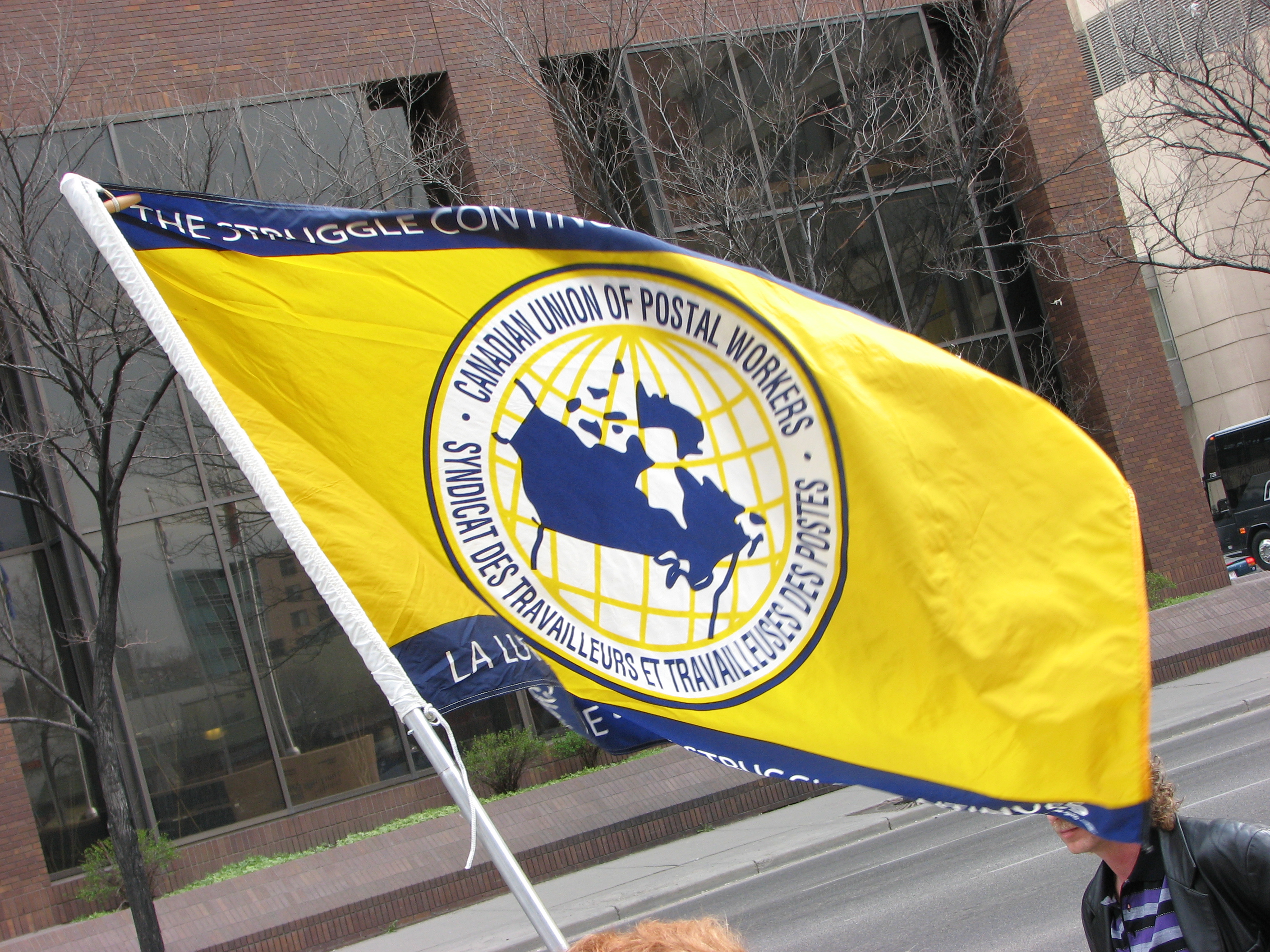
In the past several months there has been a great upsurge of postal workers fighting back globally. Here are a few examples:
Finland: Postal Workers in Finland, who are members of the PAU union, recently achieved a new Collective Agreement. The Finnish postal company, Itella, wanted to move over 7,000 workers to night shift. After a series of negotiations, overtime bans and rotating strikes, the parties reached a settlement which severely limited increased night shift work.
Kenya: Kenyan Postal Workers are negotiating for improved wages, fair remuneration for working overtime and decent pension plan. They started a work to rule campaign, and are poised to strike.
The Netherlands: Workers at the Dutch privatized postal company, TNT, have had held a one day general strike to protest plans to layoff over 3,500 workers. They are planning on more strikes and mass rallies.
Morocco: The National Union of Postal Agencies Managers recently sat in at postal headquarters to demand decent working conditions. This led to a Memorandum of Understanding that resolved the issues.
Ireland: The Communication Workers Union in Ireland has launched a campaign "Protect Your Post" to highlight issues that are facing Irish people with the impending opening up of postal services to competition.
Spain: The Spanish postal union recently mobilized a day of action to protest the deregulation of the post office and the failure of the Spanish Post Office to settle their Collective Agreement.
USA: The American Postal Workers are negotiating for a new Collective Agreement. If they are not successful, the issues in dispute will go to binding arbitration. The APWU has been fighting to stop contracting out and put an end to bargaining unit jobs being given to management personnel. The Unites States Postal Service has proposed two tier wages, which the APWU has rejected.
Panama: The Postal Union is fighting against the recently announced decision by the Government to privatize the Post Office.
Even though CUPW members are geographically separated from these fights, we know that their struggles will benefit postal workers everywhere. The fight for respect, equality and a universal public postal service shows that solidarity knows no borders.
In solidarity,
Denis Lemelin
National President
November 30, 2010
Moa Chooses Delegate to the 17th World Festival of Youth and Students
Cuba
By Felix R. Lobaina / frl@cmkv.icrt.cu / Monday, 29 November 2010 12:48
"I take this as a mission that has been assigned to me by the organization," said Yordanka Leyva Perez, who was chosen as the only delegate from the mining municipality of Moa, to the 17th World Festival of Youth and Students to be held in South Africa from December 13 to 21.
During a meeting to present her as delegate before hundreds of colleagues from the Factory Commandante Ernesto Che Guevara, where she works, Leyva thanked the election and said that any young people from the factory could represent the nickel workers in such important meeting.
The 17th World Festival of Youth and Students will be dedicated this year to two universal figures: the Commander in Chief Fidel Castro Ruz and the South African leader Nelson Mandela.
The 30-year-old Yordanka Leyva Perez was graduated in 2003 as mechanical engineer in the Mining Institute "Dr. Antonio Nez Jimnez" of Moa, in the northeastern region of Holguin, and has been working for seven years in the Ernesto Che Guevara nickel factory, as the specialist in the Maintenance Unit’s Capital Repair Group.
She is member of the Young Communist League since 2001.
By Felix R. Lobaina / frl@cmkv.icrt.cu / Monday, 29 November 2010 12:48
"I take this as a mission that has been assigned to me by the organization," said Yordanka Leyva Perez, who was chosen as the only delegate from the mining municipality of Moa, to the 17th World Festival of Youth and Students to be held in South Africa from December 13 to 21.
During a meeting to present her as delegate before hundreds of colleagues from the Factory Commandante Ernesto Che Guevara, where she works, Leyva thanked the election and said that any young people from the factory could represent the nickel workers in such important meeting.
The 17th World Festival of Youth and Students will be dedicated this year to two universal figures: the Commander in Chief Fidel Castro Ruz and the South African leader Nelson Mandela.
The 30-year-old Yordanka Leyva Perez was graduated in 2003 as mechanical engineer in the Mining Institute "Dr. Antonio Nez Jimnez" of Moa, in the northeastern region of Holguin, and has been working for seven years in the Ernesto Che Guevara nickel factory, as the specialist in the Maintenance Unit’s Capital Repair Group.
She is member of the Young Communist League since 2001.
Cuban Five Cause to be Amplified in World Youth Festival
Labels:
cuba,
cuban five
Cuban Five Cause to be Amplified in World Youth Festival
by PL — last modified Nov 26, 2010 08:14 AM
— filed under: WORLD FESTIVAL OF YOUTH AND STUDENTS, CUBAN FIVE
The denouncing of irregularities in the trial and the maltreatment to five anti-terrorist fighters of Cuba since 1998, will get to the 17th World Youth and Students Festival in South Africa, said the son of one of the Cuban Five here Wednesday.
In conversation with Prensa Latina, the eldest son of Antonio Guerrero, with the same name as his father, said that thousands of young people will know about the Cuban Five in South Africa, from December 13 to 21.
Antonio Guerrero, Ramón Labañino, René Gonzalez, Gerardo Hernandez and Fernando Gonzalez were arrested in the US when they were monitoring the terrorist actions of anti-Cuban groups in Florida, US.
A lot of irrefutable evidence, the innocence and testimonies from high military chiefs of the US show the Cuban Five never attempted against the US national security.
"Our interventions will show the human part of the case, the suffering for more than 12 years of separation and the value of world solidarity, for their definite liberation," said Antonio Guerrero Jr.
This Cuban young man, graduated from the Information Sciences University and who works for the Civil Aeronautics Institute of Cuba, will be a member of the Cuban delegation to the 17th World Youth and Students Festival.
The Cuban delegation is comprised by 265 Cuban citizens, including renowned artists, sports stars and internationalist fighters who took part in the independence of Africa.
A total of 35 collaborators from different sectors giving services in South Africa, Algeria, Mozambique, Zimbabwe, Namibia, Lesotho and Swazilandia will join those who depart from Havana on December 9.
Together with Antonio Guerrero Jr. the respective elder daughters of Rene Gonzalez (Irma Gonzalez) and Ramon Labañino (Aili Labañino) will travel to South Africa as members of the delegation.
by PL — last modified Nov 26, 2010 08:14 AM
— filed under: WORLD FESTIVAL OF YOUTH AND STUDENTS, CUBAN FIVE
The denouncing of irregularities in the trial and the maltreatment to five anti-terrorist fighters of Cuba since 1998, will get to the 17th World Youth and Students Festival in South Africa, said the son of one of the Cuban Five here Wednesday.
In conversation with Prensa Latina, the eldest son of Antonio Guerrero, with the same name as his father, said that thousands of young people will know about the Cuban Five in South Africa, from December 13 to 21.
Antonio Guerrero, Ramón Labañino, René Gonzalez, Gerardo Hernandez and Fernando Gonzalez were arrested in the US when they were monitoring the terrorist actions of anti-Cuban groups in Florida, US.
A lot of irrefutable evidence, the innocence and testimonies from high military chiefs of the US show the Cuban Five never attempted against the US national security.
"Our interventions will show the human part of the case, the suffering for more than 12 years of separation and the value of world solidarity, for their definite liberation," said Antonio Guerrero Jr.
This Cuban young man, graduated from the Information Sciences University and who works for the Civil Aeronautics Institute of Cuba, will be a member of the Cuban delegation to the 17th World Youth and Students Festival.
The Cuban delegation is comprised by 265 Cuban citizens, including renowned artists, sports stars and internationalist fighters who took part in the independence of Africa.
A total of 35 collaborators from different sectors giving services in South Africa, Algeria, Mozambique, Zimbabwe, Namibia, Lesotho and Swazilandia will join those who depart from Havana on December 9.
Together with Antonio Guerrero Jr. the respective elder daughters of Rene Gonzalez (Irma Gonzalez) and Ramon Labañino (Aili Labañino) will travel to South Africa as members of the delegation.
Young Yannelis Iglesias to Represent Camagüey in South Africa
Florida, Camaguey, Nov 30.- Yannelis Iglesias Hernández has been appointed delegate for the 17th World Festival of Youth and Students representing the Sabino Pupo Milián Polytechnic School, in the municipality of Florida, located 46 km northwest of Camagüey on the way to Havana.
Iglesias Hernández who lives in Ortigal, a rural neighborhood west of the municipal administrative center, said: "I’ll take to South Africa my best wishes of peace, brotherhood and solidarity; and I hope that our delegation gets the successful it deserves in the Festival. We are a very caring and anti-imperialistic people, so we will stand for this vocation there”.
The conversation with Iglesias Hernández takes place near the vegetable garden of her school. She explains to me how big has been her satisfaction for this appointment and is aware of her responsibility as delegate. She is also pleased for their families and classmates are proud of her:
“My family is happy because I’m going to participate in an event as important as the World Festival of Youth and Students. My classmates also congratulated me and everyone is proud and happy because I’ll represent them. The point is that this selection also responds to my responsibility as President of the Federation of High School Students (FEEM) in this Polytechnic School. I feel it so”.
Yannelis Iglesias Hernández, 17, is going to be an Intermediate-level Technician on agriculture and livestock, so she considers that developing her vocation will be very useful for her and the future of her country.
“It is very significant that this year’s edition of the World Festival of Youth and Students will be dedicated to Fidel Castro and Nelson Mandela, for what both historical figures represent as opponents of the imperialism”.
The meeting in South Africa is very special for the young people in the world, and particularly for Iglesias Hernández who knows well the contribution of the Cuban people to free many African countries from colonialism in general and South African from the apartheid in particular.
“With the attendance of the Cuban delegation, we will contribute to deepen the bonds of friendship and solidarity among the peoples. Many Cubans gave their blood and lives to free and gain independence for Angola, helped in the liberation of Namibia, and their participation in Africa was decisive for the elimination of the apartheid in South Africa. Although the historical circumstances are different now we will again show there our friendship”.
Iglesias Hernández is gearing up to attend the Festival –and she is aware of the importance this international gathering of the youth and students has for strengthening the work of each Revolutionary which is defending the Socialism and continue the fight for the release of the Cuban 5.
“In the heart of each Cuban are engraved the names of Antonio Guerrero, Ramón Labañino, Fernando González, René González, and Gerardo Hernández. The Cuban 5 will also be in South Africa with us”. (Humberto Guevara/Radio Florida).
Iglesias Hernández who lives in Ortigal, a rural neighborhood west of the municipal administrative center, said: "I’ll take to South Africa my best wishes of peace, brotherhood and solidarity; and I hope that our delegation gets the successful it deserves in the Festival. We are a very caring and anti-imperialistic people, so we will stand for this vocation there”.
The conversation with Iglesias Hernández takes place near the vegetable garden of her school. She explains to me how big has been her satisfaction for this appointment and is aware of her responsibility as delegate. She is also pleased for their families and classmates are proud of her:
“My family is happy because I’m going to participate in an event as important as the World Festival of Youth and Students. My classmates also congratulated me and everyone is proud and happy because I’ll represent them. The point is that this selection also responds to my responsibility as President of the Federation of High School Students (FEEM) in this Polytechnic School. I feel it so”.
Yannelis Iglesias Hernández, 17, is going to be an Intermediate-level Technician on agriculture and livestock, so she considers that developing her vocation will be very useful for her and the future of her country.
“It is very significant that this year’s edition of the World Festival of Youth and Students will be dedicated to Fidel Castro and Nelson Mandela, for what both historical figures represent as opponents of the imperialism”.
The meeting in South Africa is very special for the young people in the world, and particularly for Iglesias Hernández who knows well the contribution of the Cuban people to free many African countries from colonialism in general and South African from the apartheid in particular.
“With the attendance of the Cuban delegation, we will contribute to deepen the bonds of friendship and solidarity among the peoples. Many Cubans gave their blood and lives to free and gain independence for Angola, helped in the liberation of Namibia, and their participation in Africa was decisive for the elimination of the apartheid in South Africa. Although the historical circumstances are different now we will again show there our friendship”.
Iglesias Hernández is gearing up to attend the Festival –and she is aware of the importance this international gathering of the youth and students has for strengthening the work of each Revolutionary which is defending the Socialism and continue the fight for the release of the Cuban 5.
“In the heart of each Cuban are engraved the names of Antonio Guerrero, Ramón Labañino, Fernando González, René González, and Gerardo Hernández. The Cuban 5 will also be in South Africa with us”. (Humberto Guevara/Radio Florida).
November 29, 2010
Why I’m supporting the UDrive

And why you should too
I’m writing this in part because of actions by the McGill administration attempting to prevent efforts by the Association of Graduate Students Employed at McGill (AGSEM) to organize a union for course lecturers. We should know about this – university administrations have learned to mobilize students against campus workers, a trap we can’t afford to fall into.
I’ve also been motivated by recent statements by principal Heather Munroe-Blum. These statements suggest that she and her administration are not primarily concerned with our education, particularly undergraduates’. Munroe-Blum has been quite public with two arguments: First, she has called on Quebec to dramatically raise undergraduate tuition, occasionally employing the world-class academic logic that Harvard is unusually accessible to working-class students. Second, she is calling for the transition of schools with a lot of resources (like McGill) away from undergraduate education, becoming instead elaborate advanced research centres, publicly funded but servicing big business.
It’s important to contradict this narrative, ever more popular in these days of austerity, that the workers who provide public services have interests contradictory to those they provide services to (including students). I think it’s quite the opposite. We see this both on campus – where university administrations often manage to cut costs by turning students and workers against each other, to the detriment of our education – and off, where more generally the narrative of the public-sector-worker-as-enemy is used to attack labour rights for (almost) all of us, and to attack our public services.
Collective bargaining agreements (CBAs) determine the relationship between the employer (here, the university administration) and employees (in this instance, course lecturers). The bargaining process also provides a great opportunity to see what both sides really want. Let’s look at some examples of common things student-worker unions fight for (both within and outside CBAs).
Class sizes. Course lecturers benefit from smaller classes because they’re easier to teach, and both teachers and students benefit from more engaging discussion.
Wages, work hours, and leave. Instructors who are overworked, underpaid, or both, can’t teach as well as those who aren’t totally preoccupied by how to pay the bills. Instructors with good medical leave have a better chance to resolve health problems early, before they have the chance to become major disruptions.
Fair hiring and firing policies. Most CBAs attempt to provide fair, transparent mechanisms for hiring and firing. This helps prevent workplace discrimination, both in terms of race and gender, for example, and on the basis of the employers’ personal or political beliefs. It means getting the right candidate for the job – on the basis of their actual qualifications.
Professional development. Another staple in academic CBAs is the provision for various forms of professional development. Course lecturers have a direct interest in developing their knowledge of their field and developing as teachers – unions help get them the resources to do so. Unions can also help them obtain things like technology grants and office space, helping their members – your instructors – be better organized and more accessible.
Giving workers a say. Decisions in universities are increasingly made by individuals more concerned about their outside business interests, or their reactionary politics, than those of students and education. Course lecturers are well-placed to see what works and what doesn’t in the university. A union would give them a much stronger voice in how the university is run.
There’s a theme here: Your instructors’ working conditions are your learning conditions.
When they win rights at work, they’re winning a better education for us. If we can be turned against that, we all lose.
Fall Plenum of the Central Committee of the Communist Party of Canada
Labels:
communist party

The Central Committee (CC) of the Communist Party of Canada met this past weekend in Toronto to discuss the current political situation and the role of the Party. The following summary is provided for members of the Young Communist League and our friends. We would like to draw to your attention to the following highlights, while noting that the Central Committee of the YCL-LJC will also be convened in one week.
1. POLITICAL REPORT
The plenum adopted a political report presented by comrade Miguel Figueroa, leader of the Party, on behalf of the Central Executive.
The primary dynamic driving social and political developments remains the global capitalist crisis, which has entered a second stage:
· The very high cost of the state-monopoly bail-outs (together with falling revenues) has now led to a significant steep increase in debt; the key point is not the level of state debt per se but rather its causes and uses by the ruling class;
· This includes direct attacks at the workplace (mass layoffs, wage cuts, two-tier wage structures, attacking pension plans, etc.) and indirect attacks on living standards (cut-backs and privatization to public services, regressive tax shifts, etc.)
· The CC discussion praised the growing heroic resistance to “austerity measures” especially in Europe;
· The CC also noted increasing crude attempts to ideologically intimidate working people to accept the “necessity” of these anti-people measures, including anti-Communism, sharpening attacks on democratic rights and even promotion of racist, ultra-right and neo-fascist groups.
The deepening economic crisis is sharpening imperialism’s aggressive nature. The CC discussion also addressed war and peace, and climate change:
· Militarization continues, driven by profiteering and mainly the economic interests of imperialism with a serious dangers of war; the CC especially condemned pro-war actions of the new right-wing South Korean government creating a serious flare-up on the peninsula;
· Increasing inter-imperialist rivalries has also seen in the capitalist debate on protectionism vs. open markets – for example, the US QE2 plan and resulting deadlock over this plan in the G20;
· The CC noted the campaign to neutralize and subvert meaningful action to protect global environment, in the context of the upcoming Cancun climate change summit
· The CC also discussed other international developments, including resistance to the ‘iron siege’ on Gaza by the Zionist Netanyahu government, continued positive developments in Latin America
The CC paid special attention to the situation in Canada where, despite official records, working people face rising unemployment, poverty, increasing use of food banks – in short, a job-less recovery:
· In this context, the Harper conservatives have stepped-up their anti-people agenda, cutting government funding, while expanding military, police, and intelligence spending – evidenced at the G20
· Most urgent question is how to prevent the Harper Tories from a majority and drive them out. However, there is very weak opposition in Parliament, including no comprehensive alternative from the NDP; main venue of fight-back is extra-parliamentary;
· Lack of parliamentary resistance to Harper has helped the growth of right-wing populist movements (ie. the BC First Party, Alberta’s Wild Rose Party, the election of Rob Ford in Toronto, and Legeau’s far-right movement in Quebec)
· The Central Committee also called for a well-organized Canada-wide day of Action against the extension of the War in Afghanistan.
The CC discussed the uneven but positive revival of various labour struggles across country, and the urgent need for a coordinated fight back. It called upon the Canadian Labour Congress to take the lead, and identified that the Labour movement faces a choice – policies of class collaboration or class struggle.
2. WORK OF THE PARTY
The CC discussed a series of reports on the work of the Party, identifying successes and shortcomings in various areas.
· The CC discussed the Party’s recent Anti-crisis campaign distributing 25,000 leaflets, and our mobilization at the G20 demonstrations in Toronto, perhaps the largest Party mobilization in over 20 years;
· The rising interest in the Party witnessed in a series of very successful diverse events organized across country;
· Achievements in municipal work in Vancouver, Calgary, Hamilton and Toronto including the election of comrades;
· The successful 25th Convention of the Young Communist League of Canada and the work to build a All-Canada delegation to the World Festival of Youth and Students;
· Reports on the People’s Voice, Clarté, Spark, as well as party commissions on: Trade Unions, Peace and disarmament, Women, Aboriginal people’s, Cuba, International, Education, and internet outreach.
· Plans to mark the 90th anniversary of the Communist Party of Canada
Lastly, the CC passed a serious of resolutions on: solidarity with the striking steel-workers in Hamilton; against the extension of Canada’s mission in Afghanistan; demanding real action at the climate change talks in Cancun; defeat of the criminalization of refugees with Bill C-49; and the 90th anniversary of the Party.
On the Saturday night a very successful social event was held, in coordination with the Young Communist League, which raised over a thousand dollars to send youth to the World Festival of Youth and Students.
The full political report will be available in English shortly.
Subscribe to:
Posts (Atom)
Popular stories
-
 Rebel Youth is looking for hitchhiking stories, and also experiences with the challenges faced by women, trans people, hitchhickers facing ...
 -
 The real abuse taking place in Cuba is the crippling and inhumane American blockade Rob Miller The Guardian, Thursday 26 November 2009 Your ...
 -
 Special to RY Tyson Strandlund is the Communist Party of BC’s candidate in the upcoming election in Esquimalt-Metchosin, British Columbi...
 -
A very important meeting for labour and social movements is taking place from August 21-24th in Ottawa. The People’s Social Forum (PS...
-
J. Boyden Yesterday, January 18 th , was the 24 th anniversary of the death of Renato Guttuso. Renato Guttuso (1911-1987) was a com...
-
 Jay Watts In 1995, a report issued as part of the Royal Commission on Aboriginal Peoples called suicide “one of the most urgent problems ...
 -
 World Federation of Democratic Youth (WFDY) would like to express its deepest condolences and sympathy to all those affected by the mu...
 -
 Adrien Welsh On April 23rd, the French people were called to chose two out of the eleven candidates running for the Presidential e...
 -
 This article is part of an seven-part series of short quotes Rebel Youth is issuing about class struggle, revolution, civil-war, and par...
 -
 Ajit Singh A couple weeks ago, a Palestinian child was beheaded by the "moderate rebels" in Syria, created, funded, and backe...

